Trump says the Iran ceasefire is over — what changed in 24 hours
A 24-hour reversal puts the brief US-Iran de facto truce back into confrontation, with the president reserving a military option against any assassination attempt.
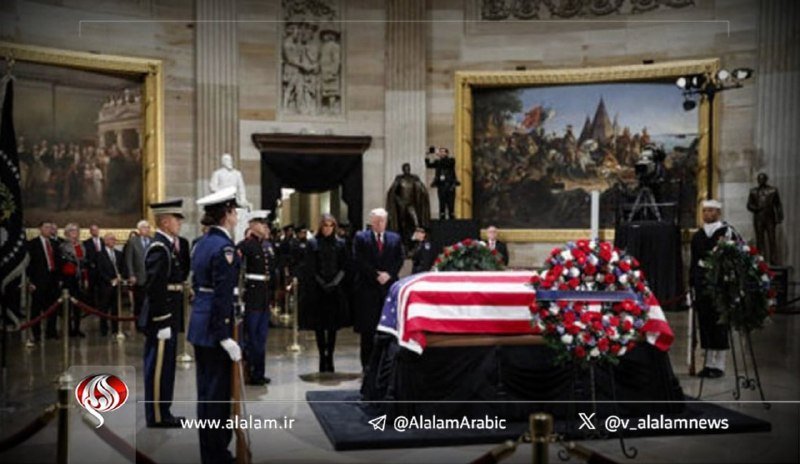
At 14:50 UTC on 10 July 2026, two parallel Telegram channels — Middle East Spectator and the war-monitoring feed Intelslava — pushed near-simultaneous alerts saying that US President Donald Trump had declared the de facto ceasefire with Iran over. The channel posts, time-stamped within fifteen minutes of each other, frame the reversal as a return to the pre-truce posture Washington held on 8 April 2026: no ceasefire, no acknowledged de-escalation channel, and a renewed threat of military action tied to personal security.
The news, as reported by aggregators citing the New York Post, is less a negotiated collapse than a unilateral American declaration. The president, in remarks carried by the New York Post via the wfwitness channel at 14:42 UTC, said he had "left instructions" for a devastating response "if anything happens" — language the paper ties directly to an alleged Iranian plot to assassinate him. The Iranian side has not, in the available reporting, confirmed any such operation. What the sources document is an American president choosing to publicise a contingency order, and an American media ecosystem ready to amplify it as policy fact.
What actually changed on 10 July
The reversal is narrow but sharp. According to the Telegram posts from Middle East Spectator and Intelslava, Trump has reverted to the position he held on 8 April 2026 — the date that, in this reporting, marks the last firm pre-truce American posture toward Iran. The two channels describe the same factual core: there will be no ceasefire, in the sense Washington used that word during the brief de-escalation period that ran through the spring and into early summer.
What the sources do not say is what, materially, is different on the ground. There is no reported withdrawal of diplomats, no announced redeployment of carrier groups, no Iranian counter-declaration visible in the thread. The collapse is rhetorical and conditional: an American president signalling, in real time, that the diplomatic patch is off and that the military option remains armed and pointed. The New York Post item, relayed by wfwitness, makes the conditionality explicit — the "devastating response" is keyed to an Iranian action that has not been publicly verified.
The Intelslava post, with its reference to "April 8" as the last comparable American posture, anchors the reversal in a timeline rather than a trigger. That matters. A ceasefire that ends because the other side violated it sounds different from a ceasefire that ends because the stronger party decided the arrangement had served its purpose. The Telegram reporting supports the second reading more cleanly than the first.
Why this is different from a routine escalation
US-Iran confrontations have produced a rhythm: provocation, threat, de-escalation, quiet back-channel. This episode fits the rhythm's first half and skips the second. The mechanism is unusually direct — a sitting president naming a contingency order in public, with a specific trigger (an assassination attempt) attached. The New York Post item, as quoted via wfwitness, reads as deterrence-by-broadcast: the target audience is not just Tehran but the political base at home, where any future Iranian action can now be presented as the exact scenario the president pre-warned.
For Iran's ruling establishment, the calculation is straightforward but unforgiving. A declared American red line tied to the president's personal safety is harder to negotiate around than a red line tied to regional assets, because backing off costs the Iranian side nothing concrete while crossing it invites escalation against the leadership itself. The structural problem — a hostile superpower willing to make the dispute personal — is one Tehran has managed before, but never under a US administration that has publicly tied its response to its own survival.
For Washington's Gulf partners, the reversal is destabilising in a quieter way. A de facto truce, even an unacknowledged one, lets shipping insurance rates fall, lets oil buyers price risk more cheaply, and lets regional finance ministers sleep at night. The end of that truce does not, by itself, reopen the Strait of Hormuz, but it returns the region to the contingent-destruction pricing model that prevailed in late 2025 and early 2026. The cost of that return is borne first by importing economies in Asia and Europe and only later by the Gulf producers themselves.
The structural frame, in plain prose
The pattern on display is familiar from other recent American retreats from limited de-escalation arrangements: a tactical pause serves a domestic political purpose, then ends when that purpose is exhausted or when a domestic audience demands a harder line. The 8 April baseline cited by Intelslava is the relevant reference point — not because that earlier posture was the "real" American position and the intervening months were an aberration, but because it was the last position Washington held that did not require any Iranian concession to sustain.
What is structurally new is the personalisation of the trigger. Earlier US-Iran escalations have hinged on tanker seizures, proxy attacks on Gulf installations, or nuclear-program milestones. Tying a military option to an assassination attempt against the president folds the dispute into the American political cycle in a way that makes it harder for any future administration — this one or the next — to climb down quietly. The red line now travels with the office.
For outside observers, the practical implication is that the next phase of any negotiation will require the Iranian side to do something visible that the American side can credibly call de-escalatory — not just restraint, but a verifiable concession. The structural asymmetry of information is also worth noting: American declarations about Iranian intentions are amplified through friendly channels (NYP, Telegram aggregators) before Iranian denials can clear editorial gates. The framing of who broke what will be settled in that window.
Stakes and the road ahead
If the reversal holds, the most likely near-term outcomes are a renewed sanctions-tightening cycle, a quiet build-up of US naval and air assets in the Gulf, and a request from Washington to regional partners to downgrade diplomatic engagement with Tehran. The New York Post's reporting on a pre-authorised military option, as relayed by wfwitness, also raises the legal question of what authorities the president has bound successors to — a question that becomes acute if the next administration inherits the contingency order rather than the policy that produced it.
For Iran, the binding constraint is economic. A return to the April 2026 posture means a return to the sanctions pressure that shaped Iran's negotiating position in the first place. The window for any deal that trades nuclear constraints for sanctions relief narrows accordingly.
What remains uncertain
Three things are not in the available reporting and matter. First, the alleged Iranian assassination operation that the New York Post cites is not corroborated by Iranian, Western-wire, or independent sources in the thread. Second, the exact trigger for Trump's reversal — the moment between the brief truce and the 10 July declaration — is not specified. Third, the European, Chinese, and Russian reactions, which would normally shape any de-escalation path, are not present in the source material. The reporting this article rests on is consistent internally, but it is reporting from one side of a contested event. The Iranian counter-version, when it surfaces, will be the test of how durable the 10 July reversal turns out to be.
Monexus framed this against the New York Post / Telegram-aggregator pipeline that broke the story, rather than waiting for a Western-wire confirmation, on the grounds that the news is an American declaration about American policy — and the official confirmation will follow that declaration regardless.
Wire provenance
This editorial synthesis draws on the following public wire/social posts:
- https://t.me/Middle_East_Spectator
- https://t.me/intelslava
- https://t.me/wfwitness