Charity gap years, not campus tours: the British pipeline to the occupied West Bank
British-registered charities are funnelling young volunteers into programmes on occupied land and into proximity with the Israeli military. The line between philanthropy and political project is doing more work than the trustees appear willing to defend.
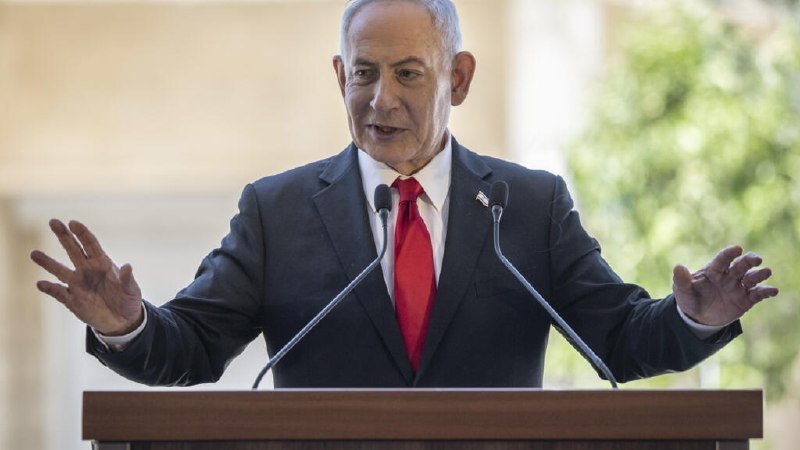
On 10 July 2026, Beirut-based outlet The Cradle reported that British-registered charities are under mounting pressure after revelations they are running gap-year programmes that place young Britons in Israeli settlements in the occupied West Bank, with placements placing volunteers in proximity to the Israeli military. The reporting catalogues a category of organisation that sits, deliberately, in the no-man's-land between philanthropy and political project — groups that are tax-privileged at home while delivering a demographic and ideological pipeline on the ground.
A gap-year volunteer is not a diplomat, and a charity trustee is not a foreign-policy actor. But the institutional architecture that links the two — UK Charity Commission registration, Gift Aid recovery, the branding of "volunteer" and "community" work — performs a service that neither embassy nor lobby group could legally perform with comparable reach. The arrangement deserves to be examined on its own terms, not waved through as apolitical youth work.
The pipeline, in plain language
The pattern The Cradle describes is familiar in outline. A UK-registered charity raises funds under descriptors familiar to British donors — youth development, educational travel, religious heritage programmes. It then partners with an Israeli organisation operating inside settlements that are illegal under international law, as the International Court of Justice advisory opinion of July 2024 and repeated UN General Assembly votes have reaffirmed. Volunteers, many of them school-leavers, are placed in those locations for weeks or months, sometimes in roles that put them alongside Israel Defence Forces units.
The pipeline is best understood not as a series of individual choices but as a coordinated institutional fact. Three features recur in the reporting: the use of the "gap year" frame, which normalises the placement; the silence on the legal status of the host settlement in the charity's domestic-facing communications; and the warm reception extended to participants by settlement councils who are otherwise short of English-speaking young labour.
The moral architecture is interesting in its own right. A charity that placed British teenagers inside, say, a Russian-occupied zone of Ukraine would not survive a week of British media scrutiny. The same structural arrangement, applied to Israeli-occupied territory, has historically been treated by British regulators as a routine volunteering matter.
The counter-narrative, taken seriously
Defenders of these programmes offer three arguments, and none of them should be dismissed out of hand. First, that volunteering abroad is a long-standing feature of British youth life and that singling out Israel-linked programmes is discriminatory. Second, that participants are adults (or near-adults) making informed choices, and that the state should not police the political content of their placements. Third, that some of the partner organisations do genuinely humanitarian work — agricultural support, medical clinics, school teaching — that would be politically neutral if conducted in Tel Aviv rather than in a settlement.
Each argument carries weight. The first is formally correct and politically slippery: it is true that there is no general bar on volunteers working in disputed jurisdictions, but it is also true that almost no equivalent pipeline runs toward, say, Moroccan-occupied Western Sahara or Syrian-controlled areas of the Golan. The second elides the asymmetry between an eighteen-year-old on a gap-year brochure and a settlement council with a land-claim to defend. The third is the strongest, and the most easily abused: humanitarian framing is the right framing for some of the work, but it should not launder the placement itself, which is the political fact.
What larger pattern this sits inside
The pattern is part of a broader reorganisation of how Western civil society interfaces with contested territory. As the official aid-and-development sector has tightened around human-rights and do-no-harm language, parallel philanthropic vehicles — faith-based charities, diaspora-linked foundations, politically-affiliated NGOs — have absorbed the harder-edged work that the official sector will not touch. The result is an off-books foreign-policy infrastructure that enjoys domestic tax privileges while operating in jurisdictions where the host state would not recognise it.
This is not unique to the Israel-Palestine file. The same architecture operates in parts of the Western Balkans, the Sahel, and the Caucasus. But the West Bank case is unusually clean: the host territory's status under international law has been repeatedly adjudicated, the pipeline's structure is unusually legible, and the regulatory question — what does the Charity Commission actually require of a UK charity placing volunteers on occupied land — has a determinate answer that the regulator has so far declined to give.
Stakes, and what remains uncertain
The stakes for the charities themselves are existential in the narrow sense: loss of charitable status, loss of Gift Aid, personal trustee liability for activities outside the registered objects. The stakes for the broader sector are larger. If the Charity Commission treats settlement-based programmes as falling inside the ordinary scope of youth volunteering, it has effectively defined charitable purpose in a way that erases international-law status of the host territory. If it rules the other way, a generation of well-connected British-Israel programmes will need to either rebrand, relocate, or shut.
What remains genuinely uncertain is the appetite of the British regulator to act. The Charity Commission has shown willingness to open statutory inquiries into small community charities over bookkeeping issues; it has been markedly less willing to police the political geography of where registered charities actually deliver their work. Until that asymmetry shifts, the gap-year pipeline will continue to function as a quiet subsidy from the British taxpayer to a settlement project the British government formally opposes.
Desk note: This piece treats The Cradle's reporting as the primary wire and reads it against the Charity Commission's published regulatory approach. Monexus frames the question as one of charity law and institutional accountability, not as a polemic about Israel — a distinction the wire coverage has not consistently drawn.
Wire provenance
This editorial synthesis draws on the following public wire/social posts:
- https://t.me/TheCradleMedia
- https://t.me/thecradlemedia