Live Wire
16:05ZCUBADEBATEDíaz-Canel receives Bruno Rodríguez after UN vote backing Cuba against US blockade16:05ZFRANCE24ENTim Merlier wins Tour de France seventh stage in sprint finish16:05ZEPOCHTIMESNorway Faces England in Saturday Football Match16:05ZINTELSLAVARussian Aerospace Forces carried out multiple FAB-500 glide bomb strikes on Ukrainian positions16:03ZDDGEOPOLITIranian official warns of retaliation for infrastructure attacks targeting Israel16:01ZSCMPNEWSHong Kong, Shenzhen ideal endpoints for modern Silk Road, economist says16:01ZBUTUSOVPLUUkrainian military uses drones to intercept Russian Mavic unmanned aircraft16:00ZSCMPNEWSChinese Users Praise OpenAI's GPT-5.6 for Efficiency, Costlier Than Domestic Rivals
Markets
S&P 500752.97 0.17%Nasdaq26,226 0.07%Nasdaq 10029,751 0.08%Dow525.24 0.20%Nikkei94.55 1.10%China 5033.48 0.21%Europe88.68 0.31%DAX41.56 0.04%BTC$63,953 1.78%ETH$1,788 2.87%BNB$574.07 0.65%XRP$1.1 1.22%SOL$77.94 0.44%TRX$0.3305 0.29%HYPE$67.46 0.14%DOGE$0.074 1.83%RAIN$0.0145 0.05%LEO$9.39 1.37%QQQ$723.9 0.09%VOO$692.2 0.22%VTI$371.85 0.11%IWM$295.14 0.71%ARKK$80.45 1.32%HYG$79.73 0.03%Gold$377.21 0.26%Silver$54.18 0.06%WTI Crude$108.09 0.84%Brent$41.96 0.50%Nat Gas$10.47 3.32%Copper$38.02 0.70%EUR/USD1.1430 0.00%GBP/USD1.3423 0.00%USD/JPY161.87 0.00%USD/CNY6.7745 0.00%
OPENNYSEcloses in 3h 51m
The Monexus
Vol. I · No. 191
Friday, 10 July 2026
Saturday Ed.
Updated 16:08 UTC
  • UTC16:08
  • EDT12:08
  • GMT17:08
  • CET18:08
  • JST01:08
  • HKT00:08
← The MonexusOpinion

The munition that keeps killing: UNIFIL's quiet warning on Lebanon's post-war landscape

Five months after a ceasefire, UN peacekeepers say unexploded Israeli munitions still threaten Lebanese communities — a reminder that wars keep killing long after the shooting stops.
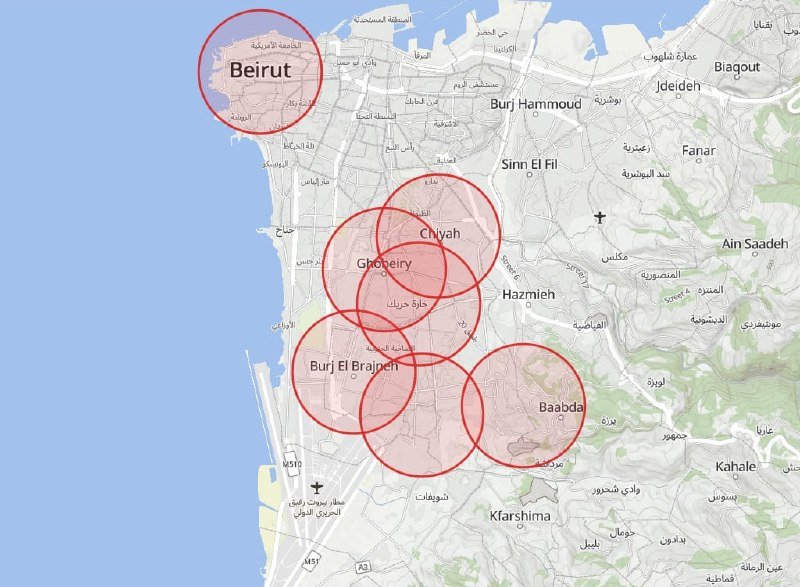
A Lebanese village in the south, months after the cessation of hostilities, where UNIFIL teams continue to flag unexploded ordnance risks. The Cradle Media · Telegram

Five months after the cessation of hostilities in southern Lebanon, the killing has not stopped. It has only gone quiet, and slower. On 10 July 2026, the United Nations Interim Force in Lebanon warned that explosive remnants of war left behind in the conflict zone continue to endanger civilians returning to border villages — a finding that recasts the human cost of the most recent Israel–Hezbollah war as a years-long tail, not a clean endpoint.

The warning matters because it punctures a routine political reflex: announcing that fighting has ended and assuming the body count has ended with it. It does not. From Laos to Bosnia to Fallujah, the post-war phase of any conflict involving air-delivered munitions is its own mortality curve, with children, farmers, and returning refugees the most exposed. UNIFIL's latest advisory is a reminder that the obligations of the parties do not end when the guns fall silent — and that the international community's scrutiny should not, either.

What UNIFIL actually said

In the alert relayed on 10 July by regional outlets including The Cradle Media, the UN peacekeeping mission operating in southern Lebanon since 1978 stated that "explosive remnants of war continue to pose a threat" to local communities. The mission called on residents to avoid handling suspicious objects, report finds to Lebanese armed forces and UNIFIL, and refrain from returning to marked areas until clearance teams have cleared them. UNIFIL did not, in the available reporting, provide a tonnage figure, a cluster-munition percentage, or a casualty count specific to the post-ceasefire period.

That silence is itself significant. The mission's mandate covers monitoring the cessation of hostilities and assisting the Lebanese Armed Forces with clearance operations, but it does not include public casualty tracking for residual ordnance. The information gap is the kind of thing that lets a war's tail vanish from the wire cycle even as it keeps costing limbs.

Why the slow burn keeps burning

Southern Lebanon is, by any honest accounting, one of the most heavily bombed landscapes of the past half-century. The 2006 war alone left an estimated one million cluster submunitions across the south, of which the UN estimated roughly a third failed to detonate on impact. Subsequent rounds of fighting — most recently the exchanges that ended in the November 2024 ceasefire — added new layers of duds and fragmentation munitions on top of an already saturated terrain.

The structural point is straightforward. Air-delivered ordnance has a built-in failure rate; cluster munitions have a higher one. When that ordnance is dropped on villages, olive groves, and agricultural tracks, a predictable share of it becomes a long-duration hazard that only clearance teams, metal detectors, and community education can defuse. International funding for that work is patchy, dependent on annual donor budgets and the political weather around the country in question. Southern Lebanon, by long custom, gets less of it than the urgency on the ground would warrant.

The political economy of who clears what

UNIFIL's warning is not the whole story. The Government of Israel has, in previous post-conflict settings, contributed to clearance funding; the United States has funded programmes in Kosovo, Laos, and Iraq through the State Department's office of weapons removal and abatement. The pattern in Lebanon has been thinner. Most clearance work is carried out by the Lebanese Armed Forces, supported technically by UNIFIL and partially financed by UN Voluntary Trust Fund mechanisms that depend on annual replenishments.

Two consequences follow. First, clearance capacity lags demand — there is more contaminated ground than there are teams to clear it. Second, the slow pace itself becomes a political fact. Returning villagers push into uncleared land because they have nowhere else to go and a harvest to bring in; one unlucky find in an olive grove is enough to put a child in a hospital and a community back on the front page. The cost is local; the responsibility is shared across a diplomacy that has long since moved on to other files.

What remains genuinely uncertain

The honest limits of the reporting are worth naming. The 10 July alert does not specify how many civilians have been killed or injured by unexploded ordnance since the ceasefire. It does not break out which types of munitions are involved, nor whether the failure rate in the most recent conflict was higher or lower than the long-run baseline. The Cradle Media, an outlet with a clear editorial line on the conflict, carried the warning prominently; mainstream wire confirmation of the specific UNIFIL phrasing was not available in the source items this article is built on. Treat the headline finding as well-attested and the granular numbers as, for now, unknown.

That gap is exactly the case for sustained reporting rather than a single cycle of attention. Wars kill in three arcs: the fighting, the displacement, and the duds. Only the first one ever gets to be front-page news, and only the second one ever gets to be a humanitarian appeal. The third one is the one UNIFIL is now pointing at, and it is the one the international community most reliably forgets.


Desk note: Monexus treated UNIFIL's advisory as the public-health and accountability story it is, not as a political scorecard on the war itself. Wire coverage of the November 2024 ceasefire tended to flatten the post-war phase into a tidy endpoint; this piece pushes back against that reflex without taking sides on the underlying conflict.

Wire provenance

This editorial synthesis draws on the following public wire/social posts:

  • https://t.me/thecradlemedia
  • https://t.me/thecradlemedia/123
© 2026 Monexus Media · reported from the wire