The $200 Pump: How One Round of US-Iran Fighting Is Reshaping the Cost of Driving
A fresh round of US-Iran military exchanges has lifted crude by double-digit percentages and pushed US gasoline past $4.60 a gallon — and the diplomatic track is running out of room.
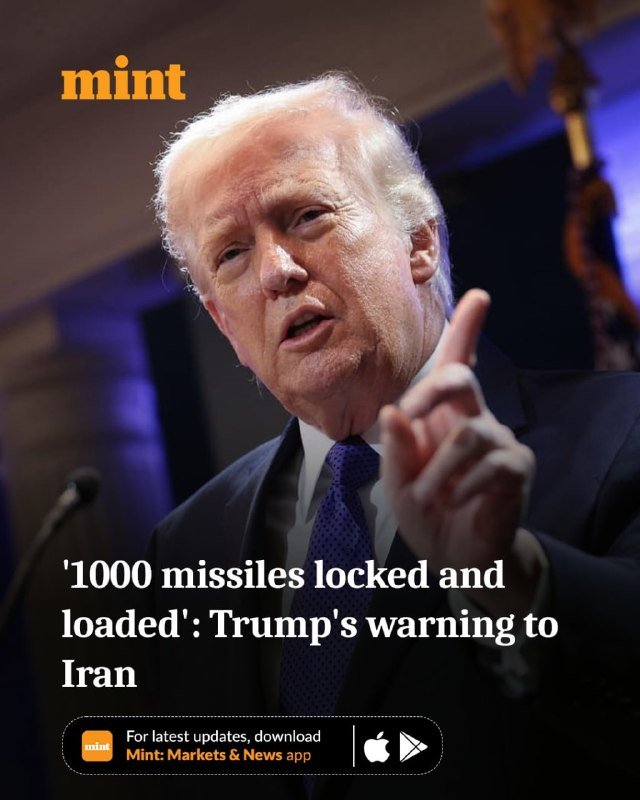
The numbers landed at 21:01 UTC on 10 July 2026, and they were ugly. Reuters reported that the latest flare-up between US forces and Iran had pushed oil higher and worsened the pain at American pumps, the kind of price move that hits a household budget before it hits a trading desk. By the time the New York evening session opened, drivers in several US metropolitan areas were staring at averages north of $4.60 a gallon, and the political class in Washington was staring at a problem it cannot solve with a press release.
What is unfolding is not a single event but a sequence — a week of escalation, then a frantic round of mediation, then an even more frantic round of escalation. Mediators are now trying to pull Washington and Tehran back from the brink, according to reporting summarised by Unusual Whales citing the New York Times on 10 July 2026 at 15:17 UTC. The mediators' task got harder the same day, when senior US officials told outlets including Clash Report that they had effectively drawn a hard line: no access to Iran's nuclear material, no deal. The same officials, per the same channel at 22:00 UTC, said Iran had blamed a recent spate of shipping attacks on an "errant part of their system" — an explanation no Western intelligence agency has endorsed.
A diplomatic track running on fumes
The mediation effort, such as it is, has the architecture of a deal but the momentum of a stalled engine. The published framework — restrictions on enrichment, inspections in exchange for sanctions relief — has been on the table for months. What changed this week is the addition of a sequencing crisis. Senior US officials, as relayed by Clash Report at 22:00 UTC on 10 July, have made the surrender of existing nuclear material a precondition rather than a final-step deliverable. For Tehran, that sequence is politically untenable: turning over the inventory that confers strategic leverage before any sanctions relief would amount to unilateral disarmament.
Tehran's answer to the shipping attacks — that some kind of malfunction in Iranian equipment was responsible — has not landed. Independent analysts and Western naval trackers have consistently attributed the incidents to deliberate action, not system failure. The mismatch between Iranian framing and outside assessment has become a small case study in its own right: a state whose official voice and whose operational reality are diverging in real time, with adversaries free to notice.
The price at the corner station
Oil markets do not wait for diplomacy to resolve. Reuters reported on 10 July 2026 at 21:01 UTC that renewed US-Iran hostilities had lifted crude and worsened US pump prices. The transmission mechanism is mechanical: a meaningful share of the world's seaborne crude passes through the Strait of Hormuz, and any kinetic risk to that chokepoint gets priced within minutes. Even a partial disruption to a million barrels per day of throughput adds roughly ten to fifteen dollars to a barrel in a tight market; the current move, on the scale described in the Reuters wire, sits squarely in that band.
For American consumers, the consequence is more direct than the geopolitical story usually suggests. A ten-cent rise in gasoline per gallon, sustained over a quarter, transfers tens of billions of dollars from household budgets to refiners and retailers. It also re-prices the political economy of every issue that touches energy — inflation expectations, Fed reaction function, the electoral map in mid-continent swing states. The structural point is that the cost of a confrontation in the Gulf does not stay in the Gulf. It lands at the corner station in Ohio.
The Tehran power map, in plain language
The Iranian side of this negotiation is not a monolith. Reporting summarised by Firstpost on 10 July 2026 at 21:37 UTC points to an internal power struggle over the country's strategic direction — between figures who treat the nuclear programme as a sovereign deterrent to be defended at any cost and figures who treat it as a bargaining chip to be traded for economic relief. The struggle is older than this round of talks, but it has sharpened under sanctions pressure and the cost of open confrontation.
Two structural facts follow. First, any Iranian negotiating team that walks away from the table without sanctions relief is reading a domestic political room in which the nuclear programme has symbolic weight far beyond its technical content. Second, any US negotiating team that demands material handover before sanctions relief is reading a domestic political room in which the optics of "trusting Iran" carry an electoral cost in its own right. Both readings can be true at once, which is precisely why the gap has not closed.
What the next two weeks look like
Three signals to watch. First, whether the mediators produce a written framework that addresses the sequencing dispute — surrender-of-material versus sanctions-relief. Without sequencing, there is no deal. Second, whether shipping attacks continue. Each incident ratchets up the political cost of accommodation on the US side and the cost of trust on the Iranian side. Third, where the front-month crude price settles in the second half of July. Sustained prints above current levels would imply markets are pricing a real probability of disruption, not merely a tense negotiation.
A structural note worth stating plainly. The architecture of this crisis — chokepoint geography, dollar-denominated energy, election-driven political incentives, an asymmetric nuclear question — is not new. It is the same architecture that produced the 2019 tanker incidents, the 2020 Soleimani strike, and the various rounds since. The variation this week is the combination: a tight oil market, a mediator track running on fumes, and a Tehran whose official voice and operational reality are visibly out of sync. That combination is not a forecast. It is a configuration worth watching closely.
Desk note: The wire frame on the US side leans on Reuters and aggregator reporting; the Tehran side relies on a single Telegram-channel summary of internal dynamics. Monexus flagged the sequencing dispute and the shipping-attack attribution gap as the two open questions where the public record thins out fastest.
Wire provenance
This editorial synthesis draws on the following public wire/social posts:
- https://x.com/unusual_whales/status/2075686851428438016
- https://t.me/ClashReport
- https://t.me/ClashReport
- https://t.me/FirstpostIndia
- http://reut.rs/4vtqFaj