Wimbledon's quiet recalibration: how four semi-finalists solved grass, and what the record purse says about the tour
A record $86m purse and four semi-finalists with rocky grass-court histories converge on the All England Club, framing a tournament the tour has spent the year recalibrating.
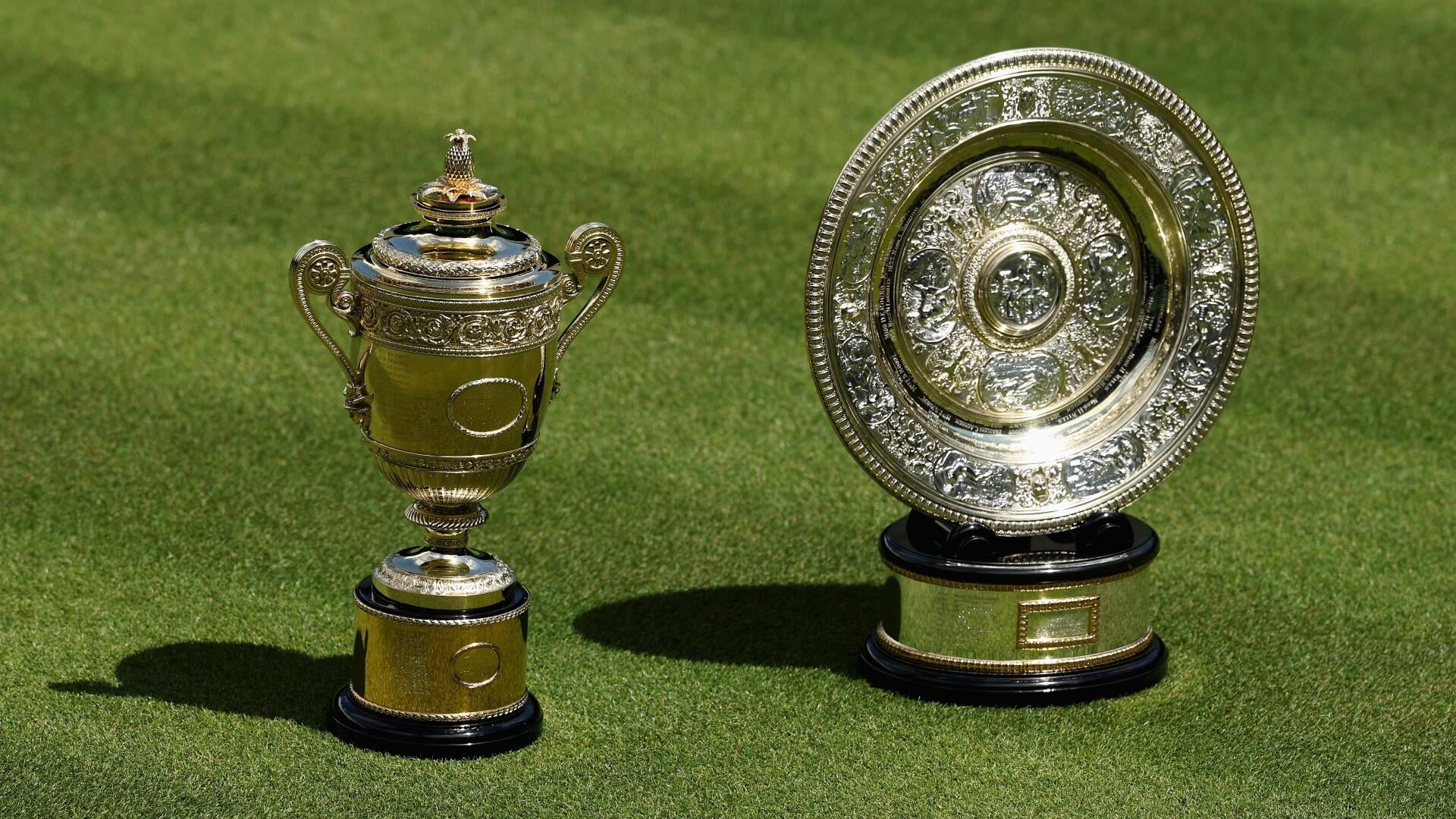
The four women who will contest the Wimbledon semi-finals this weekend did not, on the evidence of their careers, build themselves for grass. Yet on 9 July 2026 they arrived at the All England Club as the last quartet standing on a surface that has historically demanded a different skill set than the hard courts that dominate the professional calendar. Their presence, more than any upset in the draw, is the story of this Championships.
The deeper narrative underneath is financial as much as athletic. The All England Club confirmed an $86m record purse for the 2026 edition, with the men's and women's singles champions taking home historic paydays. For the four women still in contention, and for the four men on the other side of the draw, the calibration of prize money has become a referendum on what the tour is actually selling.
A surface most of them had to learn
Grass-court tennis rewards low, skidding bounces, shortened rallies and the willingness to approach the net — a vocabulary alien to players raised on the hard courts of North America, the Middle East and the Australian summer. According to BBC Sport's 9 July piece on the women's semi-finalists, all four have had to "crack the code" on a surface where their prior results did not suggest natural fluency. That framing matters: it positions Wimbledon not as a coronation for grass specialists but as a place where modern baseline players have had to acquire a second game.
The implication is structural. As the tour expands its hard-court footprint — from the Middle East swing in February to the North American summer hard-court season that precedes the US Open — fewer players arrive at the All England Club with dozens of grass matches already in their legs. The four semi-finalists' run is therefore less an indictment of grass-court specialisation than evidence that the swing toward one surface has forced every contender to become multi-surface out of necessity.
The purse, and what it prices
The $86m purse, reported by CBS Sports on 8 July 2026, is the headline. But the structural question is what the money rewards. With the men's and women's singles champions taking home "historic paydays" — CBS's phrasing — the tournament has continued a decade-long convergence between the two tours on prize money, a convergence that was not inevitable and that Wimbledon, more than any other major, has driven. The early-round increases, which lift payouts for first-round losers more sharply than for champions, redistribute the purse down the draw in a way that rewards depth rather than stardom alone.
This matters for the semi-finalists specifically. Players who arrive at Wimbledon having struggled through grass-court warm-ups at Queen's, Eastbourne, Halle or Berlin collect smaller early-round cheques than they would at a Masters event. A deeper purse flattens that disadvantage. Read against the BBC's profile of late-career resurgences on grass, the prize money functions as a quiet subsidy for the kind of surface fluency the tour otherwise has no commercial reason to cultivate.
The counter-read
The optimistic framing — that Wimbledon is democratising, that baseline players can reinvent themselves, that the purse rewards depth — has a counter-narrative worth stating. Grass-court specialists, the players who historically sustained the surface's identity through the off-season, are increasingly marginalised by a calendar that gives them one or two tune-up events at most. If the four women's semi-finalists are the proof that the code can be cracked, they are also the proof that the code no longer rewards the players who used to own it.
The same tension runs through the men's draw. The men who reached the second week at this Wimbledon have, by and large, navigated the transition that the women in the other semi-final have navigated. Whether that is a healthy sign of tour-wide athleticism, or a sign that Wimbledon has homogenised into a generic hard-court major with green paint, depends on what a reader thinks tennis is for. The wire coverage tends toward the first reading. The structural read points toward the second.
Stakes
For the All England Club, the stakes are reputational as much as commercial. A record purse paired with a deep, internationally diverse semi-final line-up makes the case that Wimbledon remains the prestige event of the calendar — the tournament where surfaces, schedules and nationalities all collide and where a champion is crowned without asterisks. The CBS-reported purse figure is part of that case: Wimbledon is signalling that it will not be out-bid by the Gulf-state hard-court events or by the WTA's own expansion into longer Asian swings.
For the players, the stakes are simpler. The four women in the semi-finals on 10 July 2026 have, on the BBC's telling, spent the year solving a problem most of them were not built to solve. Two of them will contest the final on Saturday. The men's draw will resolve over the same weekend. Whoever lifts either trophy will do so having answered a question the tour has been asking its athletes for a decade: can you win on a surface that the schedule no longer prepares you for? At this Wimbledon, four women and four men have answered yes.
What remains uncertain
The BBC profile characterises the semi-finalists' grass-court journeys as a single arc of adaptation; the individual match data and surface-specific win-loss splits sit outside the reporting surfaced here. The exact split of the $86m purse between the men's and women's draws, the round-by-round breakdown, and the doubles allocations are not specified in the CBS headline figure. Readers looking for the granular economics will need the All England Club's own release; the headline number stands, but the structure underneath it has to be inferred.
Desk note: Monexus framed this around the surface-versus-schedule tension and the redistributive logic of the new purse, rather than running a results diary. The wires emphasised feel-good adaptation and a record cheque; the structural read asks what those two facts together imply about a tour that no longer schedules its players to win Wimbledon.