Xi tells Pyongyang: the socialist cause goes on, together
On 10 July 2026 Xi Jinping reaffirmed Beijing's commitment to deepen ties with Pyongyang, framing the relationship as a shared project of socialist modernisation against a backdrop of intensifying great-power competition.
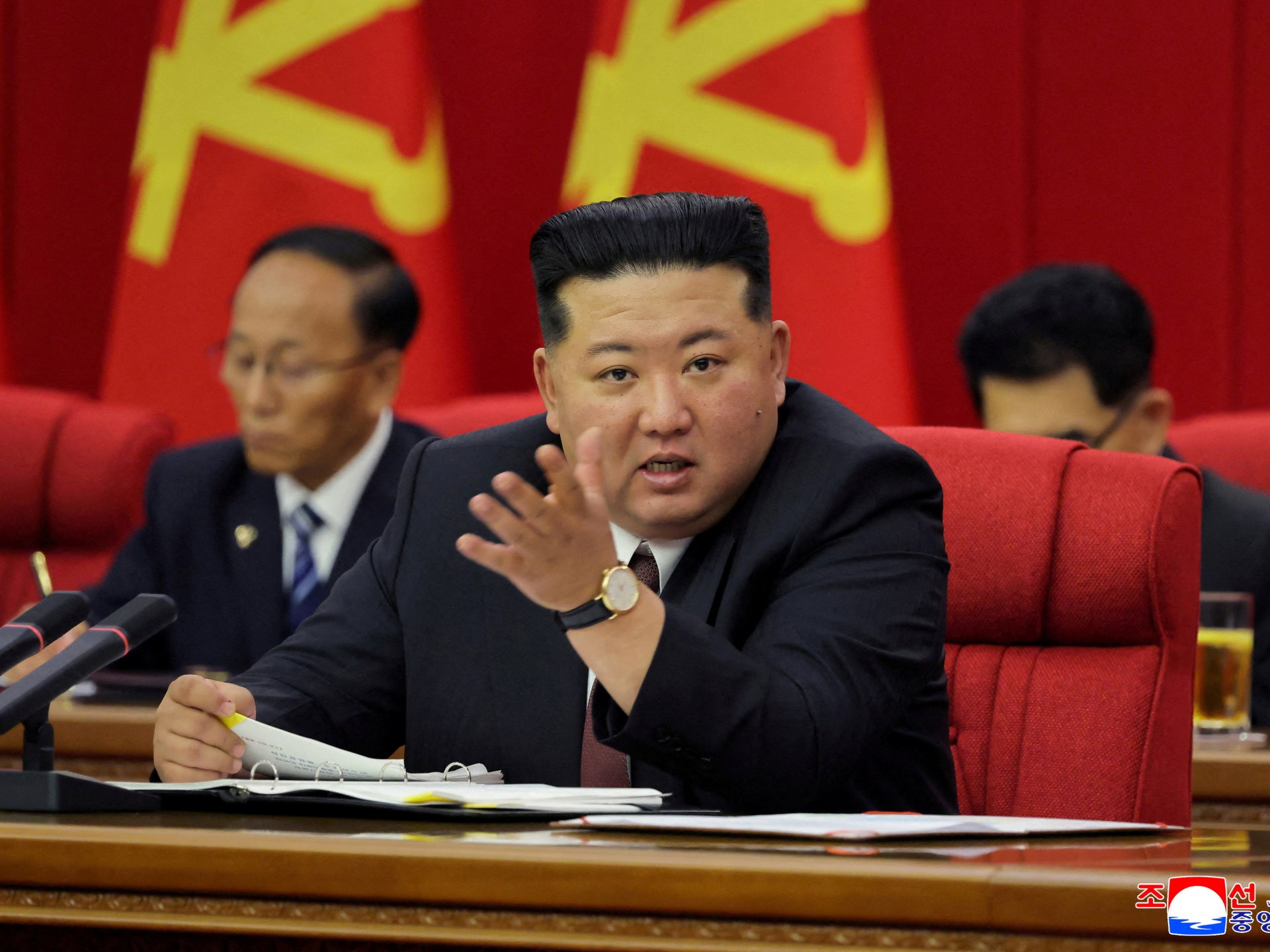
At 22:51 UTC on 10 July 2026, state-aligned outlet Telesur English relayed a Chinese Communist Party statement in which President Xi Jinping told his counterparts in Pyongyang that bilateral relations between the People's Republic of China and the Democratic People's Republic of Korea should "continue advancing the socialist cause and both countries' modernisation." The framing — socialist, modernisation-focused, and conspicuously long on political vocabulary rather than economic specifics — is the public face Beijing wants the world to read as it deepens one of its most politically awkward friendships.
The message lands at a moment when the People's Republic is recalibrating almost every external relationship along its periphery. Xi has spent 2026 rebuilding diplomatic bandwidth after a turbulent trade year with Washington, deepening security coordination with Moscow, and quietly positioning Chinese capital as the preferred infrastructure financier across Southeast Asia and the Pacific. North Korea, long treated as the difficult cousin of the socialist family, has re-entered the priority list. The reaffirmation is rhetorical rather than operational — no new treaty text is in evidence — but in diplomatic signalling terms it confirms that Beijing intends to keep Pyongyang inside its orbit rather than watching the relationship drift toward Moscow alone.
The message and what it carries
The single public line, as reported by Telesur English on 10 July 2026, is a reaffirmation rather than a breakthrough. Xi told his DPRK counterparts — the readout does not name Kim Jong Un explicitly, which is consistent with how Beijing handles leader-to-leader messaging when it wants to keep the audience wide — that the two countries' "socialist cause" and "modernisation" should advance together. The vocabulary tracks the language used in Chinese Communist Party communiqués for decades: modernisation as the explicit policy goal, the socialist qualifier as the political anchor.
In Beijing's house style, that formulation is doing two jobs at once. It is reaffirming ideological alignment without committing to a specific economic package. It is signalling to Pyongyang that the relationship is not transactional-only, while leaving room for Beijing to keep calibrating the depth of that alignment against its other interests — chiefly the management of its trade relationship with the United States, where the threat of secondary sanctions on Chinese firms doing business with North Korea remains live.
The counter-read from Seoul and Washington
The dominant Western reading of any Xi-to-Pyongyang message is that it implies deeper Chinese tolerance — or support — for North Korean military programmes, particularly missile tests and the dispatch of workers abroad. That reading is not wrong as a default. But it tends to flatten what is actually a more transactional and contested relationship.
The structural counterpoint is this: Beijing does not want a destabilised peninsula any more than it wants a destabilised Taiwan Strait. North Korea's nuclear and missile posture has, on several occasions in the past decade, complicated Chinese diplomacy with Washington and Seoul in ways that cost Beijing politically. The 2017 sanctions episode, in which Chinese commercial banks were briefly cut off from the US dollar system for processing North Korean–linked transactions, is the cautionary tale still whispered inside Chinese banking circles. Beijing's reaffirmed friendship is real; so is its aversion to paying a renewed price for it in dollar-clearing terms.
The socialist framing, in plain terms
What Beijing is reaching for when it talks about a shared "socialist cause" is less a doctrinal alignment than a political vocabulary that holds the relationship above the level of pure commercial exchange. For Pyongyang, that vocabulary matters: it gives Kim Jong Un a partner-of-record at the UN Security Council — still the body where North Korea's sanctions regime is renewed annually — and it gives the DPRK's domestic propaganda apparatus a "fraternal" framing that local audiences understand.
For Beijing, the same vocabulary is useful because it keeps the relationship inside a frame that does not require public, itemised economic concessions. The People's Republic prefers its strategic friendships to read as political before they read as financial. That ordering is a feature, not a bug, of how Chinese statecraft has handled Pyongyang for two decades.
What to watch next
Three near-term indicators will tell readers how much of this reaffirmation is rhetorical and how much is operational. First, whether Pyongyang dispatches a senior envoy — Foreign Minister or higher — to Beijing before the end of the third quarter of 2026, and what the readouts from that visit include. Second, whether the UN Security Council's annual North Korea sanctions renewal, expected later in 2026, draws an explicit Chinese abstention, a veto threat, or business-as-usual support. Third, whether publicly available trade data through the year-end shows a measurable increase in Chinese oil and food shipments to the DPRK — the historical lifelines of the relationship — or a continuation of the steady, deniable baseline.
The broader stakes are not hard to map. A deeper, more publicly visible Beijing–Pyongyang axis would compress Washington's room to assemble the kind of maximum-pressure coalition it built on North Korea in 2017–18. A rhetorical-only reaffirmation, by contrast, lets Beijing keep its trade-channel with the United States intact while still signalling to Pyongyang that the socialist vocabulary has not been retired. The 10 July statement, read on its own terms, sits closer to the second of those two poles — but the indicators above will tell readers which way the relationship actually bends.
This article relies on a single wire readout of a Chinese state-level message to Pyongyang, transmitted by Telesur English at 22:51 UTC on 10 July 2026. Where the readout names the message but not the operational detail, the analysis flags the gap rather than filling it. The Chinese MFA's own posting, where it appears, will be the primary document to revisit; the structural counterpoints above are drawn from public-record context rather than from this single input.
Wire provenance
This editorial synthesis draws on the following public wire/social posts:
- https://t.me/telesurenglish
- https://en.wikipedia.org/wiki/China%E2%80%93North_Korea_relations