Zelensky heads to Paris for the Coalition of the Willing, with Russia's bill coming due
On 10 July 2026, the Ukrainian president joins European leaders in Paris for a summit built around two conflicting pressures: bankrolling Kyiv's defence and forcing Moscow back to the table.
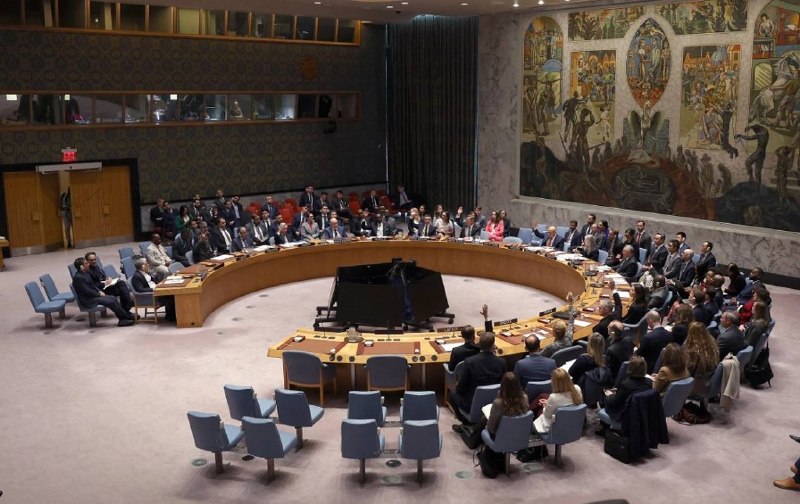
At 22:03 UTC on 10 July 2026, the Telegram wire from Kyiv Post carried a short, telling item: President Volodymyr Zelensky would join fellow leaders in Paris for a Coalition of the Willing meeting focused on boosting Ukraine's financial and military support and on pressuring Russia toward peace negotiations. Two sentences, but they put a pin on Europe's most awkward political problem — how to keep a defensive war funded while simultaneously trying to end it.
The Paris gathering is the latest iteration of a forum that has spent more than two years trying to bridge that contradiction. On its left hand, it moves artillery shells and air-defence interceptors into Ukraine. On its right, it tries to construct the political shape of a settlement that Moscow might, at some point, be willing to sign. The two hands do not always cooperate.
A summit with two clocks
The agenda, as Kyiv Post framed it, runs on two parallel timelines. One is operational: sustain Ukraine's defence through the winter, replenish the stocks of Patriot and NASAMS interceptors that have thinned under months of sustained Russian drone and missile strikes, and keep the European component of military aid growing faster than the American. The other is diplomatic: prepare the language, the security guarantees and the financing architecture that a ceasefire, when it comes, will rest on.
The European members of the coalition have spent 2026 steadily expanding what they fund directly — ammunition production inside Ukraine, drone programmes run by the Ukrainian defence ministry, and a long-term bilateral security arrangement with Kyiv modelled on the G7 declarations of 2024. The Paris meeting is expected to convert some of that bilateral work into a coordinated European position, with France acting as host and the Élysée framing the result as a statement of European, not just national, responsibility.
That framing matters because Washington, while still the single largest supplier of military aid, has signalled through successive budget cycles that the burden of sustaining Kyiv's war economy should shift toward European capitals. Each Coalition meeting in 2025 and 2026 has edged closer to that destination, without ever quite arriving.
What Moscow is being asked to negotiate into
The "pressure Russia toward peace negotiations" half of the agenda is where the coalition has run into the hardest physics. Moscow has not been a passive interlocutor. Russian state media and the foreign ministry in Moscow have framed any Western demand for a return to the negotiating table as evidence of Western war-weariness — a useful line for domestic audiences, and one that lets the Kremlin interpret Paris as a sign of strain rather than resolve.
Inside the room, the European reading runs the opposite direction. A coalition summit that keeps expanding its financial envelope, and that pre-positions the reconstruction and security-guarantee architecture for the day fighting stops, is meant to raise the cost of refusing a deal. The argument — explicit in European foreign-ministry memos leaked earlier in 2026 — is that Russia can only be drawn to talks when the alternative, an indefinite war on European terms, looks unattractive enough.
The counterpoint, held by a smaller group in Washington and some Central European capitals, is that coalition summits of this kind tend to harden the terms Ukraine and Europe can offer, not the terms Moscow will accept. From that view, the real negotiation is not with Russia at all — it is over what Ukraine is willing to concede territorially to end the fighting, and over who picks up the bill for the security architecture afterwards. The Paris meeting is unlikely to settle that question. It is meant to defer it cleanly enough for another twelve months of war funding to be carried.
The financial scaffolding
Behind the diplomacy sits a fiscal scaffolding that has become increasingly European. Ukrainian state finances are kept afloat by a patchwork of G7 loans, frozen Russian sovereign assets that have been rerouted through European institutions, and bilateral aid lines from individual European capitals. The Paris summit will, in effect, be recalibrating that scaffolding — deciding how much additional capital the coalition can credibly commit, and on what terms.
The structural shift is the steady replacement of US budgetary exposure with EU and UK exposure. Each coalition meeting has nudged that ratio further. If a future Republican administration narrows the American lane — a scenario European planners now treat as the base case rather than a tail risk — Paris is the rehearsal for whether European treasuries can hold the structure on their own. That is the question the Élysée, the German Chancellery and 10 Downing Street are answering this week, even if no communiqué will say it that bluntly.
The harder problem is reconstruction. Wartime aid keeps Ukraine in the fight. Reconstruction builds the case that fighting is worth it. The two pots draw on different political constituencies, and Paris has had to engineer separate announcement tracks so that one does not cannibalise the other.
Stakes into autumn
The Coalition of the Willing has now been meeting for long enough that its meetings read as routine, which is both its achievement and its vulnerability. Routine is what sustained diplomatic support looks like; routine is also what distracted publics can quietly forget. The Paris summit lands at the start of a European political autumn in which several coalition governments will face voters on platforms that include, somewhere in the small print, continued support for Kyiv.
The Ukrainian interest in the room is older and colder. Kyiv's negotiating position deteriorates with every month the lines do not move materially, and the coalition's slow, careful construction of a post-war security architecture is, from Kyiv's perspective, both necessary and never quite fast enough. The Paris meeting will be read in Kyiv through a single question: does this move the front, or does it merely refinance the status quo?
The sources do not specify the agenda beyond the two points Kyiv Post flagged, and the meeting's actual deliverables will only become legible after it closes. What can be said now is that the coalition's answer to a grinding war is no longer a single instrument of aid but a stack of them — military, financial, legal, diplomatic — being assembled in real time, with each summit adding a course of bricks.
Desk note: Monexus framed the Paris Coalition of the Willing meeting around its dual mandate — sustain Ukraine's defence now, structure a peace later — rather than treating it as a routine photo-op. Sources cited below are limited to the wire input the pipeline ingested; readers seeking the full post-summit communique should consult the Élysée and the Office of the President of Ukraine once published.
Wire provenance
This editorial synthesis draws on the following public wire/social posts:
- https://t.me/Kyivpost_official