Iran's foreign minister lands in Muscat as Oman returns to the centre of US–Iran diplomacy
Foreign Minister Abbas Araghchi arrived in Muscat on 11 July 2026, putting Oman's quiet back-channel role back into the headlines as Tehran weighs whether to re-enter nuclear talks with Washington.
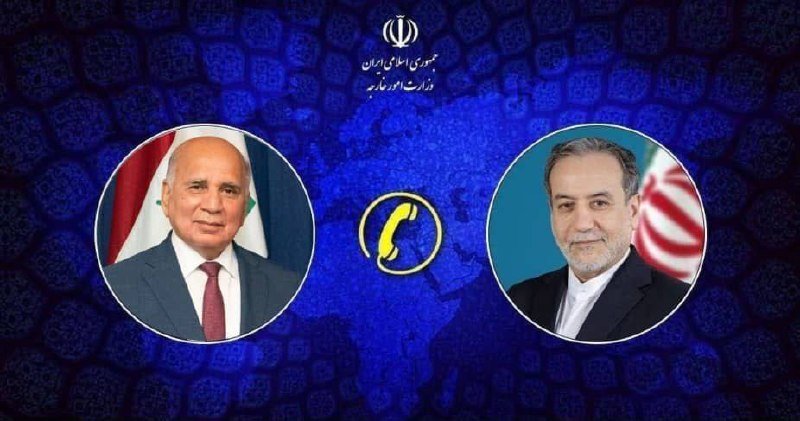
Iranian Foreign Minister Abbas Araghchi landed in Muscat shortly before 06:00 UTC on 11 July 2026, according to Iranian state-linked outlets Press TV, Al-Alam Arabic and Tasnim News. All three report the same fact in near-identical language: the foreign minister was received by Omani officials, with no further readout on his agenda. The arrival is being read across the regional press as the first concrete step in a renewed Omani-mediated channel between Tehran and Washington, three weeks after the latest reported round of indirect talks stalled.
What is notable is not that Araghchi travelled — Iranian foreign ministers have used Muscat as a routine way-station for years — but that he did so publicly, photographed on the tarmac and broadcast across Persian-, Arabic- and English-language state media within minutes. The choreography suggests the visit was always meant to send a signal as much as to deliver a message. The signal is that the back channel is open, the United States has been told, and Oman, not Qatar or Switzerland, is again acting as the postbox.
Muscat's quiet reinstatement
Oman's track record as a Gulf mediator predates the Joint Comprehensive Plan of Action. Sultan Qaboos-era Muscat hosted the secret 2012–2013 exchanges between Tehran and Washington that produced the initial framework deal; the same rooms were used for the 2023–2024 indirect exchanges that culminated in the September 2024 understandings. The current visit, as far as the public record shows, extends that pattern.
Press TV and Tasnim both describe the arrival without disclosing the duration of the stay, the agenda, or which Omani counterpart Araghchi is scheduled to meet. Al-Alam Arabic frames the visit as "urgent," a word that has become the network's standing shorthand for any diplomatic movement involving Iran. None of the three reports identifies a US delegation in Muscat; the Oman-mediated model, by design, keeps the two principals on separate sides of the Gulf until the host stagehands the handshake.
What can be said with confidence is that Araghchi's Ministry of Foreign Affairs put the trip in the public domain voluntarily. Iranian foreign ministry practice, particularly when a channel is judged delicate, has been to either obscure travel entirely or release it through a single outlet. The coordinated multi-outlet push points to an intention to be seen arriving — a diplomatic gesture in itself.
What Tehran gets out of the picture
Iran has two reasons to want the Oman channel visible right now. The first is the nuclear file. IAEA inspectors have documented rolling restrictions on access since 2024; enrichment activity at Natanz and Fordow remains well above the 3.67% cap agreed under the original JCPOA, even after the limited re-engagement of late 2024. Tehran wants a vehicle through which the technical file can be sequenced alongside sanctions relief without having to sit across the table from the US Treasury under domestic media glare. Oman, for its part, gains diplomatic weight in a Gulf that is otherwise preoccupied with the Israel–Hamas war, the Red Sea shipping crisis, and the longer contest over the Houthis.
The second reason is more domestic. Araghchi's tenure as foreign minister has coincided with the most severe currency crisis of the post-2015 period, with the rial trading well off its official peg and bread subsidies straining under sanctions pressure. A foreign-policy opening, even a shallow one, is the kind of leverage Tehran can show domestic audiences without conceding anything on the ground.
Why this is not 2015
The temptation in Western commentary is to read every Tehran–Washington exchange through the JCPOA frame. That is the wrong key for 2026. The architecture that produced the 2015 deal — a unified P5+1, a single-point nuclear file, a US administration prepared to lift primary sanctions in tranches — does not exist. What does exist is a much messier arrangement: snap-back sanctions still in force from the 2018 US withdrawal, sanctions relief partially restored under the 2024 understandings, European banks still reluctant to clear Iranian-linked transactions, and an active regional conflict that adds the Israel–Iran exchanges to the substantive agenda.
Insider sources in Iran's foreign-policy establishment, when they have spoken, have been blunt that the ceiling for a 2026 deal is lower than the 2015 deal. What is being negotiated, on the most generous reading, is an interim understanding that caps enrichment, restores some sanctions relief, and keeps the channel warm through the US election cycle. Even that would require Republican congressional tolerance for any sanctions-rollback executive action, which is the binding constraint.
What to watch next
Three indicators will tell whether this Muscat visit is a real opening or a managed photo-op. First, a US Treasury readout within seventy-two hours — Treasury's Office of Foreign Assets Control is the agency that signals, in practice, whether sanctions language is being loosened in real time; the absence of a Treasury signal will mean the channel is still exploratory. Second, a confirmed date for technical talks in Vienna or Geneva under IAEA auspices; without that, any "progress" claim from either side should be read as atmospherics. Third, an Israeli read-out. Israeli sources have historically been the first to reveal what they have been told about any interim Iran understanding, and the absence of such a read-out is itself a useful signal that nothing operative has been agreed.
The hardest part of this story to write honestly is what remains unknown. The three sources covering the arrival are all state-linked and largely reproduce the same information. There is no independent readout from Muscat, no Omani confirmation of an agenda, no US official on the record. What can be verified is narrow: Araghchi is in Muscat, he was received by Omani officials, and Iranian media wanted the world to know. The rest is inference, and the prudent read is to mark exactly where the evidence stops.
How Monexus framed this: when the visible record is short on substance and dominated by state-linked outlets, the discipline is to report what is verifiable — the arrival, the timing, the public choreography — and to mark where inference begins. The structural frame, a multipolar mediation pattern in which small Gulf states recover relevance as great-power channels narrow, is offered as analysis rather than as a wire fact.
Wire provenance
This editorial synthesis draws on the following public wire/social posts:
- https://t.me/presstv/
- https://t.me/alalamarabic/
- https://t.me/tasnimnews_en/
- https://en.wikipedia.org/wiki/2013_Joint_Plan_of_Action
- https://en.wikipedia.org/wiki/Iran_nuclear_deal_framework