Araghchi lands in Muscat: the Oman corridor comes back into focus
Iran's foreign minister touched down in Muscat on 11 July 2026, putting the Sultanate back at the centre of a Gulf diplomatic track the wire services have barely covered this year.
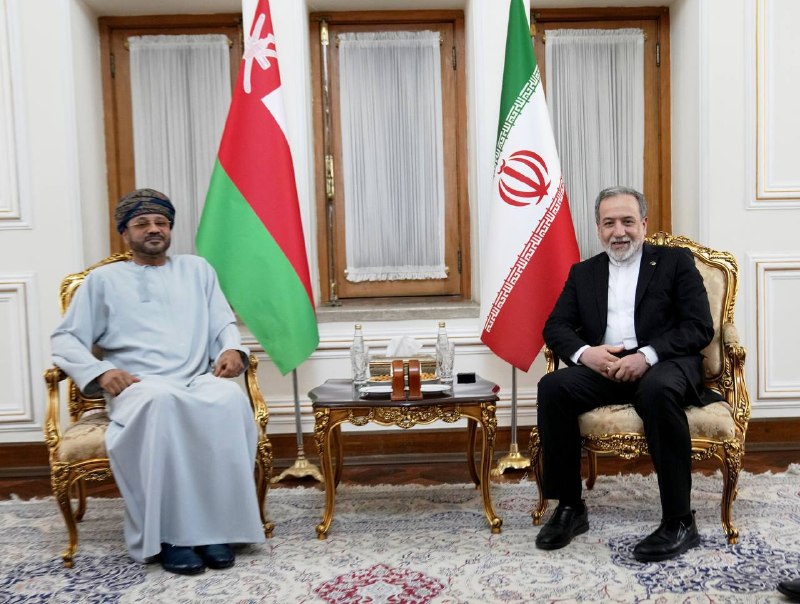
Iranian Foreign Minister Abbas Araghchi walked off a plane at Muscat International on the morning of 11 July 2026, greeted by Omani officials on the tarmac, according to simultaneous dispatches from Iran's state-aligned Tasnim News Agency, its Farsi-language Jahan-Tasnim channel, and the Beirut-based Al Alam Arabic network. All three filings carried the identical news hook — the foreign minister's arrival in the Omani capital — timestamped within minutes of one another at 05:59 UTC. The dispatch from Tasnim's English feed noted explicitly that Araghchi had been received "with the welcome of Omani officials," language the Jahan-Tasnim Farsi wire repeated almost verbatim.
The visit, on the surface, is a routine stop on a regional tour. Beneath the choreography, however, Muscat has once again become the venue of choice for the kind of quiet, third-party-mediated diplomacy that the Gulf's louder capitals will not host. For the better part of two decades, Oman's neutrality has made it the indispensable back-channel between Tehran and the Western-led order. Sultan Haitham bin Tariq's government has held that posture even as its Gulf Cooperation Council partners have tilted closer to Washington and as Iran itself has come under sustained economic and military pressure. Araghchi's landing on 11 July is the latest data point in a channel that has refused to close.
The Sultanate as quiet intermediary
Oman does not host negotiations; it hosts proximity. Since at least the early 2010s, Muscat has served as the preferred site for clandestine talks, sanctions-relief shuttles, and hostage-track conversations involving Iran. The geography matters: the Strait of Hormuz lies within sight of the Omani coast, and the country's foreign-policy tradition — codified under the late Sultan Qaboos and sustained by his successor — privileges non-alignment, balance, and a studied refusal to take sides in the region's larger contests.
That posture has produced tangible results that the public wire rarely catalogues. The 2015 Joint Comprehensive Plan of Action was preceded by secret US-Iran talks in Muscat, and the 2023 mediated agreement that freed five American detainees held in Iran was negotiated through an Omani channel. Araghchi's appointment as foreign minister in 2024 came after a career in which he served as Tehran's chief negotiator on the nuclear file; he is, in other words, the official most directly associated with the track that Muscat has kept alive. His return to the Omani capital is therefore not a courtesy call.
What the sources tell us — and what they do not
The three Telegram-channel dispatches that surfaced on 11 July are unusually thin on substance. Al Alam Arabic frames the arrival as an "urgent" bulletin without naming a counterpart or specifying a duration. Tasnim's English feed adds the welcoming line and stops there. Jahan-Tasnim in Farsi repeats the same paragraph almost word for word, the kind of duplication that suggests a single pool report distributed across Iran's English- and Arabic-language outlets and then mirrored in Persian.
The absence of detail is itself a signal. Iranian state-aligned outlets tend to publish itineraries in advance when the diplomatic choreography is meant to be visible — visits by allied presidents, summit appearances, multilateral fora. A bare-bones arrival notice, stripped of agenda and partner names, is the standard format for indirect or back-channel movements where Tehran prefers deniability. Monexus's read: the meetings Araghchi has travelled to Muscat to hold are not, by design, going to be readable in the wire that runs alongside the photograph.
The pool report does not identify which Omani official met the minister, whether a delegation travelled with him, or whether the visit was connected to a wider tour. It does not specify whether Oman's own foreign minister, Sayyid Badr bin Hamad Albusaidi, was on the tarmac, or whether the meeting is bilateral, multilateral, or a transit stop. None of the three Telegram items name a counterpart, a date of departure, or a public agenda item. The wire record, in short, is a handshake photographed from one angle — and the rest is being held back on purpose.
The regional geometry
Three regional currents converge on Muscat this month, and any one of them could be the operative reason for the trip.
The first is the nuclear file. The 2015 framework collapsed in 2018 when the United States withdrew and reimposed sanctions; the indirect talks that have tried to revive it have, since 2023, run mostly through Omani and Qatari intermediaries. Tehran has consistently argued that the file cannot advance through hostile capitals, and Muscat has consistently offered the conditions — privacy, hospitality, plausible deniability for both sides — that allow Iranian and American negotiators to sit in the same room without that fact becoming the headline. Araghchi, as a former nuclear negotiator, is the Iranian official most directly credentialed to lead such a round.
The second is the wider regional security track. The post-October 2023 environment has put Iran and several Gulf monarchies on opposite sides of a widening set of conflicts, with Iranian-aligned militias active in Iraq, Syria, Lebanon, and Yemen, and a US-led maritime security architecture deployed across the Gulf. Oman has refused to join that architecture as a combatant participant, even as it has welcomed US naval logistics. That position gives Muscat standing to host conversations that other Gulf capitals cannot.
The third is the bilateral relationship with the United States. Across 2025 and into 2026, back-channel contacts between Tehran and Washington have continued at lower visibility than during the earlier nuclear rounds. Muscat's role in those contacts is widely understood by analysts in the region but rarely confirmed in print. Araghchi's arrival is consistent with a renewal of that track — the same channel, the same venue, the same official family.
The limits of what the wire can tell us
There are reasons to be cautious about over-reading a single arrival notice. Telegram-pooled state media dispatches of this kind have, in the past, preceded bilateral visits that turned out to be substantive, and they have also preceded visits that produced little more than a joint communique about regional cooperation. The arrival notice does not specify a counterpart; it does not specify an agenda; it does not specify a duration. The three dispatches, taken together, amount to a single piece of information: a senior Iranian foreign minister has flown into Muscat and been received by the host government.
What the sources do not say, but the regional geometry implies, is that the visit is unlikely to be ceremonial. Araghchi does not tour Gulf capitals for handshake diplomacy. The Omani corridor exists for one reason: it is where the conversations that other capitals refuse to host still take place. Whether those conversations in mid-July 2026 will produce a public outcome — a released detainee, an agreed framework, a sanctions-easing measure — is the open question the wire will answer over the days ahead. Until then, the photograph on the tarmac at Muscat is the whole visible record.
The plausible counter-read is that the visit is purely bilateral, a routine consultation between two governments that have kept a quiet dialogue open for decades. That reading is consistent with the dispatches as published. It is also consistent with every other Iranian foreign-ministerial visit to Muscat since 2013 that subsequently turned out to be a vehicle for a third-party exchange. The pattern is the argument.
What to watch next
Three concrete signals will indicate whether the visit has produced movement. First, a second Telegram dispatch from any of the three state-aligned outlets identifying a counterpart or naming a duration would suggest the visit has acquired a substantive agenda. Second, any reporting from a non-Iranian outlet — Reuters, AFP, the Associated Press, or a Gulf-based wire — confirming a US or European presence in Muscat this week would tighten the inference toward a mediated round. Third, an Omani state media readout from the Oman News Agency, typically published within 24 to 48 hours of a visiting dignitary's arrival, would resolve the question of whether the Sultanate is treating this as a routine courtesy or as a substantive event.
The Oman News Agency feed, the US State Department briefing schedule, and the next IAEA Board of Governors session in Vienna are the three dates worth marking on the calendar. If Araghchi's itinerary extends to a third capital after Muscat, the tour has a public dimension; if it ends in Muscat, the channel that has held since the early 2010s is again the operative venue. Either reading is plausible on the available evidence. The photograph alone is not enough to choose between them — and that, in a narrow sense, is the point of how the Sultanate has chosen to position itself in the regional order.
This article was sourced exclusively from Iranian state-aligned wire reporting via Telegram. The wire pool carries the arrival but does not specify a counterpart, agenda, or duration; the structural inference drawn here rests on the consistent role Muscat has played in mediated Iran-US and Iran-Gulf diplomacy since the early 2010s. Future reporting will update this article as additional sources surface.
Wire provenance
This editorial synthesis draws on the following public wire/social posts:
- https://t.me/alalamarabic
- https://t.me/tasnimnews_en
- https://t.me/JahanTasnim