Drones, Jobs Data, and the Quiet Reshaping of Public Surveillance
Police and fire departments deployed aerial surveillance over Independence Day weekend, issuing a $100,000 fine for illegal fireworks — the same week the monthly jobs report revealed the limits of its own headline number.
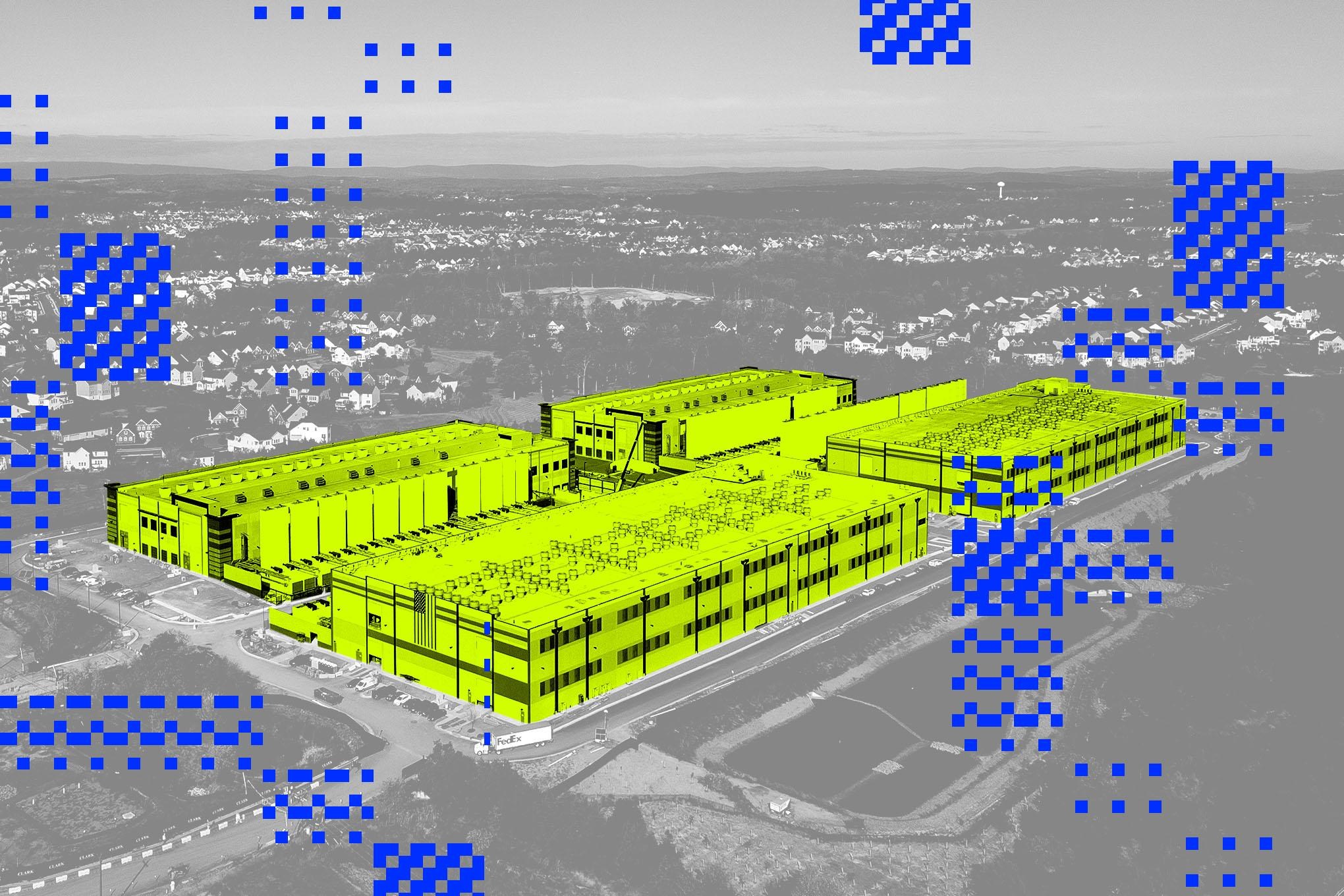
A drone operating over an American suburb on the night of 4 July 2026 helped local authorities issue a $100,000 fine for illegal fireworks, the kind of outcome that would have read as science fiction a decade ago and now reads as a quarterly line item. According to a 10 July 2026 Ars Technica dispatch, the increased aerial surveillance of July 4th fireworks — a coordinated push by police and fire departments — produced the six-figure penalty and underscored how thoroughly unmanned aircraft have entered the routine toolkit of municipal enforcement. The same week, an item circulating on AngelList and Product Hunt feeds argued that the headline monthly U.S. jobs report, the single number that moves global bond markets within minutes of release, does not reflect the true health of the labour market. Two unrelated data points, surfaced within hours of each other. Read together, they describe the same underlying problem: official metrics, whether from a county sheriff or the Bureau of Labor Statistics, increasingly depend on a layer of automated observation that the public has not yet voted on.
This publication finds that the July 4th enforcement wave is a small, legible case study in something larger. Drones are cheap, jurisdiction-friendly, and politically quiet. The headline number on the jobs print is just as cheap, just as jurisdiction-friendly, and just as politically quiet. Both are instruments of compression: they take sprawling, messy reality and reduce it to a single output that fits on a screen, a ticker, or a court summons. The interesting question for 2026 is not whether these tools are accurate in isolation. It is whether the institutions deploying them have earned the trust required to operate at that scale.
The new look of a 4 July patrol
The fireworks enforcement story is the easier of the two to characterise. Ars Technica reported that more police and fire departments used drones over the holiday to catch and deter illegal pyrotechnics, with the $100,000 fine representing the kind of financial consequence that justifies the equipment outlay in a single shift. Drones carry cameras that record continuously, log coordinates automatically, and stream to an operator who may be miles away. A consumer-grade drone costs less than a patrol officer's body camera fleet, and it sees further. For a fire department trying to determine whether a rooftop ignition is a signal flare or a structure fire, the answer is no longer a guess. For a sheriff trying to attribute a mortar to a specific address, the answer is a video file attached to a citation.
The civil-liberties objection is well-rehearsed and worth restating plainly: a drone does not need probable cause to be airborne, and the flight itself generates a record. Manned aerial surveillance, in the form of helicopters, has been litigated for decades. Rotorcraft are loud, expensive, and visible; they announce themselves. A quadcopter at 400 feet announces nothing, and the courts have not yet settled the constitutional question of what its footage can support without a warrant. The July 4th operations are the first widespread test of that question at scale, and they passed without notable judicial pushback. That is a fact about the system, not an endorsement of it.
What a jobs number actually measures
The second thread, an essay circulating on AngelList and Product Hunt feeds, is more abstract but ultimately more consequential. The argument is that the headline monthly U.S. jobs report — the nonfarm payrolls number that drives 30-year mortgage pricing within minutes of release — does not always reflect the true health of the labour market. The piece, distributed on 10 July 2026, did not name a specific month or a specific revision, but the structural critique is familiar to anyone who has watched a strong headline print get followed, weeks later, by a benchmark revision of 80,000 jobs in the opposite direction.
The point is not that the Bureau of Labor Statistics is wrong in any given month. The point is that the survey instrument itself was designed for an economy in which most adults worked a single salaried job, walked into an office, and stayed there for years. The 2026 labour market has a higher share of contract work, platform-mediated gig work, multi-job holding, and immigration-status complexity than the model assumes. The headline number is an estimate with a confidence interval the public rarely sees. The markets trade on the point estimate, the revision is a footnote, and the policy response is built on the footnote.
The compression problem
Both stories sit inside the same structural pattern, and it is worth naming it in plain terms. Governments and institutions are under pressure to produce clean, defensible numbers on demand. The political cost of a missing data point is high; the political cost of a wrong one is low, because revisions are technical and corrections are buried. Drones and payroll surveys are both answers to that pressure, and both are answers of the same type: deploy a sensor, compress the output, ship the file. The sensor is real, the output is real, the file is real. The question is whether the compression step is honest about what it has discarded.
In the case of the fireworks drones, the discarded material is the ambient privacy of a neighbourhood. In the case of the jobs report, the discarded material is the texture of how people actually earn a living. Neither is a conspiracy, and neither is a hoax. Both are the kind of routine, well-intentioned institutional output that, multiplied across thousands of jurisdictions and twelve monthly prints per year, reshapes what the public can know and contest.
What to watch by year-end
The two strands are not yet converging into a single legislative fight, and the sources do not point to one. The more likely trajectory is continued parallel creep: more drones, more refined survey instruments, more revisions that arrive after the policy response. The discrete moments to watch are municipal — a privacy ordinance in a mid-sized city that names a specific drone model and a specific flight ceiling, and a federal one — the next benchmark revision of the prior month's payrolls, which will be parsed for whether the establishment survey has begun to weight gig and contract work more honestly. Neither is a referendum. Both will be presented as housekeeping.
The deeper risk is that the public learns to distrust the compressed outputs without gaining access to the uncompressed ones. A $100,000 fine is defensible if the underlying video is preserved and contestable. A jobs print is useful if the confidence interval travels with the headline. Where those conditions hold, the new surveillance economy functions. Where they don't, the trust deficit compounds, and the next reform debate starts from a worse position than the last one.
Wire provenance
This editorial synthesis draws on the following public wire/social posts:
- https://t.me/angellist
- https://t.me/producthunt
- https://t.me/ars_technica
- https://www.bls.gov/news.release/empsit.toc.htm