Guehi's hamstring leaves Tuchel weighing England's defensive options ahead of Norway test
Marc Guehi is a serious doubt for England's World Cup quarter-final against Norway on Saturday after picking up a hamstring strain in the win over Mexico, leaving Thomas Tuchel to weigh his central-defensive options.
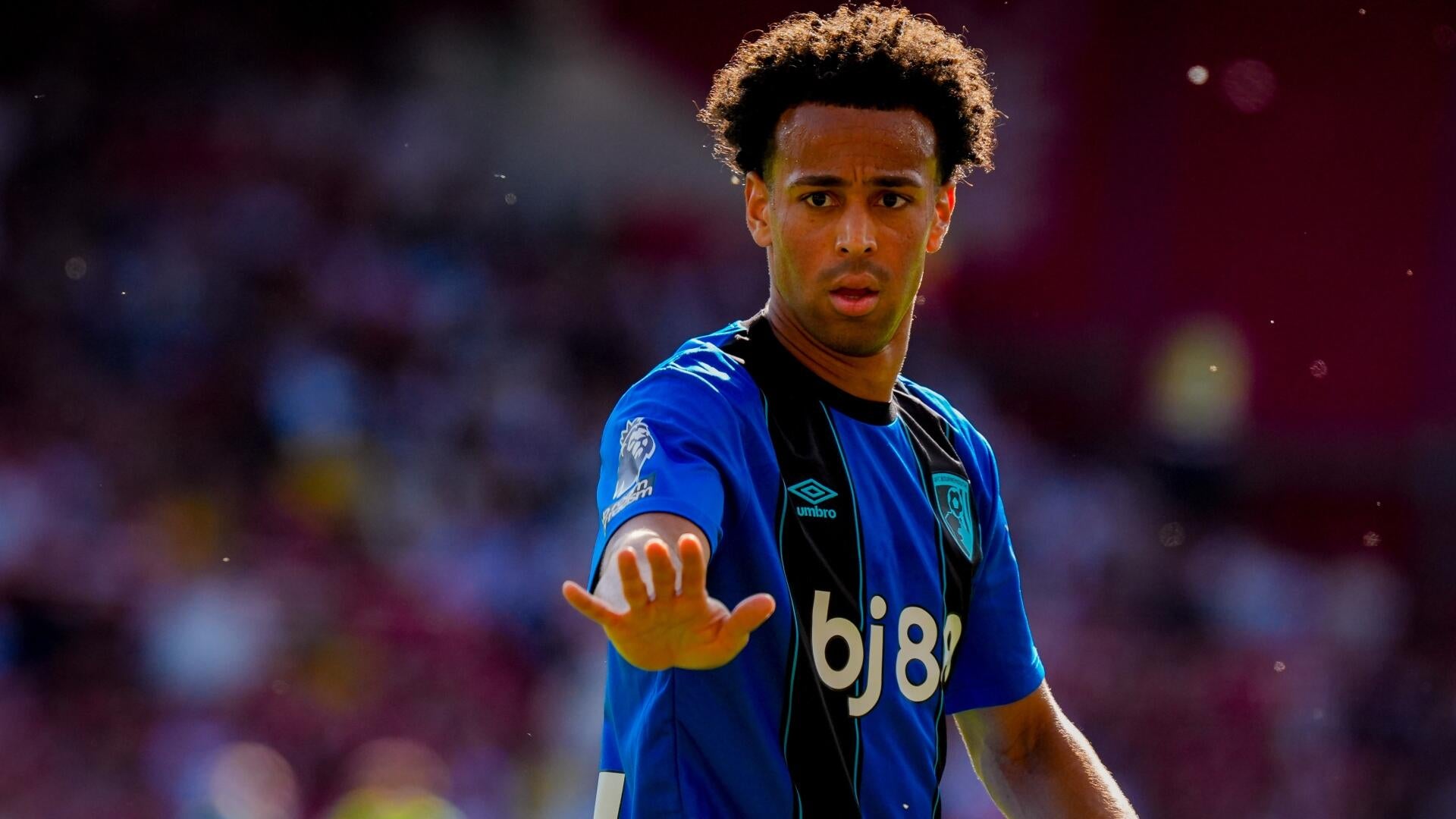
England's World Cup campaign has reached the sharp end, and the timing of the latest fitness concern could hardly be more inconvenient. Marc Guehi, the Crystal Palace centre-back who has emerged as one of Thomas Tuchel's first-choice defenders, is a serious doubt for Saturday's quarter-final against Norway after picking up a hamstring strain in the round-of-16 win over Mexico.
The 25-year-old is being managed carefully by England's medical staff ahead of the meeting in the last eight. The Football Association has not ruled him out, but the language used by both the reporting and the camp is unmistakably cautious: a player dealing with a "slight" strain, in Sky Sports' words "a serious doubt," and in BBC Sport's framing a genuine fitness question rather than a routine knock.
The picture, in short, is one of an England squad that knows exactly what it has — a composed, ball-playing centre-half who allows the back line to step up and squeeze — and is trying to keep him fit for the highest-stakes fixture of the tournament so far.
A doubt, not a decision
The reporting on Guehi's status has converged on a careful middle position. Sky Sports reported on 10 July that the defender was "a serious doubt" for the quarter-final after going down with a hamstring strain in the win over Mexico. BBC Sport, writing the previous evening, was more measured: Guehi is "managing a slight hamstring injury" and "could miss" the Norway game. Neither outlet has confirmed an absence; neither has confirmed his availability.
That hedging reflects how Premier League clubs and national-team medical departments now handle soft-tissue injuries in tournament football. A hamstring strain can be a 48-hour problem or a six-week absence depending on grade; England's staff will be scanning the affected muscle daily rather than working to a public timeline. The honest answer on Guehi is that no one outside the camp currently knows.
For Tuchel, the question is whether to gamble on a player who is not fully fit or to plan for the alternative. With a quarter-final at stake, the calculus tilts toward caution.
What Guehi actually gives England
It is easy to forget, watching England negotiate a tournament, how thin the pool of genuinely top-tier English centre-backs has been across the last decade. Guehi's emergence — first at Chelsea's academy, then at Swansea on loan, and over the past three seasons at Crystal Palace — has coincided with England's quiet transition from a side that defended deep and absorbed pressure to one that builds from the back with intention.
Against Mexico, he was tasked with stepping into midfield to break lines and starting play from the left of the centre-back pairing. That role is not interchangeable. Replacements can offer different attributes — aerial presence, recovery pace, left-foot distribution — but the combination of all three is rarer than the position's prominence on a team sheet suggests.
The worry for England is not that they lack a back four. It is that the specific match-up against Norway — physical, direct, comfortable in transition — rewards precisely the kind of defending Guehi has made his trademark: front-foot, calm under the first ball, quick to recover when the second phase arrives.
The alternatives on the table
Tuchel has used the tournament to rotate sparingly rather than experiment, which means the shortlist to replace Guehi is small and familiar. Ezri Konsa and Levi Colwill have both featured at centre-back during the group stage; John Stones remains an option when fit; the right-sided Eric Dier-shaped role that has come and gone from international football can also be dusted down for a one-off.
None of those names, however, would be a like-for-like swap. Konsa offers physicality and Premier-hardened positioning; Colwill, still under 23, brings ball-progression but a thinner injury ledger of tournament minutes; Stones, when available, brings experience and a passing range that no one else in the squad quite matches, but the question of whether he can play three matches in eight days is itself unresolved.
What Tuchel almost certainly will not do, on the available evidence, is break the back three he has used selectively across the tournament. England have built tactical coherence around a back four with inverted-full-back patterns; disrupting that for a single knockout game, on short notice, carries its own risk.
What is still unknown
The single most important fact about England's quarter-final — whether Guehi plays — is also the one the public reporting does not yet answer. Sky Sports called him a serious doubt; BBC Sport called him a player managing a slight strain. Both can be true at once: a grade-one strain that responds to treatment in time, or one that does not.
What the sources do not specify is the grade of the strain, the scan results, or whether Guehi has trained with the group in the days since the Mexico win. Until England name their side, the central defensive question is unresolved.
The deeper uncertainty is tactical. England have looked more convincing in this tournament when they have controlled territory and tempo rather than chasing games. Replacing a player as central to that approach as Guehi risks nudging the side toward the kind of reactive football they have so far avoided. Tuchel's job over the next 48 hours is to keep the architecture intact while protecting the muscle that, on Saturday, may or may not be ready to run.
Desk note: Monexus framed this as an open fitness question rather than a confirmed absence, matching the hedging language used by both Sky Sports and BBC Sport in the reporting window. No medical verdict has been issued publicly.