India opens UN Security Council bid for 2028–29, with Washington as the swing voter
External Affairs Minister S. Jaishankar will launch India's campaign for a non-permanent Security Council seat next week. The harder contest is the permanent one New Delhi keeps deferring to mention.
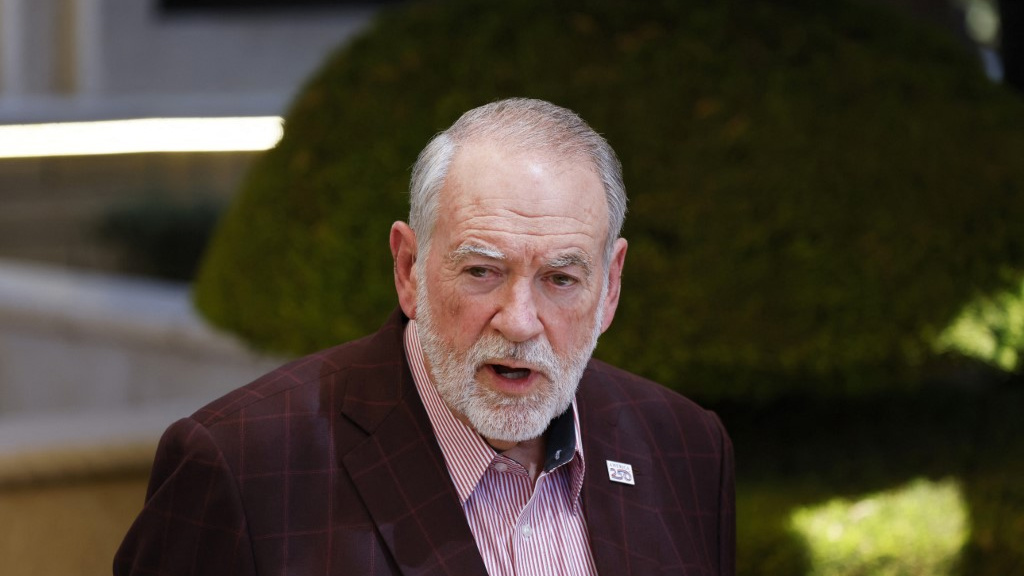
On 11 July 2026, External Affairs Minister S. Jaishankar confirmed he will travel to New York next week to formally open India's campaign for a non-permanent seat on the United Nations Security Council for the 2028–29 term. The launch event, scheduled at the council's mid-month rhythm, will be the first moment the world's most prolific council aspirant of the past two decades publicly lays out its case to the General Assembly.
The campaign is the easy part. India has won a non-permanent seat twice before (in 1950–51 and 2024–25), and the South Asian constituency at the UN, the so-called "Group G" slot reserved roughly for the Indian Ocean rim, is widely treated as New Delhi's to lose. What makes this round worth watching is where Jaishankar sits during the surrounding week: bilateral meetings on the margins of the General Assembly, where the campaign's diplomatic subtext will do most of the real work.
The seat is the headline. The reform is the subtext.
Every Indian minister who has stood at the UN since 2011 has used the phrase "rules-based international order." Few have been clearer than Jaishankar that the order, as currently drawn, no longer reflects the distribution of power. New Delhi's permanent-membership case rests on three structural facts that even its Western interlocutors now concede: India will be the world's third-largest economy by purchasing-power-parity inside this decade, it fields the second-largest standing military on the Asian mainland, and it runs the world's largest standing electoral exercise without significant fraud dispute.
What is new in 2026 is not the argument but the venue. With the African Union's two permanent seats still caught between Algiers, Abuja and Addis Ababa over which capitals should hold them, and Brazil's reform push stalled in the 2025 General Assembly session, the council's 2026 debates have quietly become an Indian-led procedural exercise. It is, in effect, a long campaign for the harder prize wearing the mask of an easy one.
The vote that matters is in Washington, not New York
The non-permanent seat will be decided by simple majority among the 193 General Assembly members in June 2027, and India is not going to lose that vote. The sharper contest, the one Jaishankar will be having on the margins, is the consent of the United States. Washington has, since 2005, signed no fewer than four bipartisan letters supporting India's permanent-seat aspirations; it has, in the same period, declined to translate that text into the only negotiating document the council recognises, the draft UN Charter amendment.
The reason is not Delhi's behaviour. It is the arithmetic. Any permanent-seat expansion faces a "P5 veto" inside its own procedural rules: each of the five current permanent members must ratify, and any single "no" blocks the change. Beijing's signal on an Indian permanent seat has been, at best, ambiguous since the 2020 Galwan clashes. Moscow has been more forthcoming, partly as a hedge against Washington's lean toward Tokyo. France has, traditionally, been the second European P5 backer of Indian membership, with the United Kingdom oscillating. The holdout list is therefore effectively Washington-and-Beijing, which means the Indian permanent-seat case has, in 2026, exactly one swing vote it can plausibly move: the US administration of the moment.
Jaishankar's New York week will read to the wire services as a standard "consultations on bilateral and multilateral issues of mutual interest." What it will actually be, if recent precedent holds, is a quiet effort to convert the next round of US-India joint statements into language closer to a draft UN Charter amendment than to the customary hortative paragraph.
What the Global South hears, and what it doesn't
India's pitch to the African and Latin American blocs, in public, centres on a familiar claim: the council is unrepresentative of the world it now governs, and any non-permanent rotation that cedes those two African seats to African capitals is a down-payment on the larger reform. In private, the pitch is simpler: New Delhi would, as a permanent member, be a different kind of permanent member than any of the current five, a non-aligned voice on questions of sanctions and intervention, and a non-dollar-centric voice inside the P5 on questions of financial architecture.
The second claim is the one the Global South receives most warmly. The first claim is the one it does not, on the record, endorse. No African Union communique since 2020 has named India as the natural Asian anchor of the next round of expansion; the Sirte and Ezulwini consensus statements, both reiterated at the 2025 UNGA, still name Brazil, Germany, Japan and two African states together and stop there. India does not currently appear in that quartet. New Delhi is asking, for now, to be added to a list that is, itself, not being delivered. That is the structural bind the 2026 campaign will have to surface without naming.
Stakes, and the next eighteen months
If India wins the 2028–29 seat cleanly, the only open question is the size of the winning margin, the durable impact on the council's agenda is modest. The harder imprint will be on the August 2026 Security Council open debate on the working methods of the subsidiary bodies, which New Delhi has already requested be reframed under this year's elected African presidency of the council. That debate is the procedural lever the permanent-seat campaign has been waiting on: it is where the council decides whether reform stays hortative or becomes operational.
The next eighteen months will therefore be read less by India's votes than by what New Delhi, in collaboration with Brasilia, Abuja and Paris, can put on the council's working methods agenda. The wire's instinct will be to cover the campaign. The campaign's purpose is what happens after it, and on that point the available sourcing remains thin.
Desk note: Monexus is covering the launch through the publicly stated Indian government line and wire summaries; full bilateral meeting readouts and the August working-methods debate agenda will be the next test of how far the campaign has actually moved.
Wire provenance
This editorial synthesis draws on the following public wire/social posts:
- https://t.me/LiveMint/