Tehran's Saturday deadline: a public statement on Hormuz, and a quiet rebuild next door
Washington wants Tehran on the record by Saturday that the Strait of Hormuz is open and that commercial shipping will not be fired on. Satellite imagery now circulating suggests Iran is also rebuilding facilities struck earlier in the year.
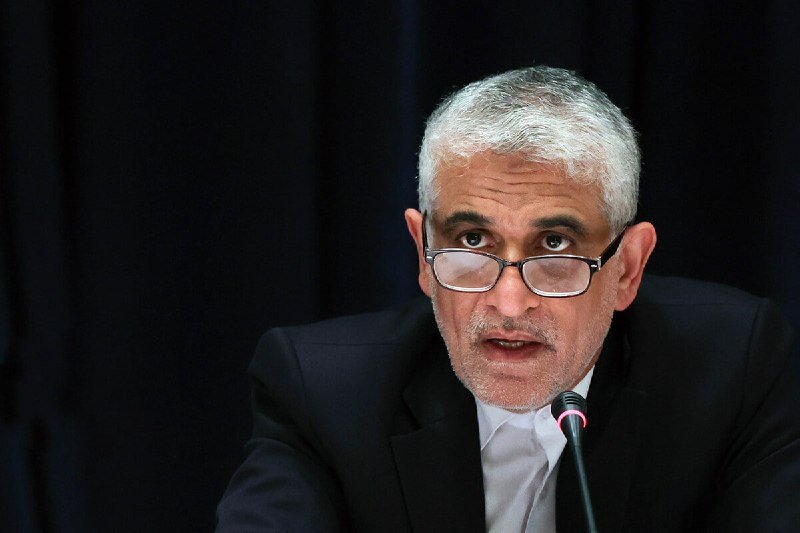
By Friday evening Washington time, the Trump administration had given Tehran until Saturday to do something it has conspicuously refused to do since Iranian forces began targeting commercial traffic in the strait: say it out loud, in public, in writing. U.S. officials told reporters on Friday that Iran must issue a public statement confirming the Strait of Hormuz is open and committing to stop firing on commercial ships, according to Axios correspondent reporting circulated at 21:36 UTC on 10 July 2026.
What makes the demand unusual is its form. It is not a ceasefire request, not a sanctions waiver, not a prisoner exchange. It is a request for a sentence. The administration wants the words on the record, attributable, quotable, and verifiable from a podium in Tehran. The bet is that a public commitment creates a different cost structure for a future attack than silence ever did.
The pressure is being layered, and the timing is not accidental. The same Axios cable carried by Middle East Spectator and Tasnim before it reached wider channels reports that the Saturday deadline lands the same day a new round of satellite imagery is circulating, imagery that suggests Iran may be attempting to rebuild nuclear facilities struck earlier in the conflict. The framing on Iranian state-adjacent wires is that the photographs may be read as a possible violation of the memorandum of understanding Tehran signed under duress earlier this year. The wording of that memo has not been made public in full, but the existence of a written commitment gives Washington a standard to point at.
The form of the demand
Diplomats and sanctions lawyers will recognise the move. It is the same logic that produced the "binding public commitment" language in the original JCPOA framework of 2015 — the idea that Iran's compliance had to be observable to Iranian domestic audiences, not merely to inspectors in Vienna. A private assurance to a U.S. envoy is recoverable in Iranian politics. A televised statement read by a Foreign Ministry spokesman is not.
This is also why the demand specifies the channel. A statement on Iranian state television, or read at a Foreign Ministry briefing in Tehran, locks the regime to its own words in front of its own constituencies. Iranian negotiators have historically tried to thread this needle with "technical" commitments delivered to international monitors, commitments that can be denied or reinterpreted at home. The Trump administration is, in effect, asking Tehran to abandon that wiggle room.
What the satellite imagery actually shows
The reporting that surfaced at 22:24 UTC on 10 July through OSINT channels pointed to imagery suggesting reconstruction at sites associated with Iran's nuclear programme. The thread framing was careful: not "Iran has rebuilt," not "production lines are operating," but "signs" and "raising questions as to whether." That hedging matters. Commercial satellite providers and open-source analysts have a track record of catching the moment construction resumes at a struck facility — earthworks, new roofing, fresh concrete, vehicle tracks — long before they can confirm what the facility is producing.
Two structural facts follow. First, even a modest rebuild under active sanctions and active surveillance is itself a signal: someone inside the Iranian system has decided the cost of rebuilding is lower than the cost of being seen to have stopped. Second, the public narrative inside Iran still treats the original strikes as a humiliation that required retaliation in kind. The Hormuz campaign against commercial shipping — crude, deniable, episodic — has been read in Washington as that retaliation. A public statement confirming the strait is open would, in Tehran's domestic politics, amount to conceding that the retaliation failed.
Why Saturday, and what comes after
Saturday is a US business day but a Friday in the Islamic Republic. If Tehran issues a statement, it will most plausibly be timed for an evening audience in Iran. If it does not, the U.S. calendar offers limited further patience: shipping insurance rates are repriced weekly, oil traders have already priced a Hormuz risk premium into August contracts, and allied naval task forces in the Gulf have begun coordinating escort protocols that themselves raise the temperature.
The counter-reading, harder to dismiss than it might appear, is that Washington is asking for the wrong concession. Iranian decision-makers, reading the same satellite imagery and the same political signals, may calculate that any public climbdown on Hormuz makes the nuclear rebuild impossible to defend at home — so they refuse, and the strait stays dangerous. A second reading: the U.S. is using the Hormuz demand as the visible lever precisely so it can move on the nuclear file without appearing to have traded away the shipping issue. A statement on Hormuz becomes the diplomatic chip spent to buy room on enrichment.
What remains contested
The reporting is not yet consistent on whether Iran has responded at all. Iranian state media has carried the Axios-sourced demand in translation, which is itself a signal — denial-by-silence would have been simpler. What the sources do not specify is the text Iran would have to read to satisfy the U.S., nor whether Washington has defined what counts as compliance. A statement that says the strait is "open to civilian traffic in line with international law" is not the same sentence as one that renounces attacks on commercial shipping. The difference between the two is the difference between a de-escalation and a trap Iran is unlikely to walk into willingly.
The narrower picture is that two clocks are running at once. One counts down to whatever Tehran says, or does not say, on Saturday. The other counts the days between a construction site being photographed and whatever is built there next becoming operational. Neither clock is public. Both are doing the diplomatic work.
Desk note: Monexus frames this as a paired crisis — a public-statement demand on a shipping lane and a satellite-imagery dispute over a struck nuclear site — rather than as two separate stories. The wire consensus treats the Hormuz deadline as the lead; the structural story is that the two are being run simultaneously, by design or by accident, and the diplomatic weather on Saturday will hinge on which Tehran reads as more existential.
Wire provenance
This editorial synthesis draws on the following public wire/social posts:
- https://t.me/osintlive
- https://t.me/Middle_East_Spectator
- https://t.me/wfwitness
- https://t.me/tasnimplus