Tehran's war-crimes docket and Washington's southern-Lebanon call: a single July day of pressure on the Israeli file
On 11 July 2026, Iran's judiciary chief told international lawyers to press war-crimes cases, while Israeli media reported Washington had asked Israel to pause sensitive operations in southern Lebanon. The two currents sit on the same diplomatic fault line.
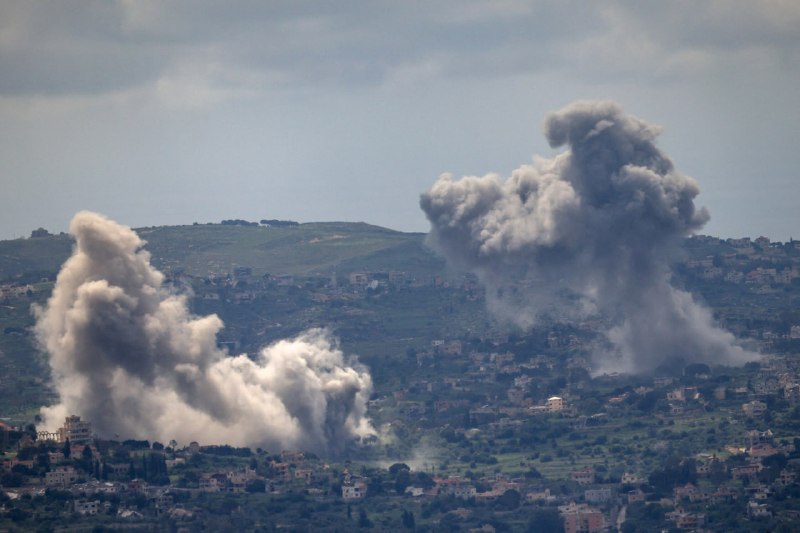
At 08:20 UTC on 11 July 2026, Iran's judiciary chief told a delegation of international lawyers and jurists in Tehran that "war criminals should be punished and pay damages," and that the case would be pursued "diligently." By 07:21 UTC the same morning, Israeli public broadcaster Kan had reported that the United States had asked Israel to stop sensitive operations in southern Lebanon. Four hours and a thousand kilometres apart, two messages from two capitals converged on a single diplomatic fault line: the legal and operational pressure now bearing on the Israeli file.
The conjunction is not accidental. Tehran is constructing a legal record in public, with foreign jurists as witnesses; Washington is, separately, tightening the room in which the Israeli military operates on its northern border. Read together, the two moves suggest a coordinated tightening, even if the choreography is loose and the principals will not say so on the record. Either reading has consequences for the war in Gaza, the ceasefire track in Lebanon, and the domestic politics of accountability on all three sides.
The Tehran docket
The headline of the judiciary meeting, carried in identical wording by Tasnim and Mehr News at 08:14 and 08:20 UTC, was the phrase itself: war criminals should be punished and pay damages. The head of Iran's judiciary, in his meeting with the group of international lawyers and jurists, "emphasised the diligent pursuit of the war crimes case," according to both outlets. The phrasing matters. It is the language of state-to-state claims commissions, not of headline diplomacy; it positions Tehran as the convener of a legal process with external counsel attached, rather than the issuer of a political denunciation.
Iranian state outlets have, over the preceding months, framed the work of such meetings as the preparatory stage for formal complaints lodged with international bodies, though the source items for 11 July do not name a specific forum, docket number, or filing date. What they do establish is the diplomatic staging: a sitting head of judiciary, an assembled panel of foreign jurists, and an explicit reference to damages. That is the scaffolding of a claim, not a press release. Whether the panel includes counsel recognised by Iranian, Swiss, or other protective-power channels, and whether any filings flow from the meeting, is not specified in the available reporting.
The southern Lebanon pause
The second current of the morning moved in the opposite direction. Kan, the Israeli public broadcaster, reported at 07:21 UTC that Washington had asked Israel to halt sensitive operations in southern Lebanon, and that "the political level" of the Israeli leadership had issued a corresponding instruction to the army. Tasnim's English service relayed the same report at 06:56 UTC under the headline that the United States had asked Israel to stop sensitive operations in southern Lebanon. The Israeli military did not, in the available items, publicly confirm or deny the operational pause; the reporting chain runs from Kan to international wires to Iranian state media, with no Israeli spokesperson statement attached.
The substance of the request, as relayed, is the deferral of operations whose disclosure or fallout Washington judges politically costly at the present moment. What counts as "sensitive" is not defined in the source items. The omission is itself the story: it leaves the door open for continued action under a different classification, and it tells outside observers that the United States is managing the tempo of Israeli operations rather than their existence. That distinction has been the architecture of US-Israel operational coordination for years, but each new iteration narrows the set of operations that can be carried out under daylight, and widens the trust deficit when operations become visible after the fact.
A coordinated squeeze, or two parallel pressures?
The Western wire read of this pair of dispatches is straightforward: Washington is using its leverage to dampen escalation on the northern front while a Gaza ceasefire architecture is negotiated, and Tehran is opportunistically building a legal file against Israel to insert itself into any eventual settlement. The Iranian-state read, as carried by Tasnim and Mehr, inverts the moral order: a crime has been committed, a judicial process is the appropriate response, and outside powers should not obstruct the pursuit of accountability. Both readings are coherent. The question is whether they describe the same event or two events with superficially aligned timing.
The evidence on the public record supports a third framing: a looser coordination in which Washington is buying time on one track and Tehran is consuming it on another. The US pressure on Israel's southern Lebanon operations and the Iranian judiciary's war-crimes docket do not require a phone call to align. They require only that both sides read the same calendar, and that the calendar now contains ceasefire talks, prisoner exchanges, and the political exposure of senior officials. Under that reading, the two moves are complementary rather than coordinated: one narrows the operational space, the other widens the legal space, and the space between them is where the next phase of the conflict will be fought.
What the sources do not yet show
Three things remain genuinely uncertain on the morning of 11 July. First, the composition of the international lawyers' panel meeting the head of Iran's judiciary is not specified in the available items; it is not clear whether the jurists are acting in any official capacity, what jurisdictions they are drawn from, or whether the meeting will produce a public document. Second, the operational scope of the US-requested pause in southern Lebanon is undefined: "sensitive operations" is a category that can cover a single targeting cycle or a class of activity. Third, no Israeli government spokesperson is on the public record in the source items either confirming or rejecting Kan's reporting, which leaves the political instruction described by Kan in a curious limbo of acknowledged-by-default and unconfirmed-by-statement.
These gaps matter because the policy weight of both moves depends on details that the morning's dispatches do not contain. A panel of named jurists from three or more jurisdictions changes the political optics of a Tehran meeting considerably; a narrowly defined pause changes the strategic reading of a Washington intervention considerably; a formal Israeli acknowledgment of the request would close the gap between "reported" and "stated." None of those details is present in the wire traffic so far.
The stakes, by autumn
If the pattern of 11 July consolidates, three trajectories follow into the late summer. The legal track in Tehran produces filings, amicus briefs, or formal communications to international bodies, and the international lawyers' panel becomes a recurring venue rather than a one-off meeting; the political cost of any future Israeli operation in southern Lebanon rises, because each visible action now sits against an explicit, reported US request for restraint; and the diplomatic space between Washington and Tehran narrows further, with both capitals now invested in the same outcome on different timelines.
The counter-reading is that none of this holds. The Tehran meeting is a photo opportunity with foreign jurists whose names do not appear in the Western legal directories; the Kan report describes a request rather than a binding instruction; and the summer's headlines are still more likely to be written by events on the ground in Gaza and Lebanon than by meetings in courtrooms or capitals. That reading is also coherent, and the source items for 11 July do not settle the contest between them. They do, however, place both readings on the record at the same moment, which is itself the diplomatic fact of the day.
Desk note: Monexus carries the Iranian state framing of the war-crimes meeting at the same weight as the Israeli public broadcaster's report on the US request to pause southern Lebanon operations. Both rest on the source items' own reported language; neither is paraphrased into a stronger claim than the wire traffic supports. The legal-process and operational-restraint tracks are presented in parallel, not as a single coordinated sequence, because no source item in the morning's traffic establishes that coordination.
Wire provenance
This editorial synthesis draws on the following public wire/social posts:
- https://t.me/tasnimnews_en
- https://t.me/mehrnews
- https://t.me/tasnimnews_en
- https://t.me/JahanTasnim
- https://t.me/tasnimnews_en
- https://t.me/JahanTasnim
- https://t.me/mehrnews
- https://t.me/tasnimnews_en
Follow the event.
These dated source records provide context. They do not retrospectively verify this archive article.
Separate what the nuclear watchdog reported from what it could not determine after the June 2025 strikes.