Israeli drones hit Kfar Tebnit as the southern Lebanon ceasefire truce keeps fraying
Two Israeli drone strikes hit the Nabatieh-area town of Kfar Tebnit early Saturday, the latest in a slow pattern of violations that has kept the ceasefire nominally alive while reshaping the ground reality in the south.
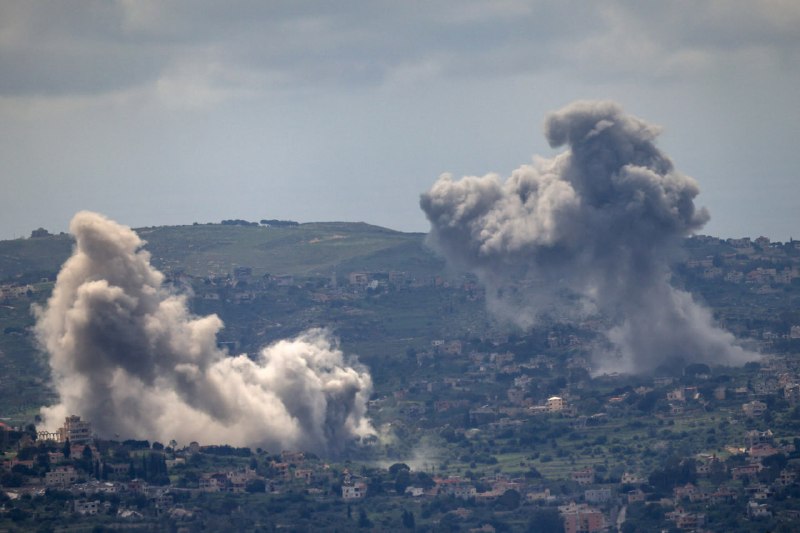
Two Israeli drone strikes hit the southern Lebanese town of Kfar Tebnit on Saturday morning, according to Lebanese sources carried by PressTV, in what residents described as a continuation of a calibrated, low-volume campaign of aerial operations that has persisted well past the formal ceasefire. The strikes landed at roughly 07:45 UTC on 11 July 2026, the broadcaster said, citing local reporting on the ground; the Israeli military has acknowledged conducting fresh attacks in southern Lebanon in recent days but did not, as of wire time, issue a strike-by-strike confirmation for Kfar Tebnit specifically. The pattern, not the payload, is the story.
The November 2024 ceasefire arrangement was supposed to end hostilities between Israel and Hezbollah and pull Israeli ground forces back from the border belt. Twelve months on, the guns have not stopped; they have thinned. Aerial activity, drone-launched hits, and standoff strikes continue on a near-daily rhythm, and Israeli forces remain deployed inside Lebanese territory in a posture the army describes as defensive. For Beirut and the cluster of villages along the Litani, the difference between a war and a slow-motion war is a matter of debris volume, not air traffic.
What actually happened at Kfar Tebnit
Kfar Tebnit sits in the Nabatieh governorate, between the Litani and the line of towns that bore the brunt of 2024's full-scale Israeli campaign in the south. According to the Lebanese accounts aggregated by PressTV, the first drone strike hit a structure in the town centre and the second followed within minutes. The broadcaster framed the strikes as a fresh breach of the ceasefire rather than a continuation of it, and pointed to prior drone activity that it says has produced a near-daily drumbeat of incidents in villages from Tayr Harfa to Khiam. Casualty figures from the scene were not specified in the initial wire; reporters on the ground have been prevented from accessing parts of the south by ongoing military operations, which itself is part of the story.
The Israeli military's public line, as relayed by mainstream Israeli press in the weeks before this strike, is that operations inside Lebanon target militants and infrastructure used to reconstitute Hezbollah's southern network, and that the operations are carried out in coordination with the ceasefire's terms as understood by Jerusalem. PressTV, for its part, presents the same activity as a sustained violation. Both framings can be true at once, depending on where you draw the line between a permitted precision strike and a prohibited attack on Lebanese territory.
The ceasefire that refuses to die
What is striking about the July 2026 picture is how durable the arrangement has been on paper despite how porous it has become in practice. The ceasefire's formal architecture, mediated by the United States and France, set out a phased withdrawal, a buffer zone inside Lebanon policed by the Lebanese Armed Forces, and a disarmament track for Hezbollah weapons south of the Litani. None of those tracks has completed. The Israeli side has not fully withdrawn; the buffer zone is enforced unevenly; the disarmament talks, such as they are, are stuck on the question of what counts as an acceptable Hezbollah force posture.
The result is a hollowed-out truce: the language of the November arrangement continues to govern diplomatic traffic, while the operating reality is one of intermittent air operations, periodic flare-ups, and a southern Lebanese civilian population whose displacement status has effectively frozen in a transitional limbo. Villages that were supposed to be repopulated by the spring remain, in many cases, half-empty, with residents citing the near-daily presence of Israeli drones as the reason for not returning.
The asymmetry that never quite went away
The deeper structural point is that the war in the south was always less a discrete campaign than one front of a wider Israeli campaign against Iranian-aligned Hezbollah as a force projection capability. Strikes at Kfar Tebnit, whether or not they individually target specific weapons infrastructure, fit into a logic of degrading reconstitution capacity: the smaller the threat the next round has to deal with, the argument goes, the smaller the next round. That logic rewards patience, incommensurate with Beirut's appetite for the status quo, and translates into a pattern of slow aerial pressure that is collectively indistinguishable from a slow-burn war.
The counterweight is the Lebanese state's projection capacity. Beirut cannot match Tel Aviv airpower and does not try to; it relies on the diplomatic architecture of the ceasefire, on UNIFIL reporting, and on intermittent international coverage of civilian harm as its principal constraint mechanisms. That leverage is real but degrades in direct proportion to how quiet the news flow looks from a Western capital. When a town does not trend for three weeks, the village elders note, the diplomatic pressure on Jerusalem thins.
What to watch next
Two markers in the next two weeks will tell you whether July's pattern hardens into something the ceasefire architecture cannot absorb. The first is whether the Israeli military publishes a more granular, strike-by-strike accounting of the Kfar Tebnit operation, or whether it stays inside the aggregate "operations in southern Lebanon" framing it has used for most of 2026. Specific acknowledgment would amount to a public claim that the activity is consistent with the ceasefire; silence keeps the ambiguity that lets the truce continue. The second is the Lebanese government's posture at the UNIFIL-facilitated tripartite meeting later this month, where Beirut has indicated it intends to file a formal complaint over recent incidents. A formal complaint that is followed up is a baseline; one that is walked back is the price of diplomatic continuity.
Casualty numbers from Kfar Tebnit remain unsourced in the initial wire, and no Israeli spokesperson has named the specific target by afternoon UTC. The ambiguity at the centre of this story, what was actually hit and whether the Israeli frame or the Lebanese frame will end up shaping the international read, is the part that the next 48 hours will resolve.
Desk note: Where Israeli-English wire reporting tends to lead with "targeted Hezbollah infrastructure" framing and Lebanese sources lead with "civilian casualties" framing, Monexus carries both and notes the dispute plainly rather than picking a side. The structural point, that a ceasefire now measured in months of low-volume aerial activity rather than in months of silence, holds either way.
Wire provenance
This editorial synthesis draws on the following public wire/social posts:
- https://t.me/presstv/