Katz vows Gaza playbook for southern Lebanon as Israel widens its demolition doctrine
Israel's defence minister says southern Lebanon will be reduced by the same model already applied in Rafah, that 200,000 displaced villagers will not return for a long time, and that the campaign in Gaza is still expanding.
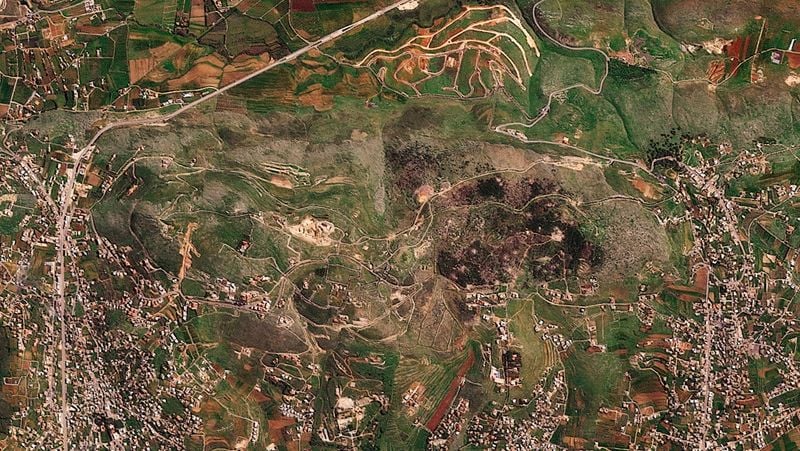
On 11 July 2026, Israel's Defence Minister Israel Katz sat for an interview in which he laid out, in unusually explicit terms, the operational logic now driving two simultaneous fronts. Southern Lebanon, he said, would be treated the way Rafah was treated. The 200,000 former residents of southern Lebanon would not return home for a very long time, he added, because roughly half of their houses had already been destroyed. In Gaza, he said, Israeli forces were not just dug in but expanding: present in the heart of the strip, operating across more than 60 percent of its territory, with no plan to withdraw.
The remarks, circulated in English by Israeli political-channel aggregator Clash Report and consistent with Katz's earlier public posture, do more than update a battlefield briefing. They describe a doctrine: that above-ground civilian infrastructure inside an active combat zone is itself a military target, that targeted killings are the lever the other side cannot tolerate, and that the only durable outcome is to make return physically impossible.
The demolition logic
Katz's framing turned on a single operational claim. "The buildings above ground are part of the threat," he said. "They are what allow the enemy to come back every time. That is why they must be systematically demolished." The phrase "systematically demolished" matters more than the geography. It signals that the Israeli campaign is no longer being measured in airstrikes and raids alone, but in the deliberate erasure of the housing stock, schools, mosques, and municipal buildings that allow a population to reconstitute itself after combat ends.
In Gaza, Katz framed the campaign as still in escalation, not de-escalation. "We are in the heart of Gaza," he said. "Not only are we still in Gaza, but our presence is expanding rather than shrinking. We have already gone beyond 60 percent of the territory." The 60 percent figure, presented in the interview as a milestone of physical occupation rather than a line on a map of influence, recasts the conflict's tempo. The political signalling from Tel Aviv through much of 2025 and into 2026 had alternated between talk of phases and talk of residual control; Katz's language cuts through that ambiguity.
The Lebanon playbook, named out loud
It was on Lebanon that Katz was most candid about method. "I said that Southern Lebanon would become Gaza," he said. "We would apply the Rafah model. We would destroy everything there. We would deal with them in exactly the same way." The reference to Rafah, the southern Gaza city where Israel conducted one of the war's most destructive ground operations in 2024, was offered not as a warning but as a template.
The human figure he attached to that template was stark. Of the roughly 200,000 residents displaced from southern Lebanese villages since hostilities escalated, he said, "about half of their homes have already been destroyed," and the remainder will not be returning "for a very long time." That formulation, public and on the record from a sitting defence minister, marks a deliberate departure from the language Israel has typically used around Lebanese border villages, which has tended to emphasise temporary evacuation and the threat posed by Hezbollah infrastructure.
A second line from the same interview underlines what the demolition doctrine is meant to do politically. "One of the very first conditions they raise whenever negotiations begin," Katz said of Hezbollah and Hamas interlocutors, "is that the targeted killings must stop. This Israeli method drives them crazy." The phrase carries its own argument: that the killings themselves, of mid-level commanders and the cadre that rebuilds between wars, are a strategic asset whose tempo should not be paused for diplomacy.
What the doctrine does to the political map
Read together, the remarks sketch a coherent operational programme. In Gaza, an expanding ground footprint combined with systematic demolition of above-ground civilian structures. In Lebanon, the same template applied to a population Israel has long accused Hezbollah of using as a human shield, with the explicit end-state of making return impossible rather than merely delayed. Across both, a refusal to pause targeted killings because, in Katz's framing, the pause is itself what the adversary wants.
The diplomatic consequences are immediate. Mediators in Cairo and Doha have spent months trying to sequence a Gaza ceasefire around a phased Israeli withdrawal and prisoner-exchange framework; an Israeli minister publicly committing to an expanding occupation of more than 60 percent of the strip, and to systematic demolition of above-ground structures, narrows the space in which such a deal can be staged. On the Lebanese track, the explicit naming of the Rafah model, combined with the assertion that 100,000 or more houses have already been destroyed, raises the cost of any future ceasefire architecture that does not include a reconstruction timetable and a return mechanism, both of which Katz's remarks appear designed to foreclose.
There is a second-order effect too. By tying the Gaza and Lebanon campaigns to a single doctrinal vocabulary, Katz is signalling to his domestic audience that what is happening in the north is not a separate, contained border campaign but the same war waged by the same method. That collapses the political case for distinguishing between "operations against Hezbollah" and "operations against Hamas," and it tightens the ceiling on any future Israeli government that wants to dial back either campaign.
The contested ground
Two readings of Katz's remarks compete, and a fair account has to register both. The first, which sits behind most Israeli-government framing, is that Hezbollah spent two decades militarising southern Lebanese villages, that returning residents would simply be re-absorbed into that military infrastructure, and that the destruction is therefore a defensive necessity rather than a punishment of civilians. Under that reading, Katz's candour is a virtue: he is being honest about the cost of the operation, not signalling intent.
The second reading, which has carried weight across UN agencies, Red Cross statements, and a string of European foreign ministries, is that the deliberate destruction of civilian housing on the scale Katz is now publicly describing, carried out without a credible plan for resettlement or compensation, is the operative definition of forcible transfer under international humanitarian law. The International Committee of the Red Cross and UN OCHA have both flagged patterns of destruction across the Lebanese border zone that, in their assessment, go beyond what military necessity requires. From that vantage point, Katz's remarks are not a candid explanation of necessity; they are an admission of policy.
Monexus does not arbitrate between those readings. The defence minister's own words, however, narrow the distance between them. "Systematically demolished," "apply the Rafah model," "they must stop" of targeted killings: each of these is a policy commitment, not a battlefield detail, and each of them is on the public record.
What remains uncertain
The sources do not specify how much of the Israeli footprint in Gaza is described by the 60 percent figure as ground occupation versus air and buffer-zone control, and they do not specify whether the demolition tempo in southern Lebanon is being executed by the IDF engineering corps, by Israeli contractors, or by the airstrike campaign alone. The casualty toll on the Lebanese side, and the share of the 200,000 displaced who remain inside Lebanon versus those who have crossed into Syria, are not addressed in the material available. What Katz's remarks do confirm, unambiguously, is the operational doctrine those figures will eventually be measured against.
Desk note: Monexus has treated Katz's remarks as a primary statement of Israeli policy intent, not as commentary on it. The demolition doctrine is reported in the defence minister's own words, with the contested legal characterisation flagged in a dedicated section rather than smuggled into the lede. The 200,000-displaced and 60-percent figures are sourced directly to the 11 July 2026 interview as circulated by Clash Report.
Wire provenance
This editorial synthesis draws on the following public wire/social posts:
- https://t.me/ClashReport
- https://t.me/ClashReport
- https://t.me/ClashReport
- https://t.me/ClashReport
- https://t.me/ClashReport