Kyiv struck again: a Russian missile barrage hits the capital before dawn
A pre-dawn Russian missile attack on Kyiv injured at least six people across several neighbourhoods, the latest in a resumed aerial campaign against the Ukrainian capital.
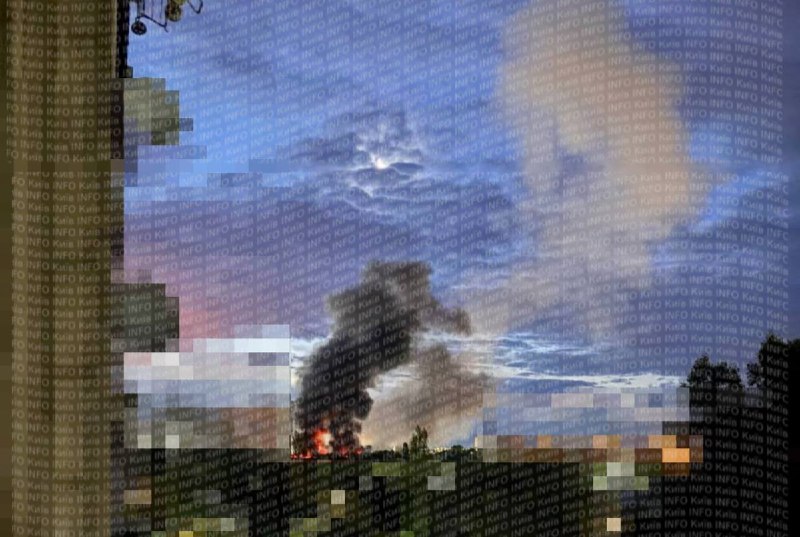
Air-raid sirens sounded across Kyiv at 00:47 UTC on 11 July 2026. Within minutes, witnesses reported explosions across the Ukrainian capital, and smoke was visible over several districts. By 03:20 UTC, the mayor of Kyiv had confirmed that at least six people were injured in a Russian missile attack that struck multiple neighbourhoods of the city.
The strike is the latest instalment of a campaign that has, by mid-2026, become a familiar rhythm: a barrage timed for the small hours, the city's air-defence umbrella engaged, debris or direct hits landing in residential areas. Each round resets the same political conversation in Kyiv and in Western capitals — about Patriot interceptors, about Western production lines for missiles and shells, about the political ceiling on long-range strikes inside Russian territory. The Russian framing, when offered, treats the barrages as retaliation for Ukrainian strikes on Russian soil; the Ukrainian framing treats them as punishment of civilians for a war Russia started. Both readings cannot be true at once, and the diplomatic language used to describe them has hardened in opposite directions.
What the overnight reporting shows
The earliest verifiable item in the public record is a warning that alerts had been activated in Kyiv, posted at 00:47 UTC by the witness channel @wfwitness on Telegram. Five minutes later, the same channel logged audible explosions in the city. By 00:55 UTC, the channel reported a second launch of ballistic missiles inbound, followed by footage of smoke rising from a hit site. OSINTdefender, an open-source investigator who tracks the conflict in near real time, posted imagery of the post-impact smoke plume with a link to a status update on X (formerly Twitter). The thread from @wfwitness accumulated a sequence of short video clips from different districts over the following hour.
At 03:20 UTC, the mayor of Kyiv confirmed that at least six people had been injured across several neighbourhoods. The number is an early count: figures from city authorities typically rise in the hours after a strike as hospitals report admissions and emergency services finish sweeping debris. The thread context does not specify the weapon type used, the targeted districts, or whether any critical infrastructure was hit; those details would normally appear in follow-up statements from the Kyiv City Military Administration and the Ukrainian air force, neither of which is included in the source set.
What the Russian framing says — and what it omits
Russian state and state-adjacent channels have, across the war, consistently framed strikes on Ukrainian cities as responses to Ukrainian attacks on Russian territory or to Western weapons deliveries. The pattern holds even where the evidence base is thin: a statement issued shortly after a barrage, attribution to a nebulous "terrorist regime in Kyiv", and a denial that civilian infrastructure was targeted. None of that material appears in the source set for this strike, which is worth saying plainly. Monexus has, for this article, only the Ukrainian side of the public record: witness footage, open-source imagery, and the mayor's office.
The omission matters. A serious accounting of any single night's barrage requires both sides: what was launched, from where, against what, and what the launching party says it was trying to do. Where the Russian read is absent, the temptation is to treat silence as confirmation of the worst-case framing. That temptation should be resisted. It is just as likely that the Russian foreign-ministry line, when it surfaces, will be a procedural non-denial; the analytical task is to read that line against the pattern of previous statements rather than to assign intent from absence.
The structural picture underneath
Strip away the diplomacy and the strike sits inside a measurable trend. Across 2024 and 2025, Russian missile and drone production scaled faster than Western air-defence interception could keep up. Ukraine's interceptor-to-munition ratio has run negative for most of the war's second phase, with the gap partially closed by deliveries of Western Patriot and IRIS-T systems but never fully closed. The result is a steady drumbeat of partial hits: some missiles downed, some landing, casualties in the low single digits or low double digits per major barrage, infrastructure damage that compounds over months.
This is the war's centre of gravity now. Not the ground lines in the Donbas, which have moved slowly for over a year; not the Kherson bank, which has been a grinding contest of drone boats and bridge repairs. The contest is in the air, and it is being lost by Ukraine on a stock-flow basis. Western aid packages have stabilised the trajectory but have not reversed it. The political question — whether Kyiv's Western partners will fund and supply the interceptor density required to flip the ratio, or will accept the current attrition rate — is the question the next twelve months will turn on.
What to watch
The next verifiable milestones are familiar: a full casualty and damage report from the Kyiv City Military Administration, typically issued within 24 hours; a Ukrainian air force statement naming the weapon types attempted and intercepted; and, usually within 48 hours, a Russian Ministry of Defence briefing claiming strikes on Ukrainian military-industrial targets. If the Russian statement names specific facilities rather than the city's general infrastructure, the strike will be treated as a tactical operation; if it speaks in general terms about "decision-making centres", it will be read as a punishment barrage aimed at civilian morale.
The deeper watch is structural. Each successive barrage tests the same load-bearing assumption of Western policy: that Ukraine can be defended with finite supplies of expensive interceptors against an adversary willing to expend cheaper munitions indefinitely. If that assumption cracks — and the way it would crack is through a single high-casualty strike on a residential block or a hospital, captured on body-cam footage and broadcast within hours — the political weather in Berlin, Paris, and Washington will shift. Kyiv's air defenders know this. So does Moscow.
The sources do not, at this hour, name the weapon type used, the specific neighbourhoods hit, or whether critical infrastructure was struck. They confirm only the early count of six injured and the timing of the strike. Anything beyond that is reading the pattern, not the event.
How Monexus framed this: the wire reporting on overnight strikes on Kyiv has, across the war, leaned on Ukrainian-side footage and official counts without reliably attaching the Russian-language counter-claim in the same dispatch. This piece notes that asymmetry explicitly rather than reproducing it.
Wire provenance
This editorial synthesis draws on the following public wire/social posts:
- https://t.me/wfwitness
- https://t.me/osintlive
- https://t.me/farsna
- https://twitter.com/sentdefender/status/2075746101777334360
- https://t.me/wfwitness/