Labour MPs urge Burnham to restore Brown's aid-spending target
Backbenchers and a leading thinktank are pressing the likely next prime minister to put Britain back at the centre of international development — and to do it with money, not just rhetoric.
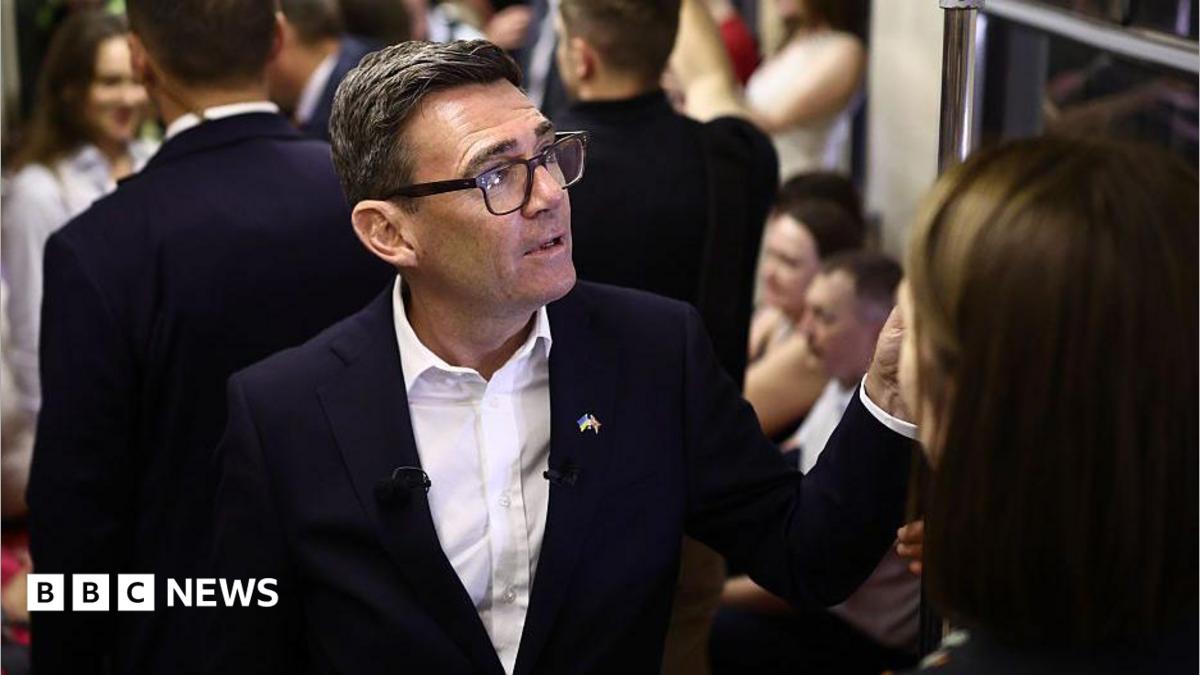
On 11 July 2026, a coordinated push by Labour backbenchers and a major development thinktank landed on Andy Burnham's desk: restore the aid-spending target Gordon Brown set in his 2005 Gleneagles agreement, and reclaim Britain's role as a leader in international development if he wins the premiership.
The intervention is more than a polite request from the party's internationalist wing. It is a test of whether a leadership contender who has built his brand on domestic policy — policing, housing, regional devolution — is willing to stake political capital on a foreign-aid floor that successive Conservative chancellors eroded, and that Labour itself has struggled to defend in opposition. The answer will shape both Britain's standing in the Global South and the fiscal envelope Starmer's successor inherits.
The shape of the ask
The campaign is built around a specific anchor: the United Nations target of spending 0.7 per cent of gross national income (GNI) on official development assistance, the same commitment Brown signed at Gleneagles under pressure from the Make Poverty History coalition and the Live 8 concerts. Backbenchers argue that abandoning that figure did not just shrink the aid budget; it cost Britain the moral authority to convene other donors, to push the World Bank and the regional development banks on concessional finance, and to act as a counter-weight to Chinese infrastructure lending in low-income states.
The thinktank framing is blunt: a prospective prime minister who lets the target stay in abeyance is presiding over a slow retreat from a position the UK held for decades. The argument is that development spending is not charity but strategic positioning — climate finance, pandemic preparedness, debt restructuring for distressed sovereigns — all of which increasingly shape the diplomatic terrain in Africa, the Caribbean and South-East Asia.
The counter-narrative from inside the spending debate
The domestic objection is fiscal. Aid spending fell from roughly 0.7 per cent of GNI under David Cameron to 0.5 per cent in 2021 as the Treasury rebalanced budgets after the pandemic, and has hovered near that level since. Reverting to 0.7 per cent in the current deficit environment would cost several billion pounds annually at a moment when public services are under strain and when Conservative critics already frame aid as wasteful. A rival reading — favoured by some on the party's right flank and by the Treasury's traditionalists — holds that British influence abroad depends less on the headline ratio than on the quality of programmes and the UK's continued seat at the table of the IMF, the G7 and the Paris Club.
There is also a delivery argument. Successive National Audit Office reviews have flagged weak monitoring, fragmented programmes and the slow disbursement of funds. Critics inside the development community itself ask whether restoring the 0.7 per cent anchor without reforming the Department for International Development's successor machinery — DFID was absorbed into the Foreign Office in 2020 — would simply pour more money into a less accountable structure.
What the structural picture looks like
Strip away the party positioning and the underlying dynamic is straightforward: the pool of concessional finance flowing into low-income countries is fragmenting, and the donors who once set the rules of the road are no longer the only game in town. China extended roughly $170 billion in loans to Africa between 2000 and 2022 according to Boston University tracking work cited in development-policy circles; the Gulf states have built their own aid architectures; multilateral lenders led by the World Bank are stretching balance sheets with hybrid instruments. Britain's traditional lever — writing the largest single cheque in the OECD's development committee — has lost mechanical advantage.
In that environment the 0.7 per cent target functions less as a spending rule and more as a credibility marker. A country that voluntarily cedes the headline ratio signals to negotiating partners that the political appetite for development is finite. A country that restores it signals the opposite. The backbenchers' bet is that the second signal is worth more, over a five-to-ten-year horizon, than the marginal pounds saved by staying below 0.7 per cent.
Stakes and what to watch
If Burnham does move on the target, the immediate fight will be with the Treasury over the fiscal path — and over whether the pledge is back-loaded to a future spending review rather than reinstated in the next budget. Watch for whether the manifesto language mirrors the 0.7 per cent commitment verbatim, or retreats into a softer "aspiration." Watch, too, for the development-finance angle: the UK's role in the African Development Bank, in the Bridgetown Initiative's debt-restructuring push, and in climate-loss-and-damage funding will be tested against the new fiscal envelope before the end of 2027.
The risk for Burnham is that a high-profile pledge becomes a target for Conservative attack ads and a hostage to the next downturn. The risk for the backbenchers is that a Burnham win delivers yet another round of warm rhetoric without a hard fiscal commitment. The sources do not specify how the campaign plans to force that second outcome if a Burnham government prefers the first — which is, in the end, the question that will decide whether this week's intervention matters at all.
Desk note: Monexus has framed the aid-target fight as a credibility marker in a fragmenting concessional-finance landscape, rather than as a purely domestic spending argument, and has surfaced the delivery-side critique alongside the moral-case case for restoration.
Wire provenance
This editorial synthesis draws on the following public wire/social posts:
- https://t.me/themonexus/cluster-c515488231