Mojtaba Khamenei's first message: a blood-debt made public
On 11 July 2026, hours after burying his father, Iran's new Supreme Leader issued a written pledge to avenge the killing. The vow is less a surprise than a template, and the next forty-eight hours will reveal how the template is paid for.
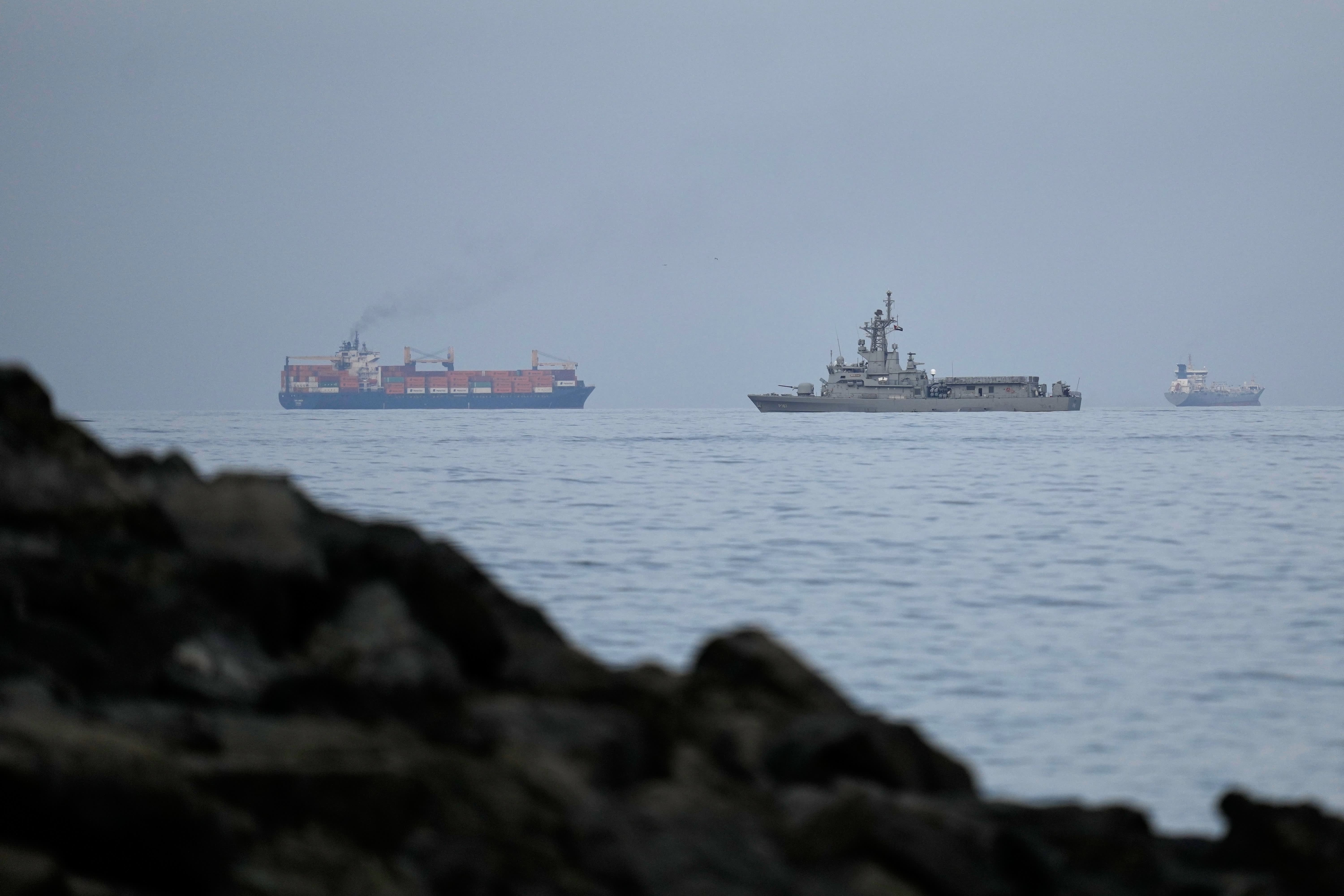
At 09:47 UTC on 11 July 2026, Iranian state media told waiting reporters that the country's new Supreme Leader, Mojtaba Khamenei, would issue a message within hours. By 11:01 UTC, Reuters had moved a wire: Iran's Supreme Leader pledges revenge for slain father and predecessor. By 11:14, the pledge itself was in circulation on X, in Arabic and English, attributable to a written message rather than a televised address. By 11:26, Middle East Eye was reading it back: "Revenge is the will of our nation." The interval between the announcement and the act was ninety minutes. The interval between the act and the world's reaction was shorter still.
What Mojtaba Khamenei has done, in his first public act as Supreme Leader, is to convert a private succession crisis into a public debt. The message is short, formal, and unmistakably liturgical in cadence. It pledges to avenge the "pure blood" of his father and predecessor Ali Khamenei, killed in an airstrike that is not yet publicly attributed, and to avenge, in the same breath, "the blood of all the martyrs of these two wars from the criminal and disgraced" killers. Retribution is described as a national demand, and one that "must certainly" be carried out. The choice of written form is itself a signal: a written message is durable, transmissible, translatable. It can be reprinted on placards. It can be recited by proxy. It cannot be edited by a broadcaster who has second thoughts overnight.
The message, read literally
Strip the rhetoric and the document is a triangle of obligations. The first edge runs from Mojtaba to Ali: a son's pledge to a father. The second runs from the new Supreme Leader to the Iranian state: a vow, made in writing, that the apparatus of power will be directed toward retribution. The third runs from the office of the Supreme Leader to the public: the claim that "revenge is the will of our nation", and therefore not merely the will of a single family or faction.
Deutsche Welle's contemporaneous report, also timestamped 11 July, frames the vow in the context of Donald Trump's threat, broadcast the same day, that the United States would "completely decimate" Iran should it attempt to assassinate him. That juxtaposition is doing a lot of work: it places the Iranian vow inside an escalating exchange in which both sides are now addressing each other in the vocabulary of pre-emption. The English-wire translation of Mojtaba's phrase, "criminal and disgraced killers", is closer to a verdict than a complaint.
This is not, on its face, a doctrinal document. There is no fatwa. There is no identifiable target, no named weapon, no theatre of operations. The message names no date. What it does, with surgical restraint, is bind three constituencies at once: the bazaaris who want a credible deterrent; the Islamic Revolutionary Guard Corps officers who need political cover for whatever is already being planned; and the Gulf of Basra street, where the killing of Ali Khamenei, whoever struck him, is being read as a humiliation that demands an answer.
What the wire consensus is missing
The wire consensus on 11 July is thin, and worth marking as such. Reuters and Deutsche Welle both reach for the obvious frame: succession plus vendetta. Middle East Eye, reporting from a regional vantage, leans into the continuity claim, "Iran's Supreme Leader Mojtaba Khamenei has pledged to avenge the death of his father", without engaging with the choice of medium. WarMonitors and BRICS News, both aggregating the same text, reproduce the "must certainly" qualifier in bold, which is the operative phrase.
What the consensus does not yet capture is the tone. The message is not angry. It is not the rhetoric of a man surprised by grief. It is the rhetoric of a man who has been waiting for this microphone. The economy of the language, avenge, demand, certainly, reads as pre-drafted, not improvised. The plausibility band, given what is now in the public record, runs from message-prepared-before-father-killed to message-prepared-the-night-before. Either way, the document reads less like an early test of a new leader than like the opening page of a brief already written.
There is also a counter-read the wire has not yet voiced. The vow may be a brake rather than an accelerator. By publicly declaring that revenge is "the will of our nation", Mojtaba has, in the same sentence, given himself permission not to act on his own timetable. He has externalised the agency. If the strike comes tomorrow, it is the nation. If it comes in three months, it is the nation still waiting. The framing does the political work of postponement while ruling out the political work of abstention.
The structural picture
Iran's regional posture has, for two decades, been legible through the doctrine of strategic patience: a willingness to absorb a strike, and to return one at a time and place of Tehran's choosing, often via Hezbollah, the Houthi movement, or Iraqi Shia militias. Mojtaba's message slots cleanly into that doctrine, with one conspicuous change. The doctrine has typically been anonymous: plausible deniability is part of the deterrent. The new message is signed. It carries the new Supreme Leader's name. It is, in a sense, a downgrade of plausible deniability and an upgrade of personal authorship.
That change matters because it implies a willingness to be held to the promise. A deterrence that cannot be tested is a bluff; a deterrence with a name attached becomes a balance-sheet entry. The regional audience, Israeli intelligence, US Central Command, the Saudi and Emirati national-security apparatuses, the Turkish and Qatari foreign ministries, will read the document not as information about Iranian intentions but as a signal about how confident the new Iranian leadership is in the durability of its coalition.
Inside Iran, the document is also a factional instrument. Mojtaba Khamenei inherits a state whose security institutions are deeply factionalised, with the IRGC, the regular army (Artesh), the Ministry of Intelligence, and the paramilitary Basij each carrying different equities. A binding vow, issued on day one, narrows the room for any of those institutions to argue against escalation. It also narrows the room for the opposite: the faction that wanted to absorb the killing of Ali Khamenei and move on now has a written public document to answer to.
What to watch in the next forty-eight hours
Three indicators will tell us how seriously the vow is meant. The first is language inside Iran: does the written pledge appear in Friday-sermon guidance, in Basij mobilisation orders, in Artesh operational bulletins? The circulation of a message inside Iran's own security bureaucracy, rather than merely in foreign-facing media, is the difference between rhetoric and rehearsal.
The second is the regional escalator. Hezbollah's media infrastructure, the Houthi al-Masirah satellite operation, and the Iraqi Shia militia ecosystem all have dormant channels that re-activate within hours of an Iranian Supreme Leader address. The signature on Mojtaba's message will be tested first by what those channels do before he has to act himself.
The third is the American response. Trump's "completely decimate" formulation is at the rhetorical edge of what is operationally credible. If the United States moves additional carrier groups into the Fifth Fleet area, or accelerates arms deliveries to Israel and the Gulf monarchies, the cycle moves from signalling to logistics. If it does not, the Iranian side may conclude that the American red line is rhetorical, and act accordingly.
What remains genuinely uncertain
The sources available at 11 July 2026 do not yet establish several things that any later assessment will need. The chain of attribution for the airstrike that killed Ali Khamenei has not been published by any wire in this thread. The text of the message in its original Persian has not been independently verified beyond the aggregators named above. The internal Iranian political reaction, statements from the Assembly of Experts, from senior clerics in Qom, from the office of the president, has not, in the items this thread draws on, been recorded. And the practical question of who, precisely, Mojtaba Khamenei intends to hold responsible, the United States, Israel, both, neither, an internal faction blamed in a controlled way, is not specified in the message itself.
The honest reading, on the evidence available at 11 July 2026, is that Iran has just acquired a written public debt instrument, signed by the new Supreme Leader, payable to an unnamed creditor, on an undisclosed maturity, in an undisclosed currency. The next forty-eight hours will tell us which central bank the creditor keeps.
Desk note: Monexus reads this story in the structural register of succession plus deterrence, not in the moral register of good-versus-evil that much of the English-language wire has already adopted. The Iranian vow is being reported here as a state act with strategic content; both the Iranian state's framing and the United States' counter-framing are carried in parallel, and the framing choice of the moment is left to the reader.
Wire provenance
This editorial synthesis draws on the following public wire/social posts:
- https://x.com/MiddleEastEye/status/
- https://t.me/ClashReport
- http://reut.rs/4plmADK
- https://t.me/WarMonitors
- https://x.com/shaykhsulaiman/status/
- https://t.me/BRICSNews
- https://x.com/MiddleEastEye/status/