Pyongyang's denuclearization reversal: a signal aimed at Washington, not the negotiating table
On 11 July 2026, Pyongyang paired an order to expand its nuclear forces with an unusually public demand that denuclearization start with Washington's allies — a posture that reads less as a negotiating gambit than as a hardening of an already closed door.
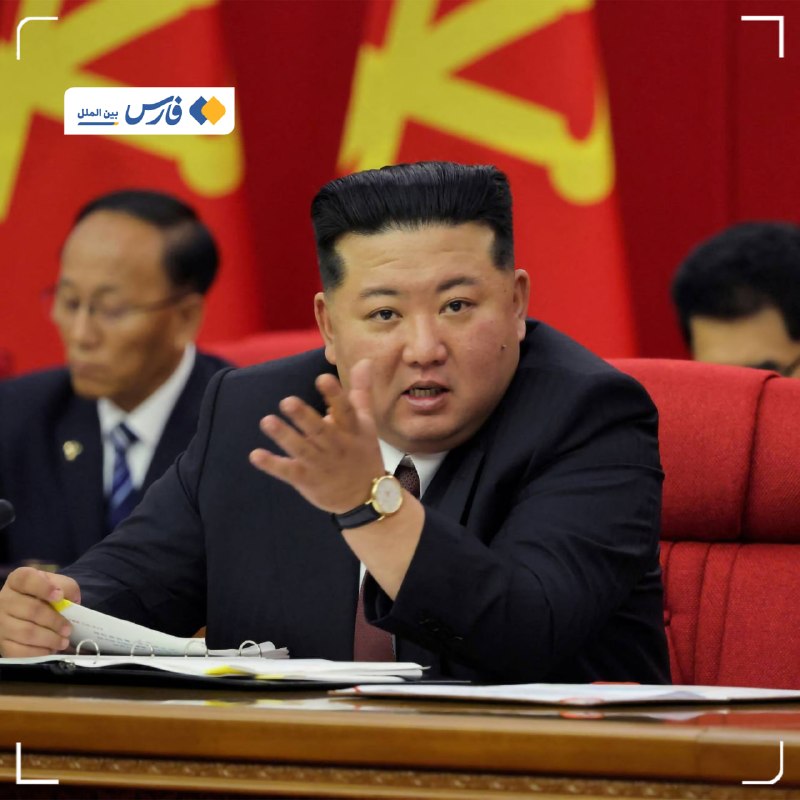
Pyongyang issued two messages in the same news cycle on 11 July 2026, and read together they leave little room for ambiguity about the trajectory. State media reported that Kim Jong Un has ordered a quantitative and qualitative expansion of the country's nuclear forces, while the foreign-policy apparatus used the closing of the NATO summit in Turkey to declare that any denuclearization process should begin with "America's allies." The pairing moves the regime's position from refusal to reversal-and-counter-demand, a posture with no recent precedent in public communications.
Both items land as Ankara is hosting the alliance's annual summit, an extraneous setting for what is, at its core, a peninsula-flavoured signal. The choreography is the news. A capital that refuses to put its nuclear posture on the table, then immediately publishes a demand that someone else dismantle first, is not signalling interest in talks; it is signalling the end of the premise on which talks used to be built.
A directive, not a debate
Fars News International, citing North Korean state outlets, reported at 05:54 UTC on 11 July that the order covers both the number of warheads and the quality of the delivery systems — meaning yield, accuracy, survivability, and the platforms that carry them. Iranian and other regional outlets were among the first to relay the language, and the framing they used, "quantitative and qualitative," mirrors the technical taxonomy North Korean state media has used in past force-modernisation announcements.
The order is the substance. It ratifies what had been telegraphed for months — that the moratorium on testing, the only significant restraint of the past decade, has been formally retired. From this point, any future detonation or missile launch is administrative, not political. The North has cleared the regulatory path to the seventh test and to solid-fuel intercontinental deployments that no longer need pre-launch fuelling, and it has done so in language designed to deter any outside party from imposing cost in response.
The diplomatic inversion
The denuclearization message, carried by Tasnim and amplified by War and Sanctions witnesses on Telegram, lands as a mirror image of three decades of US-led bargaining. The demand that Washington start the process by disarming its allies — read as Japan and South Korea — is not new as an idea, but its appearance on a summit-week podium, with no prior negotiation track open, is. Tasnim's 05:56 UTC bulletin frames the position as a precondition rather than an opening bid. That is a meaningful shift.
The structural read is straightforward: Pyongyang is reclassifying the Korean Peninsula as a multi-nuclear theatre by default, and asking the United States, on the record, to acknowledge that fact. Until now, US strategy has been to treat the North's arsenal as a unilateral problem requiring unilateral remediation. The new language rejects that frame. It treats allied US extended deterrence on the peninsula as co-equal to the North's deterrent, and asks which side disarms first to be a question of symmetry rather than hierarchy.
Why the NATO setting
Ankara is not the natural venue for a Korean Peninsula announcement. The choice is the message. North Korean commentary has, for years, treated NATO expansion as the underlying cause of any eastward security dilemma; linking the two in a single summit-week bulletin fuses the Korean file with the alliance's broader eastward creep. The implicit audience is the set of states whose forces would, in a worst-case, operate under US command in the Pacific — Japan and South Korea most prominently, and Turkey as host.
There is also a tailoring logic at work. South Korea's president and Japan's prime minister have, in recent summits of their own, deepened trilateral coordination with Washington in ways that Pyongyang reads as encirclement. The North's response is to rename that posture a target set, not a defensive architecture, and to ask whether those states' security arrangements are themselves proliferation problems to be solved.
What the language forecloses
Three implications follow from the way this was said, not just what was said. First, the regime has reframed denuclearization from a concession to a preconditioned exchange; absent movement on allied posture, the word itself has been retired. Second, the quantitative-and-qualitative formulation locks in a multi-year military programme under supreme-direction authority — Kim Jong Un's signature carries the institutional weight of a defence order, not a campaign slogan. Third, the choice to publish the denuclearization inversion while NATO is still in session signals that Pyongyang is willing to bear the cost of hardening the US negotiating assumption: that talks are now conceivable only after a long pause.
For Washington, the operational consequence is that the menu of plausible talks has narrowed further. The peninsula does not return to a 2018-style summit cycle on the North's terms. Any future channel would have to begin by conceding equivalence between the US-allied deterrent and the North's, or by ignoring the equivalence and absorbing the rhetorical cost of being seen to do so.
What remains uncertain
The two Korean-language source items do not, on their own, give an operational read of deployment timelines or warhead-count targets. Whether the qualitative expansion means a return to atmospheric or high-yield testing, or a shift toward MIRV-capable solid-fuel missiles, is not specified. The allied-disarmament framing does not yet name a counterpart — Japanese, South Korean, or both — nor a verification regime.
What is unambiguous is that Pyongyang has chosen to publish, on the same day, both the order to expand and the demand that someone else disarm first. The combined signal is harder than either would be alone. The sources do not yet record any US, Japanese, or South Korean reply; that silence is itself the next data point to watch.
Desk note: this publication reads the North's 11 July bulletin as a closing rather than an opening — a deliberate hardening of an already closed door, dressed in the language of conditional diplomacy. The wire's framing of "rejection" understates the inversion; we treat the demand that allies disarm first as the substantive act.
Wire provenance
This editorial synthesis draws on the following public wire/social posts:
- https://t.me/tasnimnews_en
- https://t.me/FarsNewsInt
- https://t.me/wfwitness