Robinhood's AI agents, a US CBDC ban, and a Tehran ceasefire that won't hold
A retail broker pushes automated AI agents into crypto wallets, a central-bank digital dollar is outlawed through 2030, and the oil market is told to expect its first post-COVID demand contraction as US-Iran talks collapse on repeat.
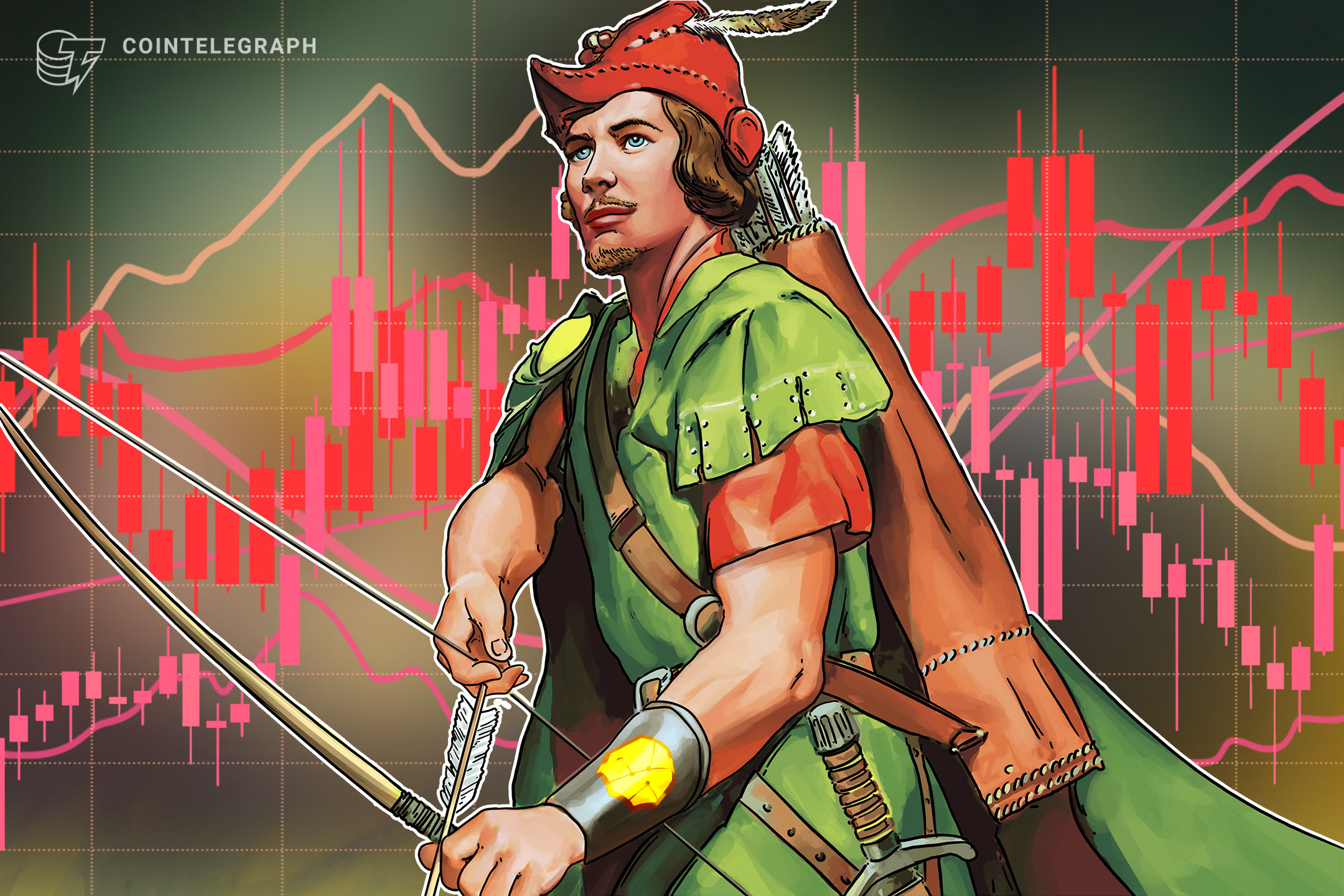
At 07:39 UTC on 11 July 2026, Cointelegraph reported that Robinhood is preparing to let retail users hand their crypto trades to artificial intelligence agents, with custom guardrails designed to stop the bot at the user's chosen threshold. Twenty-four hours earlier, the same outlet had confirmed that a US central bank digital currency is now formally banned through 2030, after President Donald Trump declined to sign the bill. And behind both items, the same Telegram wire carried four separate headlines in three days saying that Washington's ceasefire with Tehran had effectively ended.
These are not three stories. They are one story told three ways: who gets to write the rules of the next financial stack, what gets built into it, and what breaks when the underlying energy market that prices everything else refuses to behave.
The agent on the user's account
The Robinhood product, as described in the 11 July 07:39 UTC Cointelegraph alert, is straightforward in design and consequential in implication. Users will be able to deploy AI agents that execute trades on their behalf, with limits the user sets in advance. The retail broker is not positioning this as algorithmic trading in the institutional sense; it is positioning it as a personal assistant that does not sleep, does not panic, and does not chase a meme coin into the small hours.
The structural frame matters more than the feature. For most of the last decade, automation in retail crypto was either a Telegram copy-trading group, an exchange-native bot, or a paid signal service. Each of those routed decisions through a human intermediary, often anonymous and almost always unaccountable. The Robinhood pitch collapses that chain: the user's money, the user's broker, the user's bot, all inside the same app, all governed by the same user-set guardrails. The intermediary is a model.
The plausible counter-read is that guardrails are a fig leaf. An agent that trades 24 hours a day across dozens of pairs will, by volume, generate order flow, payment-for-order-flow revenue, and spread capture at a scale a human retail trader cannot match. The broker's incentive is not aligned with the trader's restraint. Robinhood's pitch will work only if the guardrails are enforced server-side, not merely suggested in a UI. The reporting does not specify which.
The dollar that won't digitise
The second item, timestamped 06:33 UTC on 11 July, is the more durable one. A US central bank digital currency is now prohibited through 2030 after the bill reached Trump's desk and was allowed to lapse into law without a signature. That procedure, ten days of unsigned silence, is the same mechanism used for the first iteration of the same prohibition in 2024.
The ban closes the door on a Federal Reserve-issued retail digital dollar for five years. It does not close the door on bank-issued tokenised deposits, on stablecoins, or on privately-minted dollar tokens operating inside the same regulatory perimeter. In practice, the prohibition is narrower than its political packaging suggests. The federal sovereign loses one tool; the private sector keeps its many.
The structural consequence is that any digital-dollar architecture the United States builds in this period will be built by issuers, not by the state. That is a deliberate policy choice and it has a long lineage. It tells the rest of the world that the issuer of the reserve currency has decided, twice, that the retail digital dollar is a problem it does not need. It also tells stablecoin issuers, in tokenised settlement, and in payment-rail operators that the field is theirs, with the regulatory perimeter that implies.
The ceasefire that isn't
The third thread runs through four items dated 08:08, 17:07, and 05:14 UTC across 8 and 9 July, and 04:16 and 15:10 UTC on 10 July. The sequence is worth reading in order. On 8 July at the NATO summit, Trump said the memorandum of understanding with Iran "is over" and called dealing with Tehran "a waste of time." Later that day he said he was "no longer sure" he wanted a deal, and added: "Let's just finish the job." By 9 July the framing had rotated: Iran "wants to make a deal so badly." On 10 July at 04:16 UTC, Bloomberg was cited confirming that technical talks would continue despite the recent strikes. By 15:10 UTC the same day, Trump told reporters that Iran had asked to continue negotiations but that the United States had replied that "the ceasefire is over."
This is not policy zig-zag in the usual Washington sense. It is two bureaucracies talking past each other in public: a diplomatic track still meeting, and a political principal declaring the meeting pointless. The IEA's 10 July alert, that global oil demand is set to decline in 2026 for the first time since the COVID-19 pandemic and is citing disruptions caused by the Iran war as a contributing factor, sits underneath both. The market is being told, simultaneously, that talks continue and that the strategic rationale for talking no longer exists, while the demand side quietly contracts.
What the three lines share
Read together, the day tells a story about who sets the terms. The retail trader is being told to delegate execution to software, the citizen is being told the sovereign will not offer a digital alternative to that software, and the energy market that prices both is being told the geopolitical discount on it has not stabilised.
The stakes are concrete. If the agent product takes off, order-flow concentration at a handful of retail platforms deepens, and the broker's balance sheet becomes the de facto counterparty to a much larger share of the market than it has ever carried. If the CBDC ban holds through 2030, the dollar's next digital iteration will be private by design and American by accident, with all the questions that raises for non-US users. And if the Iran track stays in its current posture of declared end and ongoing technical contact, the oil complex will price a rolling premium it cannot remove until one side or the other issues a clean signal.
What remains contested is whether the 10 July "technical talks" item and the same-day "ceasefire is over" line refer to the same channel of communication, or to two parallel tracks that have stopped acknowledging each other. The wire reporting does not specify. That uncertainty is itself the data point.
Wire provenance
This editorial synthesis draws on the following public wire/social posts:
- https://t.me/s/cointelegraph
- https://t.me/s/cointelegraph
- https://t.me/s/cointelegraph
- https://t.me/s/cointelegraph
- https://t.me/s/cointelegraph
- https://t.me/s/cointelegraph
- https://t.me/s/cointelegraph