Summer League debut: 35 from the #4 pick and a Caitlin Clark sighting in Las Vegas
The fourth overall pick dropped 35 points on his Summer League debut in Las Vegas, with Caitlin Clark and Aliyah Boston courtside to watch the league's next wave.
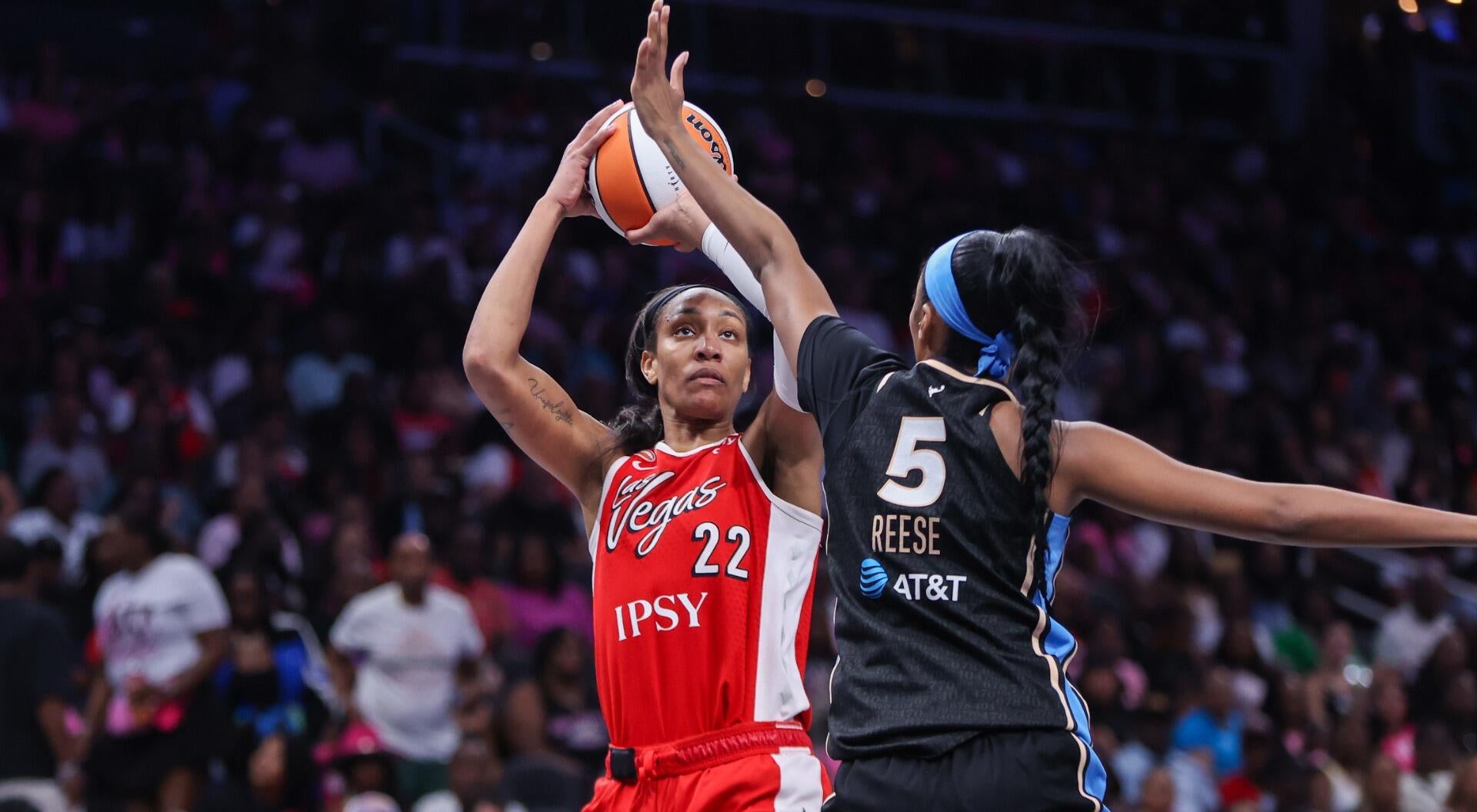
The fourth overall pick walked off the Thomas & Mack court in Las Vegas on Thursday night with 35 points on his resume — 14 before the break, 21 after — the kind of debut that resets the conversation around a rookie before the regular season even has a calendar slot. NBALive's wire put the line score in plain text: "14 in the 1H. 21 in the 2H. 35 for the GAME." No caveats, no asterisks. Just a number, and a tag confirming the setting was the NBA's Summer League showcase in Las Vegas.
Summer League has always been a petri dish more than a proving ground. The sample sizes are tiny, the defence indifferent, and the schedule unforgiving — three, sometimes four games in five days. What the league's debut stage does offer is a clean first look at how lottery talent processes an NBA game at NBA speed. On Thursday, the #4 pick processed it like he had been there before.
The shape of a Summer League debut
The 14-point first half read as the standard rookie settling-in arc: feeling out the speed, finding the gaps between defenders who were not yet interested in fighting through screens, picking spots rather than hunting them. The 21-point second half is the part that scouts will actually circle on their clip sheets. Twenty-one after halftime means the player stopped observing and started dictating — getting into his actions earlier, demanding the ball in his preferred spots, and finishing through contact that the first-half version avoided. That swing, from poise to pressure, is what front offices pay for on draft night.
It is worth remembering the limits of the genre. Summer League box scores are routinely inflated by transition volume, broken-help defence, and the simple fact that most rosters in Vegas are running on three weeks of common practice time. A 35-point night in July does not guarantee a 14-point night in February, and every front office in the league knows it. What it does guarantee is the right to a longer look — more minutes in the second game, more on-ball reps, more set plays run through the rookie's gravity.
A Caitlin Clark-shaped subplot
While the men's rookies were auditioning, the building's celebrity gravity was pulling in a different direction. NBALive noted that Caitlin Clark and Aliyah Boston — the two named 2026 AT&T WNBA All-Star starters — were courtside in Las Vegas for the Summer League slate, with a Cavs/Pacers matchup flagged on the ESPN broadcast. Clark and Boston showing up on a Summer League night is not, on its own, a story. Two All-Star starters drawing cameras wherever they sit is the story, and the league's broadcast partner clearly knew it. Pairing the in-arena shot of two WNBA faces with the rookie tape on the floor is a quiet piece of cross-product positioning: the NBA's developmental stage, the WNBA's marquee names, and ESPN's summer inventory all running through the same building at the same time.
That positioning matters more than it looks. Summer League is the one window in the calendar where casual fans, draft sickos, and league-mandated cross-promotion all overlap without anyone having to be persuaded. If a viewer came for the rookie highlights and stayed to watch Clark and Boston react to them, the league's marketing department did its job for the night.
What the rosters actually tell us
The Summer League viewing menu on Thursday was built around the league's marquee franchises — NBALive posted separate viewing links for the action on 9 July, 10 July, and 11 July, with the Las Vegas setting unchanged across all three. The repetition is itself the data point. Las Vegas is now the fixed address of NBA summer basketball the way Indianapolis has been the fixed address of the league's All-Star weekend for most of the last decade, and the broadcasting pattern around it — multi-day windows, multiple game feeds, an All-Star cameo in the stands — reflects an operation that is no longer experimenting with format.
For the #4 pick, the immediate question is whether game two carries the same shape as game one. Summer League scouts are not looking for two identical stat lines; they are looking for the second-game adjustments — how a defence that has now seen his film responds, and how he responds back. The 35-point debut buys him one clean adjustment window. Whether he uses it will be the next line on his Vegas file.
What remains unverified
The wire notes do not name the player, the opponent, the final score, or the team that drafted him fourth overall. They do not specify the attendance figure, the broadcast viewership, or how the second half of his debut was officiated. They give a stat line, a venue, a draft slot, and a pair of All-Stars in the building. That is the entire evidentiary base — and it is enough to write the lede, but not enough to write the obituary of whatever narrative the league's marketing team would like to build on top of it. The next 48 hours of Summer League tape will either confirm or complicate what 35 points in game one looks like in game two.
Desk note: Monexus is treating the Summer League debut as a stat-line event rather than a projection event — the wire gives a number and a setting, not a career trajectory, and the framing reflects that restraint.
Wire provenance
This editorial synthesis draws on the following public wire/social posts:
- https://t.me/NBALive
- https://t.me/NBALive
- https://t.me/NBALive
- https://t.me/NBALive