Trump's Decimation Warning and the Death of the Iran Deal
A funeral cortege in Tehran turned into a foreign-policy crisis. With mediation channels fraying and a sitting US president publicly dangling the threat of annihilation, the architecture of an Iran-US deal is collapsing in real time.
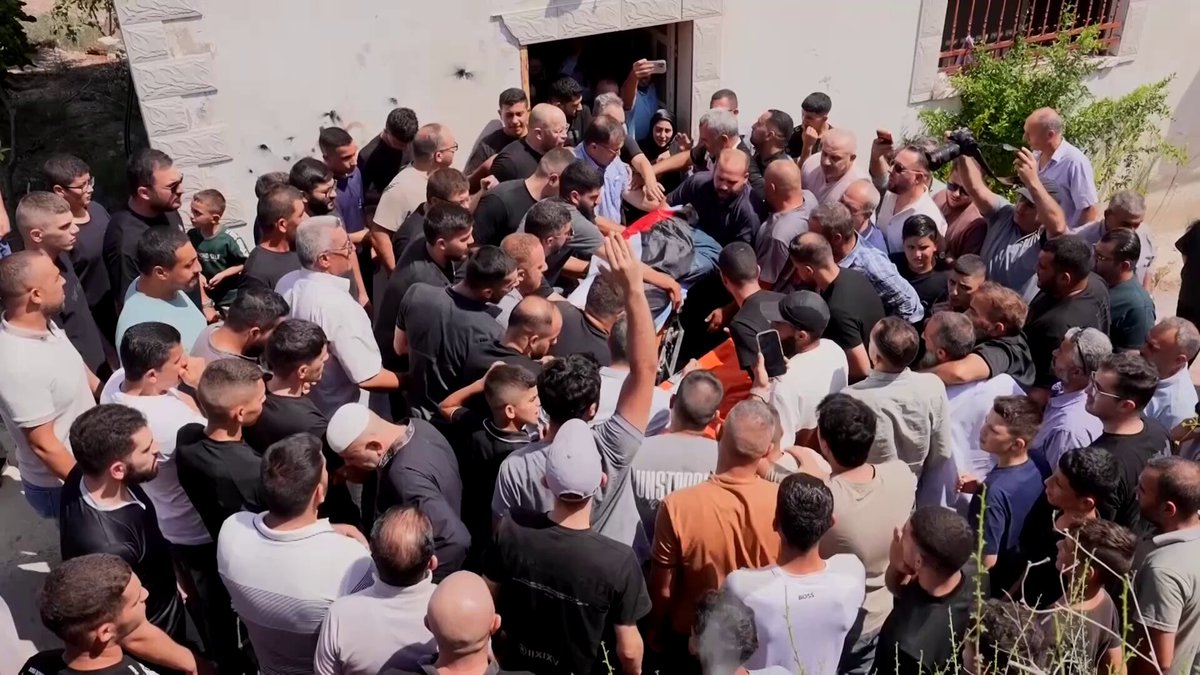
The funeral procession for Supreme Leader Ayatollah Ali Khamenei in Tehran on 10 July 2026 was, by any account, a choreographed instrument of state grief. It became something else. As the cortège moved through the capital, sections of the crowd broke into chants calling for the death of Donald Trump, a moment that crossed live wires and reached the White House within hours. By 03:41 UTC on 11 July, the US president had posted that if Iran succeeded in assassinating him, the country would be "completely decimated" (per the account aggregated by Unusual Whales on X). By 06:55 UTC, the Wall Street Journal was reporting, via senior US officials, that the Trump administration had grown "increasingly pessimistic" about ever closing a nuclear deal with Tehran. By 08:29 UTC, Trump was publicly floating a "second strike" option should any Iranian operation against him succeed.
What began as a hostage-and-funeral story has hardened into something closer to the collapse of a diplomatic channel. The mediation track that had kept negotiators in indirect contact through Oman and Qatar is being stress-tested by language that no working back-channel can survive intact. The question is no longer whether the nuclear talks fail. The question is whether the failure is contained.
The choreography of escalation
Trump's rhetorical posture follows a pattern now familiar from earlier this year: a public ultimatum, a window for compliance, a switch to coercion. The decimation warning is the loudest such switch to date. Al Jazeera English's breaking-news wire on 11 July at 08:04 UTC framed the threat inside a single sentence: "Trump threatens Iran after chants for his death erupted at Khamenei funeral." The same wire flagged that regional mediators were still trying to preserve a memorandum of understanding that had functioned as the diplomatic floor under the negotiations.
The president's framing relies on a premise that has not been independently verified in public. The allegation of an Iranian assassination plot against a sitting US head of state is a serious one, and the US intelligence community's evidentiary basis for it has not been laid out in any document the public has seen. LiveMint's 04:40 UTC summary of the same news cycle noted that Trump's warning followed a funeral at which "open calls for his killing" had been audible, but the distinction between a hostile chant at a state funeral and an operational plot to murder a foreign leader is the difference between noise and a casus belli. The White House has, to this point, chosen to treat them as the same thing.
Iran's foreign ministry has not, in the materials available to this publication, publicly disavowed the chants. That silence is itself a signal: it preserves deniability while signalling that the Iranian street, as choreographed by the state, is willing to perform hostility in front of cameras that knew exactly where to point.
What the deal was supposed to look like
The framework that the Wall Street Journal described as stillborn had three moving parts: limits on Iranian enrichment capacity, intrusive IAEA verification, and sanctions relief sequenced against verified compliance. The Iranian side had reportedly offered, in earlier rounds, a cap near 3.67 percent enrichment and a partial rollback of stockpiled material. The American side had wanted zero enrichment on Iranian soil, a position Tehran has historically rejected as a sovereignty violation.
For mediators in Muscat and Doha, the task was to find a number in the middle that both governments could sell domestically. The gap was always wide. The mediators' working assumption was that the Khamenei-era leadership would rather take a deal that constrained the programme than face the alternative of sustained maximum-pressure economics. The funeral of Khamenei, and the succession politics around it, scrambles that assumption.
A new supreme leader inherits an establishment that has spent four decades treating nuclear capability as a deterrent equaliser. The chants at the funeral are not a sideshow: they are an internal signal to whoever now sits at the top about the price of appearing to capitulate. Iran's negotiating leverage has always rested on the credibility of its threat to walk away. That credibility has just been raised.
The counter-narrative, in plain language
The Western wire consensus treats the funeral chants and the assassination allegation as the inflection points. A second reading, common in regional commentary and in capitals from Ankara to Beijing, sees the inflection differently. In that reading, the Trump administration never intended to close a deal on terms Tehran could accept. The deal was a domestic-political prop, useful through the campaign and disposable once the foreign-policy mood hardened. The assassination framing is the pretext, not the cause.
That reading does not require one to credit Iranian innocence on the assassination question. It requires only that one note the sequencing. Talks had already stalled before the funeral. The chants at the funeral did not break the channel; they provided the rhetorical cover to abandon a channel that the White House had privately decided was no longer worth the cost of holding open. The decimation warning is not a reaction. It is a permission slip, for a domestic audience, to escalate.
This publication finds the second reading more consistent with the available reporting. The Wall Street Journal's "increasingly pessimistic" framing is the language officials use when a decision has already been made and the bureaucracy is being briefed into it. Pessimism is not surprise. It is the aftermath of a meeting that did not go the mediator's way.
The structural frame, in plain editorial prose
What is happening is not a bilateral negotiation failing. It is a regional security architecture being rewritten under the pressure of two parallel crises. The first is the US-Iran nuclear track, whose collapse would end the most plausible remaining framework for constraining Iranian fissile-material production short of war. The second is the Israeli-Iranian shadow confrontation, which has its own escalation logic and its own calendar.
Iran sits inside a wider geometry. Its relationships with Russia and China have deepened as Western engagement has narrowed. Moscow has provided military-technical cooperation that does not depend on the nuclear file. Beijing buys Iranian oil in defiance of US secondary sanctions, when it suits Beijing. The Gulf states have spent the last two years quietly rebuilding relations with Tehran, partly because they concluded that maximum pressure would not produce a regime change that favoured them. A US posture that closes the diplomatic channel while demanding Iranian capitulation does not operate in a vacuum. It operates in a region that has already hedged.
The dominant frame in Western commentary treats the Iranian regime as the actor whose choices determine whether the region moves toward peace or war. A more accurate frame treats the regime as one of several actors whose choices interact, with US policy as the most consequential single variable. The decimation warning raises the cost of Iranian cooperation and lowers the cost of Iranian defection. It is, structurally, an escalatory act even if no shot is fired.
Stakes, and what to watch next
The most immediate stake is the Strait of Hormuz, through which roughly a fifth of global oil shipments transit. Iranian asymmetric capability in the Gulf has been a deterrent against the most aggressive US planning for two decades. A posture that publicly threatens national annihilation does not weaken that deterrent; it strengthens the Iranian case for treating the deterrent as the only reliable asset. Insurance premia for tanker traffic, already elevated through 2026, will move on any fresh incident.
The second stake is the IAEA file. Without a deal, the Agency's inspections regime in Iran reverts to a thinner baseline, and the technical question of how close Iran is to a breakout capability becomes harder to answer from open sources. That uncertainty is itself a strategic asset for Tehran, and a strategic liability for every Gulf capital.
The third stake is the succession. The post-Khamenei leadership will be tested early. How it handles the chants, the Trump warning, and the collapse of the channel will determine whether the Islamic Republic's foreign policy stays on its current trajectory or hardens into something more cornered. Cornered regimes make cornered decisions.
The thing to watch is not the next Iranian statement. It is the next Iranian move in the Gulf, the next IAEA quarterly report, and whether Oman and Qatar can still get the two sides in the same room. If they cannot, the decimation warning becomes, by degrees, a self-fulfilling description of the road ahead.
, Monexus framing note: Where the wire cycle treated the funeral chants as the trigger, this publication reads the public record as showing a decision already taken in Washington and a pretext supplied by Tehran. Both readings are consistent with the same set of facts; the difference is in which fact one treats as causal.
Wire provenance
This editorial synthesis draws on the following public wire/social posts:
- https://t.me/englishabuali
- https://t.me/wfwitness
- https://t.me/LiveMint
Follow the event.
These dated source records provide context. They do not retrospectively verify this archive article.
Separate what the nuclear watchdog reported from what it could not determine after the June 2025 strikes.