Missiles 'locked, loaded' and a ceasefire declared over: where the Trump-Iran ultimatum actually leaves both sides
On 11 July 2026, Donald Trump told reporters that US missiles were 'locked, loaded and aimed at Iran' if Tehran moved against him, while separately announcing that the US-Iran ceasefire was over even as talks would continue. The contradiction is the story.
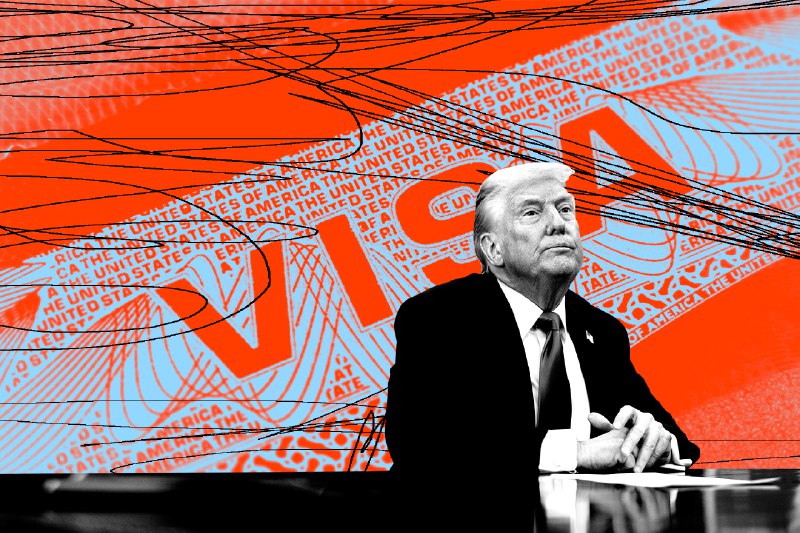
At 03:50 UTC on 11 July 2026, Donald Trump walked to the White House lectern and declared that if Iran assassinated him, the United States would respond by aiming roughly a thousand missiles at the Islamic Republic. By 05:00 UTC, the same president had told reporters that the fragile US-Iran ceasefire, negotiated only weeks earlier after the June strikes, was already over — even as both governments said diplomats would keep talking. Reuters carried both statements within ten minutes of each other. The arithmetic of those ten minutes is the story: a nuclear-armed crisis being managed, simultaneously, by ultimatum and by conversation.
The two tracks do not contradict themselves in the way they appear to. They are the same argument made twice, once in the language of deterrence and once in the language of statecraft. Each side is betting that the other cannot tell which one is real. Tehran is signalling that it can absorb and shrug off the threat — Iranian state-linked Telegram channels spent the morning circulating images of the modest grave of a senior Iranian figure, captioned as "the leader of a wealthy country like Iran," a piece of visual rhetoric aimed squarely at Washington's threat to "completely decimate" the country. The US side is signalling that it reserves the right to choose the escalatory track at any moment, with no notice. The risk is not that one side is bluffing. It is that neither side knows when the other has stopped.
The ceasefire that wasn't
When Trump appeared at the lectern on 10 July to announce that the US and Iran had "agreed to continue talks," the framing implied that the diplomatic track was intact. By sunrise on 11 July, the same talks were described as continuing in one breath and the ceasefire as "over" in the next. South China Morning Post, citing the White House pool, reported Trump's precise language: missiles "locked, loaded and aimed at Iran." Reuters carried the same remarks under a separate headline noting that the ceasefire itself had lapsed.
This is not the first time the two tracks have collided publicly. The June ceasefire that ended the most recent direct exchange between Washington and Tehran was, from the outset, structured as a pause rather than a settlement. Both governments claimed it. Neither treated it as binding. By naming the ceasefire over while keeping the talks alive, Trump is signalling to a domestic audience that he is not being softened by diplomacy, and to Tehran that the cost of walking away from the table is real. The Nation's Africa edition captured the gesture in its simplest form: a "direct threat to destroy Iran over assassination threats."
The contradiction matters less than the calibration. Iranian negotiators in Oman and Qatar had spent the previous three weeks trading technical language on uranium enrichment caps and inspection access. Killing the ceasefire publicly does not kill the working groups. It does, however, kill the political cover under which Iranian Foreign Ministry officials could sell any concession as a peace dividend rather than a surrender.
What Tehran can read from this
Iran's strategic problem has never been the absence of threats. It is the threat that the United States might act on one without warning. The "locked, loaded and aimed" formulation is, in deterrence theory, the textbook case of a general threat: it names the action, the scale, and the condition under which it would be executed, but reserves the timing to the threatener. Tehran's read of such language tends to be procedural rather than emotional. The negotiation track tells them what Washington is willing to settle for. The threat tells them what happens if the negotiation track fails. The two together define the space inside which Iranian negotiators can act without losing their jobs.
The Chinese reading of the same set of signals was published within the hour. CGTN, citing a Foreign Ministry briefing in Beijing, called on "all parties to uphold the ceasefire, advance talks on the Iran nuclear issue," and "exercise restraint." Beijing's interest here is narrower than it looks. A nuclear-armed Iran that has just been hit by the United States is a different problem from a nuclear-capable Iran still talking. A failed negotiation is preferable to a successful one followed by an Israeli strike and a regional war China did not start but cannot avoid paying for. The phrasing — restraint, dialogue, ceasefire — is calibrated to keep the diplomatic frame alive in public even as the military frame takes over in the White House.
Iranian state media, meanwhile, is doing the opposite work. The image circulated by the IR Iran Military channel on 11 July of a simple grave, captioned as belonging to "a man who is the leader of a wealthy country like Iran," is not journalism. It is the visual register of a state that has decided to absorb the American threat rhetorically rather than escalate against it. The implication — that the Islamic Republic has buried leaders before and will bury leaders again, and that the country itself is still standing — is the message Tehran wants the region to receive.
What the threats actually amount to
The "thousand missiles" figure is a Trumpian flourish, not a military planning figure. The United States does not publish its strike packages against Iran in advance, and the actual warhead count in any first strike would be a function of target set, not of rhetorical emphasis. What the figure communicates is proportional response: that any Iranian action against a US head of state would be met with a punitive strike at the country's infrastructure, not a tailored response to the specific incident.
That distinction is consequential. Deterrence against assassination is normally calibrated to deny the attacker the benefit of the act, not to punish the attacker's state. The Trump formulation makes the Iranian state the target rather than the assassination cell. It says, in effect, that the United States will not bother to distinguish between the Iranian government and an Iranian operation that the Iranian government may or may not have authorised. Israeli intelligence sources have argued for two decades that this kind of attribution shortcut is precisely what makes covert operations viable against a state whose retaliatory logic is opaque. The Trump formulation removes that opacity on the American side, which raises the cost of any Iranian operation but does not eliminate the underlying incentive.
The Israeli position has not been publicly stated in this round, but the absence of an Israeli comment is itself information. Jerusalem's preference is for the United States to carry the threat and the strike if one comes, while Israeli assets remain plausibly deniable. A public statement by an Israeli minister either way would either foreclose Israeli freedom of action or ratify it in a way that constrains future operations. The silence is operationally meaningful.
The diplomatic track that survives the threat
If the pattern of June holds, the next seventy-two hours will see both governments stage managed gestures. Tehran will release a prisoner or grant an inspection. Washington will issue a sanctions waiver or a cargo release. The talks will be declared "constructive" in both capitals' official readouts. None of this will resolve the underlying dispute over enrichment capacity, nor the question of whether Iran has decided to pursue a weapon in the technical sense. It will, however, buy time.
Time is the variable both sides are trading against. The Iranian economy is absorbing the cumulative effect of sanctions enforcement, with the rial under pressure and domestic political space narrowing around the question of whether the negotiation track has produced anything. The Trump administration is absorbing the cumulative effect of a 2024 campaign promise that the Iran file would be closed by mid-2026. Both clocks are running in opposite directions, which is why the rhetoric is escalating at the precise moment the talks are continuing. The threats are not a substitute for the negotiation. They are the price of being seen to negotiate without surrender.
What could break the pattern
The single most likely failure mode is a maritime incident in the Strait of Hormuz or the Persian Gulf. The Iranian naval posture has shifted over the past two years toward a doctrine of controlled harassment — seizures of commercial tankers, drone overflights of US carrier groups, harassment of Israeli-owned shipping. Each of those incidents is calibrated to stay below the threshold of an armed response while still forcing a US decision about whether to escalate. The Trump formulation of 11 July narrows the bandwidth for that decision by tying any Iranian action — even an unattributable action by an Iranian proxy — to a punishment framed at the scale of a national strike.
The structural risk is that an Israeli action against an Iranian nuclear site, whether by sabotage or by air, would force the question that the current ambiguity is designed to defer. Israeli strikes on Natanz or Fordow in 2024 and 2025 ended the previous round of talks. A third strike would end this one and remove the political cover under which the Trump administration could claim that the negotiation was still the operative track. The White House is signalling that the military option is ready in a way designed to discourage that strike. Whether Jerusalem reads the signal the same way is a question the public sources do not answer.
The uncertainty here is real. The source items do not specify the operational status of the talks beyond the fact that both governments say they are continuing. They do not name the Iranian negotiators involved or the location of the next round. They do not record any Israeli position. They do not specify whether the Iranian Foreign Ministry has issued a formal response to the Trump ultimatum, or whether the response is being managed entirely through state media and proxy channels. The shape of the next seventy-two hours will turn on those unrecorded details, which is itself a feature of the moment rather than a defect in the reporting.
*Desk note: Monexus framed this as a dual-track crisis — military threat and diplomatic contact running in parallel — rather than as either a march to war or a successful negotiation. The wire coverage on 11 July treated the two statements as separate stories. Reading them together is where the actual situation is.
Wire provenance
This editorial synthesis draws on the following public wire/social posts:
- http://reut.rs/4vs0OQ6
- http://reut.rs/4w1lkIm
- https://t.me/IRIran_Military
- https://t.me/DailyNation