UN Fact-Finding Mission adds to the evidentiary record on Sudan as el-Fasher testimony goes public
A fresh UN Fact-Finding Mission tranche and survivor accounts from the fall of Darfur's el-Fasher sharpen the legal picture two years into Sudan's civil war — without resolving the political one.
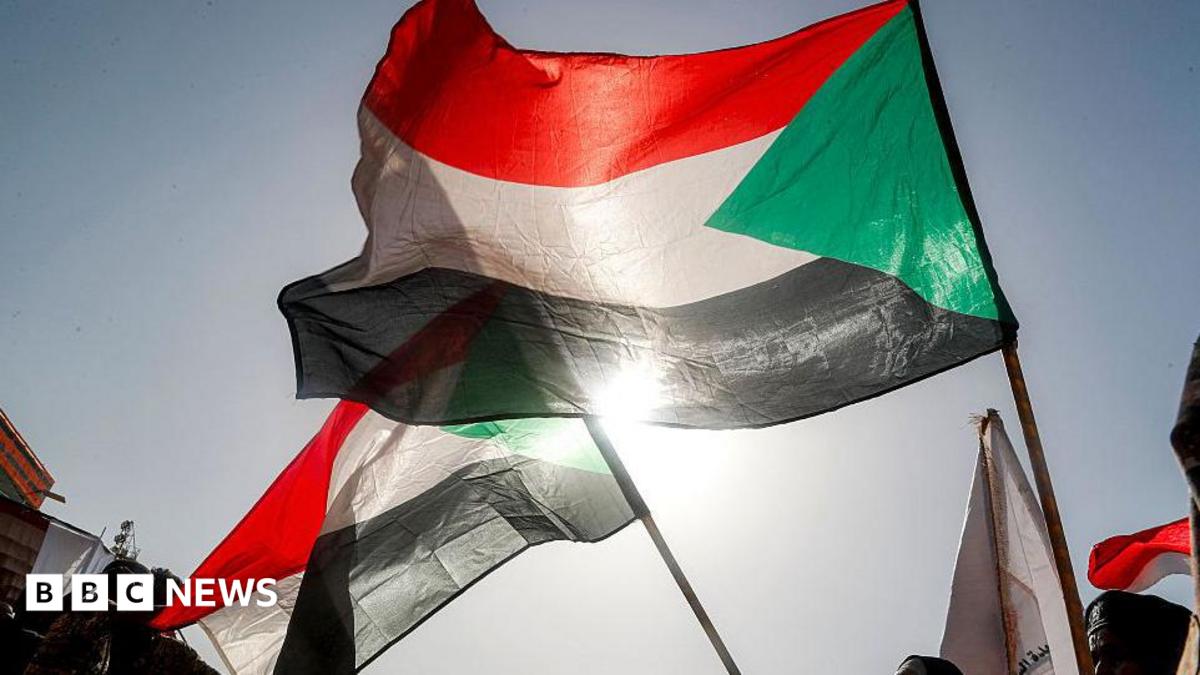
A Fact-Finding Mission established by the United Nations Human Rights Council released a further tranche of survivor testimony on Wednesday [2026-07-08] documenting events around the fall of el-Fasher, the capital of North Darfur — sharpening the evidentiary record of atrocities committed during Sudan's civil war and inviting renewed scrutiny of how the international system intends to respond.
The new material lands in the seventy-second month of a conflict that began in April 2023 between the Sudanese Armed Forces (SAF), led by General Abdel Fattah al-Burhan, and the Rapid Support Forces (RSF), commanded by Mohamed Hamdan "Hemedti" Dagalo. It does not change the legal landscape on its own — the question of genocide has been live in international discourse since the war's first months — but it does reduce the room for plausible denial in capitals that have so far resisted the language.
What the mission says
According to a 9 July 2026 report summarised by Africanews's coverage of the UN Fact-Finding Mission, the panel found "further evidence that atrocities committed by warring parties in the region constitute markers of genocide." The phrasing — markers, not findings — is deliberate. A determination of genocide is reserved, in international law, to a competent court, and the Fact-Finding Mission's mandate is investigative rather than prosecutorial. What the panel does is catalogue conduct that, taken together, satisfies patterns of intent and targeting consistent with the 1948 Convention on the Prevention and Punishment of the Crime of Genocide.
The new tranche focuses on the period leading up to and including the fall of el-Fasher, a city that for most of the war sat as the SAF's last major foothold in the Darfur region. Its loss, reported across Western and regional wires earlier in 2026, displaced the balance of forces across the western states and put RSF-aligned administration in effective control of most of greater Darfur.
What survivors describe
Reporting by Middle East Eye published 11 July 2026 draws on survivor testimony collected and released by the same mission on Wednesday [2026-07-08]. The accounts describe filtering operations, summary executions in and around displacement sites, and the deliberate destruction of communications infrastructure — a pattern consistent with earlier documentation from groups including the Sudan Doctors' Network and ECDC, and with what local lawyers have recorded since 2003 in the original Darfur conflict.
The terms in which survivors and the mission describe the violence are not interchangeable with the legal category of genocide. They are the input to that determination. The distinction matters: the mission's restraint is what gives the eventual finding weight if a court, the International Criminal Court in The Hague, or a future ad hoc tribunal chooses to act on it.
Why the language is moving now
Western capitals have, with limited exceptions, resisted the explicit genocide label in this phase of the war. Public statements from the United States, the United Kingdom and France have variously described "ethnic cleansing," "mass atrocities" and "war crimes" — each of which is a serious charge, none of which carries the same obligations under the 1948 Convention. The Fact-Finding Mission's progressive accumulation of markers narrows the political space for those halfway formulations.
The structural dynamic at work is familiar: investigative bodies established by international institutions release evidence on a calendar of their own, generally slower than news cycles but harder to discount once published. South Africa's late-2024 invocation of the Genocide Convention in proceedings at the International Court of Justice against Israel — centred on Gaza rather than Sudan — established that the legal pathway exists even when major powers are reluctant to use it. Sudan's case sits in a different courtroom but draws on the same procedural grammar.
For Khartoum, the legal framing is also a diplomatic one. Sudan's transitional civilian authorities have intermittently called for international protection and accountability; the SAF leadership has gestured at cooperation with ICC investigators even as it accuses the RSF of the bulk of atrocities. The RSF, for its part, has rejected the jurisdiction of international investigators while denying organised targeting of civilians.
What remains unresolved
The Fact-Finding Mission's work is not a verdict. It is a documented record of conduct, and the record is necessarily partial: investigators have limited access to territory controlled by either warring party, and survivor testimony is filtered through displacement, trauma and the dangers of speaking from within Sudan. The mission itself has flagged gaps in corroboration, particularly around command responsibility for specific operations, and the chain of evidence between named units in the field and the senior political leadership on both sides.
Two questions, in particular, remain contested. The first is the share of responsibility between the SAF, the RSF and their respective aligned militias — a question the fact-finding process can only partially resolve. The second is what the international system intends to do with the record once it is complete. The 1948 Convention imposes an obligation to prevent genocide once a state party has credible information that it is occurring; it does not, on its own, prescribe the means. Enforcement has always been a creature of politics, not of text.
The war's principal external actors — the United Arab Emirates, Egypt, Saudi Arabia, Turkey, Iran and, to a lesser extent, Russia — have reasons of their own not to push the language further. The African Union, despite hosting Sudan's civilian displacement crisis in Chad, South Sudan and Egypt, has been cautious about the legal framing, in part out of deference to member-state position and in part because of its own history with ICC indictments sitting heads of state. Whether the Fact-Finding Mission's steady accumulation of evidence shifts any of those calculations is the question that will define Sudan's diplomatic horizon in the second half of 2026.
Stakes and what to watch
The next movement will come in three places. First, the Fact-Finding Mission's next report cycle, which is expected to consolidate earlier tranches into a fuller narrative on command responsibility. Second, the prosecutor of the International Criminal Court, who in mid-2024 opened a fresh investigative track for Sudan and who has been progressively incorporating civil-society submissions. Third, the African Union and the UN Security Council, where the legal language of any future resolution will turn on whether Washington, London and Paris are prepared to accept the G-word in operative text — or to abstain rather than veto.
For Sudan's civilians, the timetable matters less than the direction of travel. Two years into a war that has produced the world's largest displacement crisis, the difference between "war crimes" and "genocide" in a UN report is not just a semantic one. It is the difference between accountability frameworks that are politically possible today and those that require a coalition which has not yet formed.
This publication framed the UN Fact-Finding Mission's release as a legal-evidence milestone inside Sudan's civil war — a frame shared by the UN press summaries circulated by Africanews and the survivor-testimony-focused reporting carried by Middle East Eye. Western wires have run the structural story from Khartoum and Cairo; the foreign-policy angle from Washington, London and Brussels will turn on whether the new evidence forces a revision of the "ethnic cleansing" language those governments have so far favoured.
Wire provenance
This editorial synthesis draws on the following public wire/social posts:
- https://middleeasteye.pulse.ly/nasnkqrquj