Washington's Saturday deadline: what the Hormuz ultimatum is actually buying
Vice-President JD Vance is expected in Muscat on Saturday as Washington hands Tehran a public deadline to renounce attacks on shipping in the Strait of Hormuz — and the wording of the demand is doing as much work as the timeline.
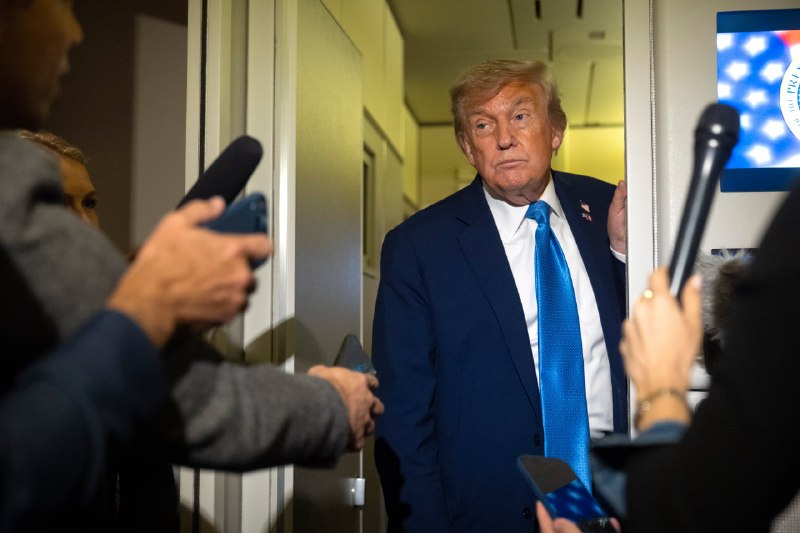
At 02:38 UTC on 11 July 2026, the BBC's World news feed reported that the United States wants Iran to publicly pledge to stop shooting at commercial ships in the Strait of Hormuz, with Vice-President JD Vance among the American officials expected at talks resuming on Saturday in Oman. By 00:26 UTC the same day, the Telegram channel Clash Report had carried a more pointed version of the same story: a US demand that Tehran issue a public declaration that the Strait of Hormuz is "open" and that attacks on shipping end immediately. Two bulletins, two slightly different frames — the diplomatic choreography, and the ultimatum underneath it.
The shape of the demand is the story. A public pledge to stop shooting, delivered in writing and on a deadline, is not the same thing as a quiet de-escalation. It is an ask designed to be either accepted — in which case Washington gets a verifiable, attributable commitment it can hold Tehran to — or refused, in which case the diplomatic ground for a harder response is pre-built. The Omani venue matters too: Muscat has hosted back-channel contact between the two sides before, and the choice signals that the channel is open, even as the rhetoric tightens.
The ask, parsed
What the United States is putting in front of Iran, in plain terms, is a single page: a written commitment that the Islamic Republic will not target commercial vessels transiting Hormuz, and a public acknowledgement that the waterway is open to international shipping. The Saturday deadline reported by both feeds is a hard date, not a framework for further rounds. Vice-President Vance's presence — the BBC names him explicitly among expected US participants — elevates the talks above the working-level track that has handled Iran file-management for most of the past decade.
The asymmetry is structural. Tehran can absorb a written pledge to a deconfliction arrangement with limited domestic cost. What it cannot easily do, in the current climate, is publicly denounce its own allies and proxies in the same breath. A US demand shaped as "stop shooting at ships" is deliberately narrow: it leaves room for Iran to comply without disowning anyone. The harder demand — to renounce or disarm the network that has done the shooting — is not on the page. The clue is what is missing.
What the Iranian side gets to keep
That parsing matters because the alternative read is that this is a setup. A Saturday deadline, with cameras and a senior US principal in the room, looks less like a confidence-building measure and more like a sequenced confrontation. Under that reading, Washington wants the failure of the talks more than it wants a deal: a refused pledge, captured on the public record, hands the administration the legal and rhetorical basis for whatever it does next — additional sanctions, a naval task force formally framed as protecting shipping, or a designation of the IRGC as the architect of the attacks.
The Iranian counter-reading is symmetrical. Tehran can argue that any written commitment to refrain from attacks on shipping in its own littoral waters is itself a concession to a US-led order that has, in its telling, weaponised the strait through sanctions enforcement and naval deployments for years. A pledge of restraint in the face of that pressure is not neutrality — it is a written acknowledgement of who holds the leverage. Iranian state-aligned outlets have made versions of this argument consistently since the latest attacks began; the framing is that the strait is not "open" or "closed" in the abstract, it is open or closed to whom, on whose terms.
The shipping calculus nobody is naming in the headlines
Hormuz is the chokepoint that makes this more than a regional security story. A non-trivial share of globally traded crude transits the strait, and the freight and insurance markets have already priced in the risk: tanker rates on relevant routes have moved, insurers have re-rated war-risk premia, and at least one major charterer has diverted capacity away from the strait for parts of the past month. None of those adjustments show up in the bulletins about Vance's flight to Muscat, but they are the reason the bulletins exist at all. If the strait were marginal, the ultimatum would be.
This is the layer where the diplomatic language and the structural economics diverge. A US ask that delivers a written Iranian pledge to stop attacks is, in the short run, a tanker-rates trade. A US ask that is refused, and is then used to justify a more muscular naval posture, is a longer-duration risk premia trade, with knock-on effects on Gulf producers, Asian importers, and the cost of US Treasury issuance. The Saturday talks sit, in other words, at the intersection of a regional security file and a global energy file. The framing in the headlines privileges the first; the price action is in the second.
What is still not in the public record
Several pieces remain genuinely uncertain as of this filing. The BBC's bulletin says US officials including Vance are "expected to take part," which is a notch below confirmed attendance; the Clash Report wording is firmer but is a single-channel Telegram post, not a wire confirmation. The exact text of the US demand — whether it includes language on proxy forces, on specific vessel categories, or on a reciprocal US posture — has not surfaced in either feed. The Iranian response, public or private, is not in the record. And the Omani read-out, which will be the first authoritative account of what was actually proposed, is several days away.
What Monexus can confirm from the available reporting is narrower than the broader narrative implies: two bulletins, same day, both pointing to Saturday talks in Oman at which Vice-President Vance is expected, with the US asking Iran for a public written commitment to halt attacks on commercial shipping in the Strait of Hormuz. Everything beyond that — motive, plausibility of success, the shape of a follow-on if the pledge is refused — is currently inference, not evidence. Watch the Omani statements on Sunday, and the wording of any Iranian counter-communique. Those are the texts that will tell you which version of the story was the real one.
This piece sticks to the two bulletins on the table — the BBC World feed at 02:38 UTC and the Clash Report post at 00:26 UTC on 11 July 2026 — and reads between them for what the diplomatic wording does and does not say. Where the wire language and the Telegram framing diverge, both are flagged.
Wire provenance
This editorial synthesis draws on the following public wire/social posts:
- https://t.me/BBCWorld/
- https://t.me/ClashReport/