US team heads to south Lebanon as IDF widens strike pattern inside the buffer zone
A US technical team is set to back the Lebanese army in pilot zones south of the Litani, while the IDF publishes footage of Hezbollah operatives moving anti-tank missiles inside the Security Zone.
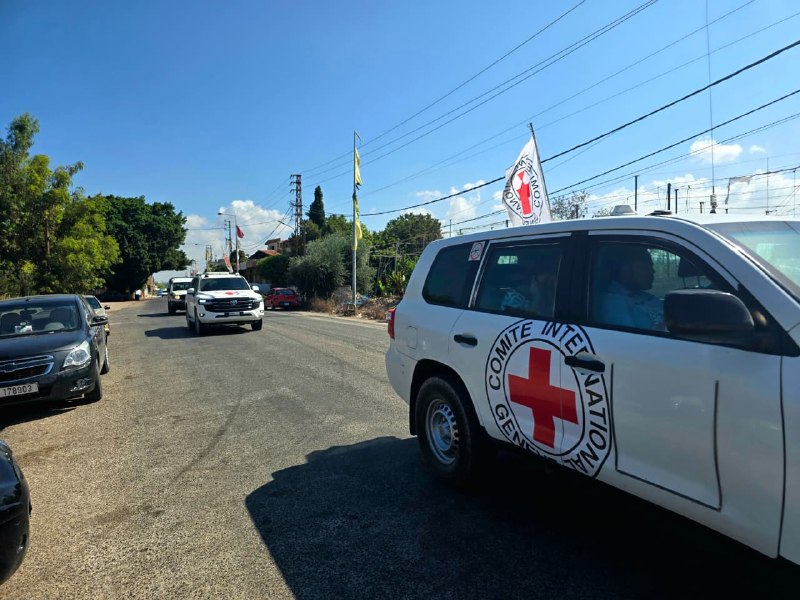
A US technical team will deploy to south Lebanon in the coming days to back the Lebanese Armed Forces in designated pilot zones south of the Litani River, Al-Arabiya reported on 11 July 2026, in the most concrete US footprint inside the post-November ceasefire architecture since it took shape. The mission, as described to Al-Arabiya, is narrow: accompany Lebanese army units, verify that pilot zones are clear of Hezbollah infrastructure, and report back. The framing is verification, not combat.
That restraint is doing real work. Within hours of the Al-Arabiya report, the Israeli Defense Forces published two distinct pieces of battlefield evidence from inside the same buffer zone the US team is meant to police. The first, a video circulated by Open Source Intel at 18:01 UTC on 11 July, shows Hezbollah operatives transferring anti-tank missiles into a structure inside the Security Zone; the IDF struck the site from the air to remove the threat. The second, posted at 17:31 UTC, documents an earlier strike on a Hezbollah weapons cache in the buffer zone in which secondary explosions were observed after impact. The two threads are not separate stories. They are the same argument, told from opposite ends of the Litani.
The verification mission, in plain terms
Al-Arabiya's reporting frames the US contingent as a backstop for the Lebanese army rather than a replacement for it. The Lebanese Armed Forces remain the nominal authority on the ground; American personnel are there to confirm that pilot zones, the small geography south of the Litani that the November ceasefire arrangement carved out for phased Hezbollah disarmament, are actually empty of missile teams, anti-tank squads, and tunnel infrastructure. The mission is described in the report as a start, not a finish: the zones are pilot areas, intended as proof of concept before any wider extension.
That sequencing matters. Beirut has been explicit, in statements carried by Al-Arabiya and regional outlets, that it wants the LAF to own the security outcome in the south rather than inherit a UNIFIL-plus-Israel arrangement that freezes the dispute in place. A US presence that props up the LAF, rather than substitutes for it, gives the Lebanese state something it can show domestically: that disarmament in the south is being run by Lebanese uniforms with American logistical backing, not imposed by foreign troops. The political purchase of that distinction is the entire reason the pilot-zone language was used in the first place.
What the IDF is showing, and why
The two Israeli releases on 11 July are evidence in a different register. The anti-tank transfer video, timestamped 18:01 UTC, is the kind of material the IDF Spokesperson's unit has been producing since the ceasefire took hold: short, sourced, geolocated footage of a Hezbollah cell doing something the ceasefire forbids, followed within hours by a strike. The cache strike at 17:31 UTC, with its secondary explosions, makes the same point at the level of materiel rather than personnel: weapons are still being moved into the buffer zone, and the IAF is still prepared to destroy them on site.
The subtext, visible to anyone who has watched the IDF's English-language output over the past seven months, is that Israel does not intend to treat the pilot-zone framework as a reason to hold fire. The Israeli security concern at the heart of the arrangement, anti-tank teams within range of northern Israeli towns, rocket infrastructure that can be reactivated, and a hostile force embedded inside the area the LAF is supposed to clear, is treated in Jerusalem as ongoing, not residual. The strikes are also a quiet message to Washington: any verification mechanism that takes more than hours to convert intelligence into action will be operating in a space Israel has already decided to police unilaterally.
The gap between the two pictures
The interesting question is not whether the US and Israeli accounts of 11 July contradict each other. They do not, exactly. They describe two different layers of the same problem. The American layer is institutional: can the Lebanese army, with outside help, build enough credible control of a slice of its own territory that Hezbollah's military presence there becomes politically and logistically untenable. The Israeli layer is tactical: right now, in this specific structure, with these specific missiles, the threat has to be removed by direct action because the institutional answer is not yet in place.
Both can be true. The pilot-zone framework is, by design, a transitional arrangement in which the institutional answer catches up with the tactical reality. The risk, visible in the 11 July footage, is that the catch-up takes longer than Israeli planners are willing to wait, and that the strikes inside the buffer zone harden into a standing campaign rather than a residual one. The risk in the other direction is equally real: a US deployment that produces verification reports nobody trusts, on a timeline that lets Hezbollah reconstitute in the gaps, would validate the Israeli argument that the buffer zone can only be held by direct fire.
What to watch over the next two weeks
Three dates will tell more than the day's communiqués. First, the actual arrival of the US team in south Lebanon and the publication of the pilot-zone boundaries on a map; the absence of a public map is the single biggest source of ambiguity in the Al-Arabiya reporting, and ambiguity on geography is the kind of ambiguity that erodes ceasefires. Second, the IDF's strike tempo inside the buffer zone over the next ten days; a sustained pace would suggest Jerusalem has decided the pilot-zone clock is too slow. Third, any Lebanese government statement that names, in plain language, what the LAF intends to do about anti-tank teams in the area once the US team begins its work.
The deeper story is older than the November ceasefire and bigger than the Litani. The arrangement the US is now trying to operationalise treats Hezbollah's military presence in south Lebanon as a problem of state capacity: build LAF capacity, verify the result, and the armed group's position in the south becomes politically unsustainable. The arrangement the IDF is enforcing on 11 July treats the same presence as a problem of immediate threat: locate the missiles, strike the cell, repeat. Neither approach is wrong on its own terms. The unresolved question, and the one the next two weeks will answer one way or the other, is whether the two approaches can run in the same geography at the same time without one of them quietly winning.
Desk note: Monexus is framing this story around the gap between an institutional track (US-LAF verification) and a tactical track (IDF strikes inside the buffer zone) rather than as a simple escalation narrative. Wire coverage on 11 July emphasised the deployment itself; the more durable question is whether the two tracks can coexist.
Wire provenance
This editorial synthesis draws on the following public wire/social posts:
- https://t.me/s/osintlive
- https://twitter.com/Osint613/status/2076
- https://t.me/s/osintlive