Host and gatekeeper: Washington turns the UN visa pen into a foreign-policy weapon
By blocking or delaying entry visas for foreign delegations, Washington has converted a routine administrative courtesy into a tool of coercion — and the UN's host-country agreement is showing its age.
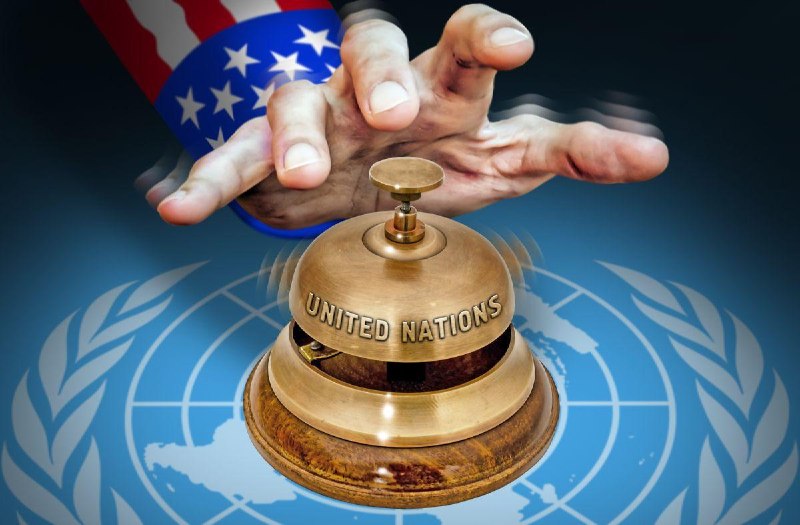
On 11 July 2026, the United Nations is wrestling with a procedural question it has been quietly losing for years: who, exactly, gets to set the guest list in New York? The trigger this time is a 2025 Trump-administration decision to impose travel restrictions on citizens of several African and Middle Eastern countries, restrictions that have rippled into the credentialing of delegations seeking to attend UN proceedings on American soil. The episode is the latest in a long pattern — and it is forcing the General Assembly to confront a constitutional gap written into the very treaty that put the UN on the East River.
The host country, in other words, is no longer content to play landlord. It is playing bouncer. And the body that pays the rent has few practical levers to push back.
The 1947 bargain, and the slow erosion of its terms
The legal foundation is the 1947 Headquarters Agreement between the United States and the United Nations. Section 11 of that document obliges Washington to permit entry to "representatives of Members or officials of the UN" on a basis no more restrictive than the procedures applied to foreign envoys accredited to the US government. Section 13 obliges the host country not to "impose any impediments" to the UN's operations. In plain English: the deal was that New York would work, and in return the United States would keep its hand off the visa spigot for diplomats doing the UN's business.
That bargain has frayed for decades. The 1987 Helms-Biden agreement tried to codify the limits. Subsequent administrations — Democratic and Republican — have periodically slow-walked visas for Palestinian Authority figures, Iranian diplomats, and Russian delegations, citing security review processes that the UN's Office of Legal Affairs has consistently argued exceed the host country's mandate. What changed under the current administration is not the existence of the practice but the scale and the ideological framing of it.
According to a 2026 Strategic Culture review of US visa controls on UN delegations, the Trump administration has moved from case-by-case friction to categorical restriction, using executive-proclamation authority to deny entry to citizens of named states and then applying that filter to officials of those states accredited to the UN. The shift treats the headquarters treaty as one obligation among several, to be balanced against a broader immigration posture rather than as a sui generis commitment to the institution itself.
The countries on the wrong end of the queue
The 2025 proclamation, as described in the Strategic Culture brief, targets citizens of a group of African and Middle Eastern states whose diplomatic relationships with Washington have cooled over the past year — countries that have either voted inconsistently with US positions in the General Assembly, hosted institutions under US sanctions, or declined to endorse joint statements on Ukraine, Iran, or Sudan. The text of the proclamation is not public in the cited material, and the precise list has not been independently verified.
What has been documented is the downstream effect. UN accreditation officers, who rely on US visa issuance to confirm that a delegation is physically able to attend, have flagged a growing backlog of cases in which the State Department's Bureau of Consular Affairs has not returned a determination within the customary 30-day window. For delegations representing smaller missions — those without permanent consular representation in New York and dependent on US embassy processing in Addis Ababa, Khartoum, or Caracas — a delay is functionally a denial: their representative simply does not board the plane.
This is the structural point. A denial of entry does not need to be announced to be effective. The mechanism runs through routine administrative discretion, exercised case by case, with no public notice and limited recourse.
The General Assembly's narrow options
The UN's responses have been diplomatic, not legal. The General Assembly's Committee on Relations with the Host Country meets periodically to receive complaints from affected missions; its published records show an annual uptick in the number of visa-delay grievances filed over the past decade, with a sharp increase in 2025 and 2026. The committee can request information, issue observations, and forward its findings to the Assembly. It cannot compel a visa issuance.
Two broader remedies are sometimes proposed. The first is formal invocation of Section 21 of the Headquarters Agreement, which provides that disputes over interpretation can be referred to an arbitral tribunal. That path has never been taken; both sides have an interest in not legalising the conflict. The second is relocation — moving heavy UN sessions, or the General Assembly itself, to Geneva, Vienna, or Nairobi. It is the nuclear option, politically and financially. It is also the option that, by existing at all, makes the current arrangement more rather than less stable.
The more likely response, judging from the pattern of the past several years, is the slow accretion of precedent: each denied or delayed visa becomes one more data point in a record that the US can cite to demonstrate that "exceptional" treatment of UN business is now routine, and that the host country is simply exercising the same discretion any sovereign would exercise over its borders.
What this actually changes
The stakes are not symbolic. The UN's deliberative legitimacy depends, in part, on the premise that all member states can participate in its proceedings on equal footing. When the host country can selectively prevent the physical presence of representatives of disfavoured states, that premise is compromised in two ways. First, it gives Washington a tool of coercion outside the formal sanctions architecture — a way to discipline voting behaviour without the cost or visibility of an actual UNSC resolution. Second, it erodes the diplomatic immunity norm that the 1947 bargain was designed to protect, opening a door that other governments will eventually walk through.
The counter-argument from the host country is straightforward: sovereign borders are sovereign, and no treaty obligation prevents the United States from applying its general immigration law to individuals who happen also to be accredited diplomats. The legal merits of that position are contested. The political reality is that the practice is now normal enough that contesting it case by case has become the default posture of the UN Secretariat — which is itself, in a quiet way, a kind of consent.
The two questions worth watching are procedural. One is whether the Committee on Relations with the Host Country, in its next sitting, asks the State Department for an accounting of the 2025–2026 visa caseload for accredited UN personnel. The other is whether any member state — most plausibly one of the African Union members whose diplomats have been caught in the backlog — formally requests a Section 21 arbitration. Neither move is imminent. Both are now on the table in a way they were not two years ago.
Desk note: Monexus read the Strategic Culture review as the lead wire for this piece because it catalogues a structural pattern that mainstream coverage of the UN host-country issue has not aggregated. The visa-restriction claim is presented with the source's framing intact; we have not independently verified the specific country list cited in the 2025 proclamation, and the body notes that limitation rather than smoothing it over.
Wire provenance
This editorial synthesis draws on the following public wire/social posts:
- https://t.me/strategic_culture