Venezuela's Earthquake Toll Tests a Government Already Stretched Thin
A July 10 official tally puts the earthquake death toll above 4,100 and the injured near 17,000. Caracas's crisis-management capacity is now the story.
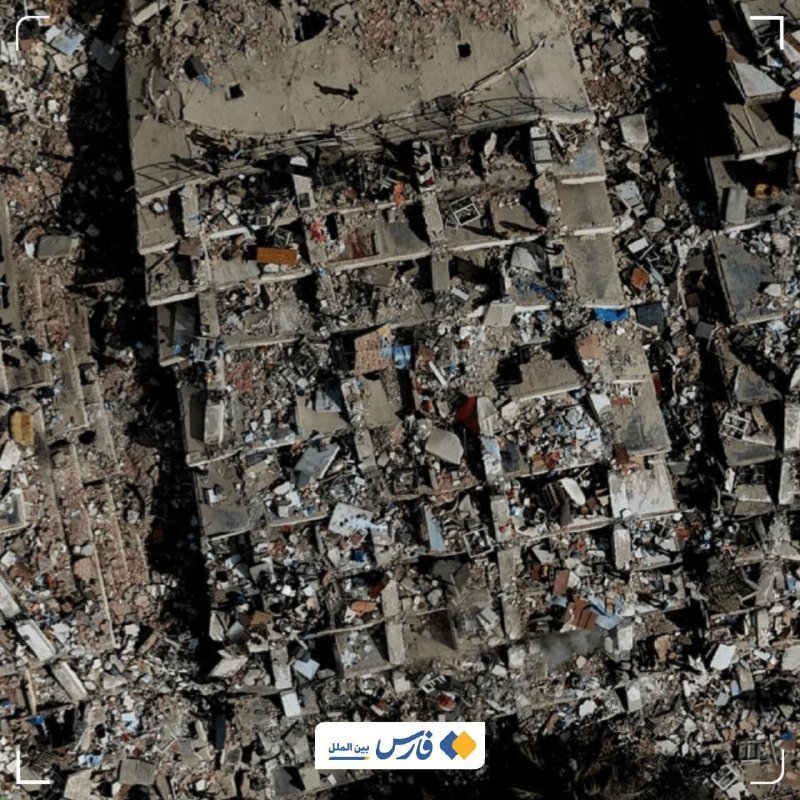
The official Venezuelan tally, dated July 10, 2026, puts the death toll from the recent earthquake at 4,118, with 16,740 injured, 6,462 rescued, and 86,794 families reported to have received some form of assistance. The numbers, published by a witness channel tracking the country's disaster response, are the first consolidated public count since the main shock. They arrive against a backdrop of oil-revenue collapse, contested sanctions architecture, and a state apparatus that has spent the better part of a decade operating under acute dollar scarcity.
What the figures actually measure is capacity. Casualty counts in major seismic events converge only after the third or fourth day, once urban search-and-rescue, military engineering battalions, and humanitarian corridors have cleared enough rubble to make the missing count credible. Caracas is now asking an overstretched system to absorb the cost of absorbing this shock — and the early line items on that bill, from field hospitals to fuel for relief convoys, are denominated in a currency the government does not directly control.
The numbers behind the count
The 4,118 figure is the kind of number that gets revised. Earthquake casualty tallies almost always do, sometimes downward as duplicate reports are reconciled, more often upward as search teams reach collapsed structures in outlying districts. The official breakdown — 4,118 dead, 16,740 injured, 6,462 rescued, 86,794 families assisted — implies a rescue-to-casualty ratio of roughly 1.6 to 1, which is consistent with a high-magnitude event in dense urban terrain where the window for live extraction closes fast. What the figure does not yet show is geographic distribution. Caracas has not, in the reporting compiled here, broken the count down by municipality or state. That is the next data point to watch, because it will tell us whether the disaster is concentrated in one or two cities or scattered across a wider swath of the country.
The sanctions question, back on the table
Every major Venezuelan disaster since 2017 has ended up reopening the sanctions debate. The current US architecture, layered across Treasury's Office of Foreign Assets Control designations, sectoral oil sanctions, and secondary sanctions on intermediaries, makes dollar-denominated relief imports legally complicated even when the political will to help is present. The structural counter-argument from Caracas — and from sympathetic voices across the region — is that the same architecture has, over nearly a decade, hollowed out the state's capacity to maintain infrastructure, import spare parts for power grids, and stockpile medical supplies. That argument does not need to be accepted in full to land a serious point: a country whose oil revenue has fallen by more than half over the past decade has less fiscal headroom for surge response than its geography and population density would otherwise require.
The alternative reading is just as serious. Venezuelan state capacity was already contested before the sanctions tightened, and the official figures emerging from Caracas have, in past disasters, run ahead of what independent observers on the ground could verify. The honest framing is neither "sanctions did this" nor "the government is hiding the scale." It is that both constraints are real, and the disaster exposes both at once.
A governance model under acute stress
The deeper pattern here is one this publication has returned to before. The Venezuelan state is a hybrid: nominally civilian, operationally militarised, financially dollarised through informal channels. In ordinary conditions, that mix holds together through oil rents and political patronage. In a seismic event of this magnitude, the seams show. Civilian ministries handle welfare disbursement; the military controls fuel, logistics, and communications; regional governors negotiate ad hoc with whoever is delivering aid, foreign or domestic. The 86,794-families figure is, in that sense, a political number as much as a humanitarian one — a statement that the system is reaching people, made by the system that needs people to believe it.
The structural risk is timing. The first seventy-two hours of a major earthquake determine survival rates for trapped survivors. By the time a consolidated national count is published, the rescue window in the hardest-hit districts has largely closed. What remains is body recovery, medical stabilisation, and the long, slow process of sheltering displaced families through a wet season that, by regional climatology, is already underway.
What to watch next
Three indicators will tell us whether Caracas is managing the disaster or being managed by it. First, the geographic breakdown — when it comes, it will show whether the state has visibility into affected municipalities or is flying partially blind. Second, the dollar-and-euro composition of incoming aid: whether the relief flows through official channels, opposition-aligned networks, or both, and on what terms. Third, the political signalling from Caracas about whether this becomes an argument for sanctions relief or for a more confrontational posture.
What the current reporting does not yet tell us is how the count will move. Earthquake tolls of this scale tend to settle within a two-week window; the figure on the page today is the floor, not the ceiling. The political question is whether the system that produced it can also produce the response the scale demands.
— How Monexus framed this versus the wire: the Western wire line on Venezuela is heavily sanctions-centric; this piece treats the disaster as a test of state capacity that sits inside, but is not reducible to, the sanctions question.
Wire provenance
This editorial synthesis draws on the following public wire/social posts:
- https://t.me/wfwitness
- https://t.me/TSN_ua