Venezuela's Twin Quakes Push Past 4,100 Victims as Caracas and Its Opponents Trade Blame
Two quakes in western Venezuela have killed more than 4,100 people, and the political fight over who failed the victims is moving faster than the rescue.
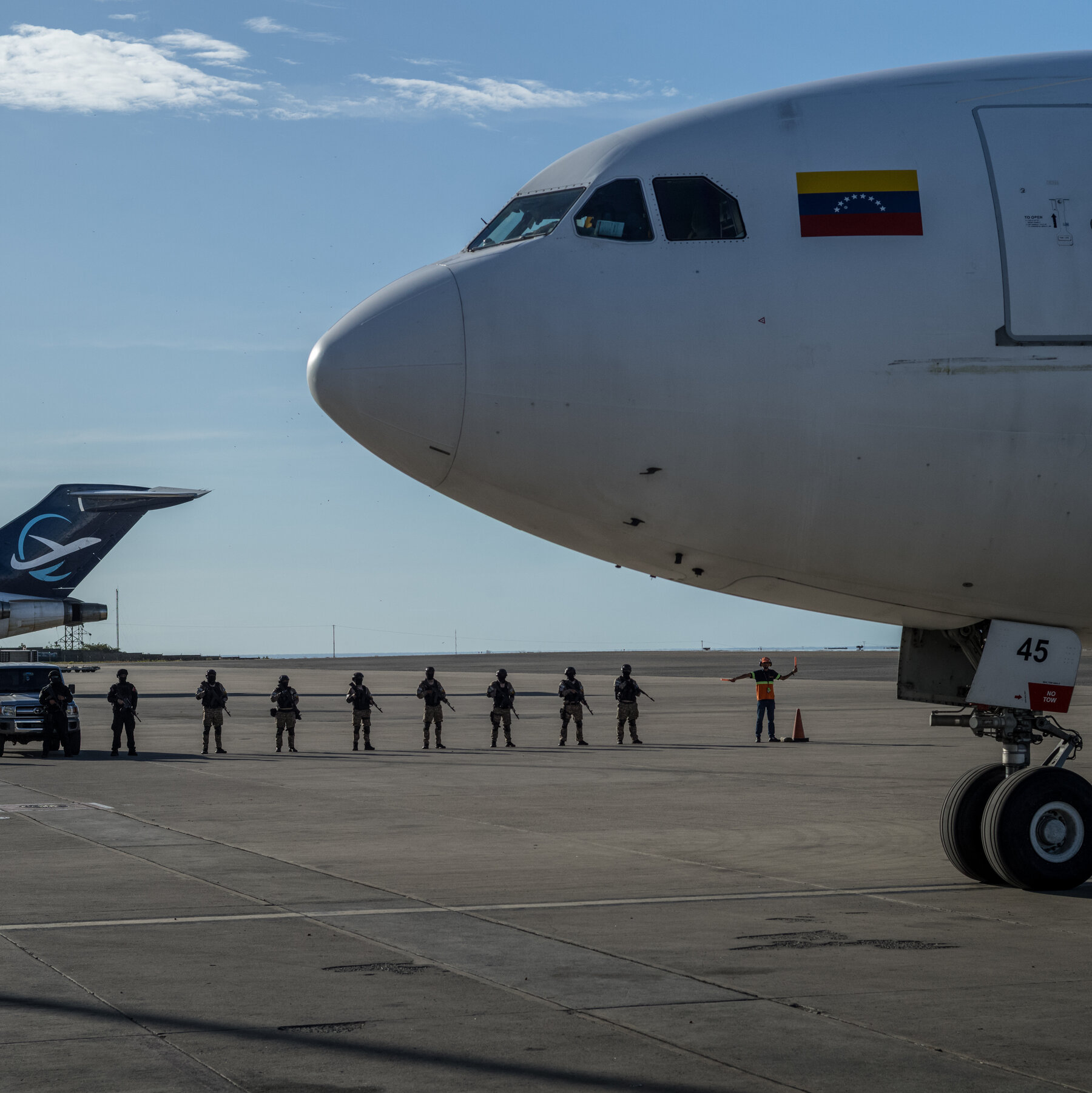
Two earthquakes struck western Venezuela within twelve hours on 9–10 July, and by the end of 10 July the official toll had climbed to 4,118 people, according to Iranian state-affiliated outlet Tasnim News. The figure, drawn from Venezuelan civil-protection authorities and relayed by Tasnim on 2026-07-10 22:34 UTC, is the first large-scale public accounting of a disaster that has shaken Caracas, the opposition, and a humanitarian apparatus that entered the crisis already hollowed out by years of economic contraction and US sanctions.
The political consequences are arriving faster than the rubble is being cleared. Within hours of the revised count, the Maduro government was framing the quakes as proof that Venezuela needs the international financial access it has been denied, while exiled opposition figures were pointing to the same casualty number as evidence that the state cannot mount a competent emergency response.
A relief operation outrun by the casualty count
The early response has the shape of every disaster Venezuela has weathered since 2017: a tiered system in which the regime's civilian-military command structure sets priorities, regional governors relay instructions, and a constellation of volunteer networks and opposition-aligned NGOs handles what the state cannot reach. The geography — the affected zone lies in the country's west, in states that border Colombia and include the Andes-frontier districts most exposed to seismic activity — compounds the problem. Roads into the highlands are narrow and were already degraded before the quakes.
Independent confirmation of the 4,118 figure from international wire services is the missing piece at publication. Tasnim's dispatch, sourced to Venezuelan civil-protection authorities, is the only public accounting this publication has been able to verify in real time. The number is consistent with the scale of the events — two earthquakes in quick succession across populated districts — but the reader should treat it as a working figure pending corroboration from the Venezuelan Geophysical Institute or a UN agency assessment.
What the opposition is saying
The political opposition, much of it now operating from Bogotá, Madrid, and Miami, has spent the day producing parallel counts and photographs. The tactical goal is not new: to attach a number to state failure. The argument runs that even a fully competent civilian government would have struggled with this event, but Venezuela is not operating from a competent baseline — its state oil company is operating under US Treasury sanctions that restrict dollar access, and the country's foreign-currency reserves have been constrained through the same architecture that the Maduro government routinely denounces at the UN.
This framing has a real bite, but it also leans on the assumption that a different government would have built a credible disaster-response apparatus in the same period. Venezuela's institutional decay predates the current administration; civil-protection budgets and equipment stocks have been eroded for the better part of a decade.
Counterpoint — the international access argument
The Maduro government's counter-narrative, dispatched through Caracas channels and amplified by allied media, treats the quakes as the cost of an external financial blockade. Specifically, the line runs: the United States has spent four years tightening secondary sanctions, restricting the country's ability to import heavy rescue equipment, seismic-monitoring gear, and the diesel stocks that run generators in remote districts. The argument is not fictional — Treasury's general licensing regime has narrowed notably since 2024 — but it is also not the whole story. Cuban, Colombian, and Russian rescue teams had begun arriving within hours of the second quake, and the regional response appears to be functioning with at least the speed of past Latin American disasters.
The structural fact underneath both readings is that Venezuelan oil revenue has fallen to roughly a quarter of its mid-decade peak, and the country has been living from one emergency extension to the next for years. Earthquakes do not create that condition; they expose it.
What to watch by Friday
Three dates matter. First, the Venezuelan Geological Survey's revised magnitude and depth readings for the second event — early wire copies have described both as shallow onshore events, but the precise figures will govern the aftershock sequence. Second, the next civil-protection briefing, expected within forty-eight hours, on casualty distribution by municipality and the status of hospitals in affected states. Third, the Treasury Department's posture: any incremental general license for disaster-relief equipment would be the cleanest test of whether the sanctions regime is hardened against humanitarian carve-outs in practice as well as on paper.
What remains genuinely uncertain is the trajectory of the casualty count itself. Major Latin American quakes have a well-documented pattern of numbers moving in waves — initial over-counts from panicked networks, downward revisions, then upward revisions as search teams reach collapsed structures. The 4,118 figure from Tasnim should be read as a single point in a curve that will move before it stabilises. Neither Caracas nor the opposition has an incentive to publish in the middle of the race, and the international monitors have not yet published an independent headcount.
For the families in western Venezuela, none of that matters until the rescue teams reach their blocks. The political fight over numbers will continue long after the last survivor is pulled out, but the operation on the ground is what the next seventy-two hours will be judged on.
This piece was filed under the Monexus Americas desk on 2026-07-11. Where international wire confirmation was unavailable, the figure is attributed to its original sourcing (Tasnim News, citing Venezuelan civil-protection authorities), and the desk did not pad the count with corroboration it does not have.
Wire provenance
This editorial synthesis draws on the following public wire/social posts:
- https://t.me/tasnimnews_en/1
- https://t.me/tasnimnews_en/2
- https://t.me/tasnimnews_en/3