Venezuela's twin quakes expose a state that cannot save itself
More than two weeks after twin earthquakes struck western Venezuela, the official death toll has crossed 4,100 and the rescue phase has ended. What the numbers actually reveal is a state whose capacity to respond has been hollowed out long before the ground shook.
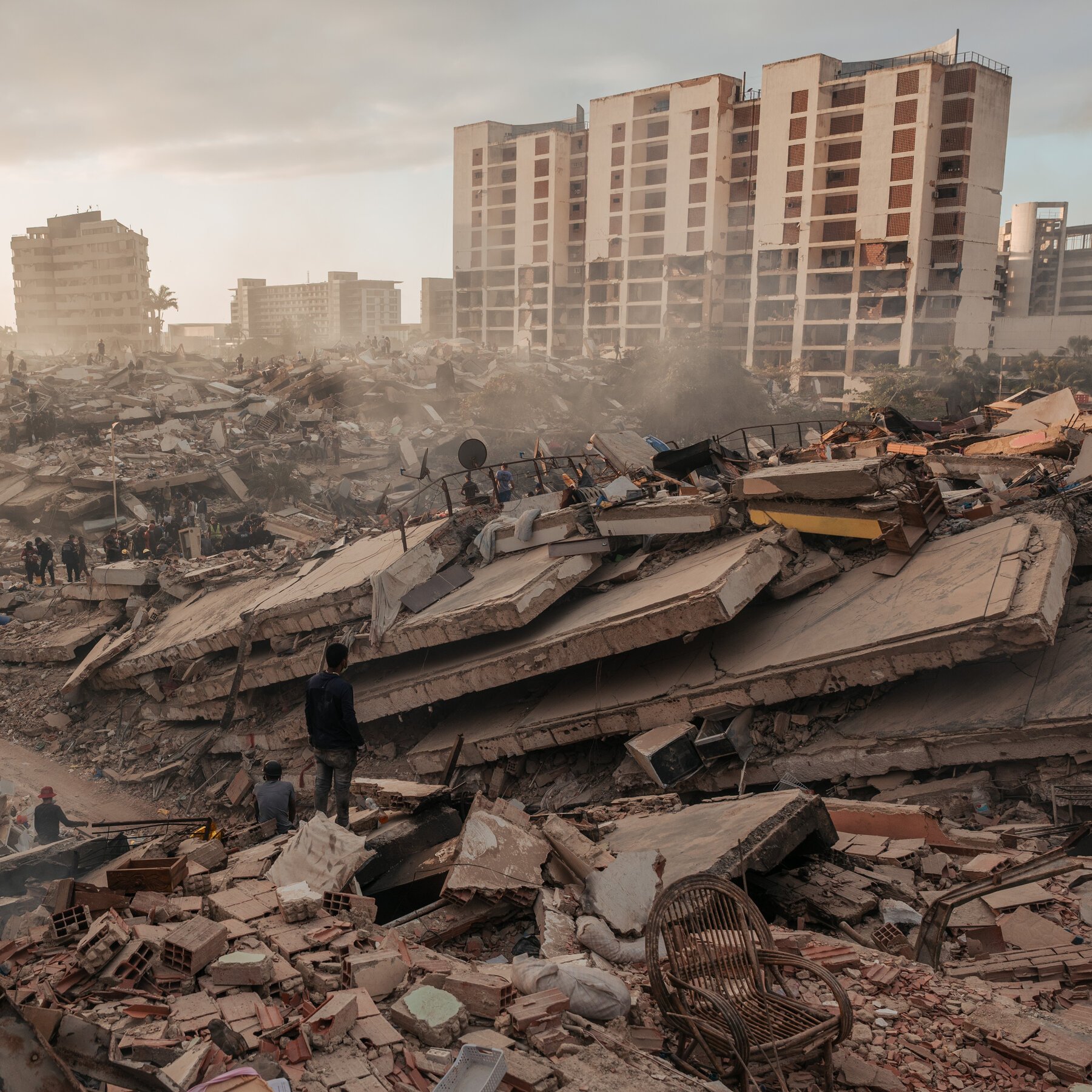
At 03:19 UTC on 11 July 2026, the second of two earthquakes struck western Venezuela, and a country that had spent the better part of a decade training itself for catastrophe found itself, once again, improvising. By Friday morning Caracas time, authorities had raised the nationwide death toll to 4,118, with 16,740 people injured and 6,462 pulled from rubble by neighbours, firefighters, and volunteers working with hand tools and a handful of excavators (sprinterpress, 11 July 2026, 08:19 UTC). France 24 framed the same morning's update in starker terms: families still sifting through debris more than two weeks after the first shock, hoping for a sign that their missing relatives had simply lost their names in the paperwork of the rescue (France 24, 11 July 2026, 08:11 UTC).
The numbers are not abstractions. They are the ledger of a state that asked its citizens to wait, and then asked them to wait again. Beneath the rolling tally sits a simpler, more uncomfortable question: what kind of government is left when the ground gives way, and where does the capacity to save people actually live?
What the first hours looked like
The tremors hit Zulia and the surrounding Andean flank in sequence, the first registering in the high sixes and the second close behind. Cellphone video circulated within minutes, much of it recorded by people who had run into the street in whatever they were wearing. Fire services in Maracaibo reported being overwhelmed before midnight local time. The national guard deployed from Caracas, roughly 600 kilometres east, but the highways through the Andes were already buckled in places, and convoys that should have arrived by dawn arrived by midday (sprinterpress, 11 July 2026, 08:19 UTC).
The 6,462 rescued figure is the part of the count that matters most. It came from neighbours, not from above. Caracas-based television crews filmed the same pattern in every cordoned street: a grandmother directing traffic, teenagers passing buckets of concrete dust, a single backhoe shared between three blocks. The state was present at the margins, in cordons and loudspeaker announcements. The labour of rescue was private.
The framing the government prefers
President Nicolás Maduro's administration has moved quickly to centralise the narrative. Official statements describe the quakes as a test of national resilience, blame the international sanctions architecture for any shortfall in heavy equipment, and frame international humanitarian offers as conditional or hostile. The argument has internal logic: oil revenue, the state's primary fiscal lifeline, has been compressed for years, and a depleted treasury cannot stockpile the kind of search-and-rescue capacity that Chile or Japan carry as a matter of routine. That is not a conspiracy theory. It is a budget line (France 24, 11 July 2026, 08:11 UTC).
The harder question is what the same budget has funded instead. Venezuela's military and intelligence apparatus have grown even as public-works capacity has contracted. The country that built the cable-stayed bridges of Maracaibo in the 1970s cannot now fabricate enough sheet piling to shore a collapsed school. That disparity is not an earthquake problem. It is a political choice, and it precedes the disaster.
The framing the opposition prefers
The Unitary Platform and its diaspora allies offer the mirror image. In their telling, the rescue shortfall is the predictable yield of two decades of misrule, with the quakes merely exposing what was always there. They point to the pre-2014 infrastructure stock as evidence of a baseline that has been drawn down, and to the emigration of an estimated 7 million Venezuelans as a tax base that no longer exists to fund a response of the scale required. The opposition's preferred counter-policy, a transition government backed by external guarantees, has its own constituency in Caracas and in Washington (France 24, 11 July 2026, 08:11 UTC).
Neither frame is wrong. Both are incomplete. The opposition's read explains the chronic underinvestment; the government's read explains the foreign-exchange constraints that shape any rescue; what neither explains is why an oil state with nine years of compressed revenue still cannot pre-position three working heavy-rescue platoons along its most seismically active corridor.
What actually has to happen next
Three concrete claims fall out of the reporting on the morning of 11 July 2026. First, the casualty curve has not flattened in any of the digits Caracas is publishing; the 4,118 figure is the running total, not the ceiling. Second, the international medical and shelter offers that have arrived are being routed through channels the opposition does not fully trust, which raises the price tag of every bed and tarpaulin delivered. Third, the rainy season over the Maracaibo basin is roughly six weeks away, and the displaced are currently sheltered in schools and churches whose roofs were not rated for the load (sprinterpress, 11 July 2026, 08:19 UTC).
A credible response over the next ninety days looks like this: an internationally monitored donor channel that bypasses the central treasury but lands at municipal level; a temporary waiver of secondary sanctions for medical and shelter imports, narrowly drawn; a transparent civilian casualty registry, published daily, that both Caracas and the opposition can attest to. None of that requires a government to fall. All of it requires one to operate.
The source material does not let this publication say with confidence whether that operating posture will materialise. The morning of 11 July brought updated numbers and continued footage of rescue, but no public signal of a coordination mechanism the opposition trusts. What the sources do support is a narrower claim, and it is the one worth holding onto: a state that cannot save its own people when the ground shakes is, in the most literal sense of the word, failing at the first obligation of sovereignty. The question after the rubble is cleared will not be which leader presided over the disaster. It will be what was built, or not built, in the decade before it struck.
Desk note: Monexus is reporting this from the casualty figures and on-the-ground footage available on the morning of 11 July 2026, framed as a test of state capacity rather than a natural-disaster narrative; further updates will track the casualty curve and the donor architecture as it takes shape.
Wire provenance
This editorial synthesis draws on the following public wire/social posts:
- https://x.com/sprinterpress/status/1943943927808713217