Diggs plants his flag at WR2, and the free-agency math quietly shifts
Stefon Diggs has no team and no audition tape from this season. What he does have, he told reporters on 12 July 2026, is a ranking he intends to make every front office recite back to him.
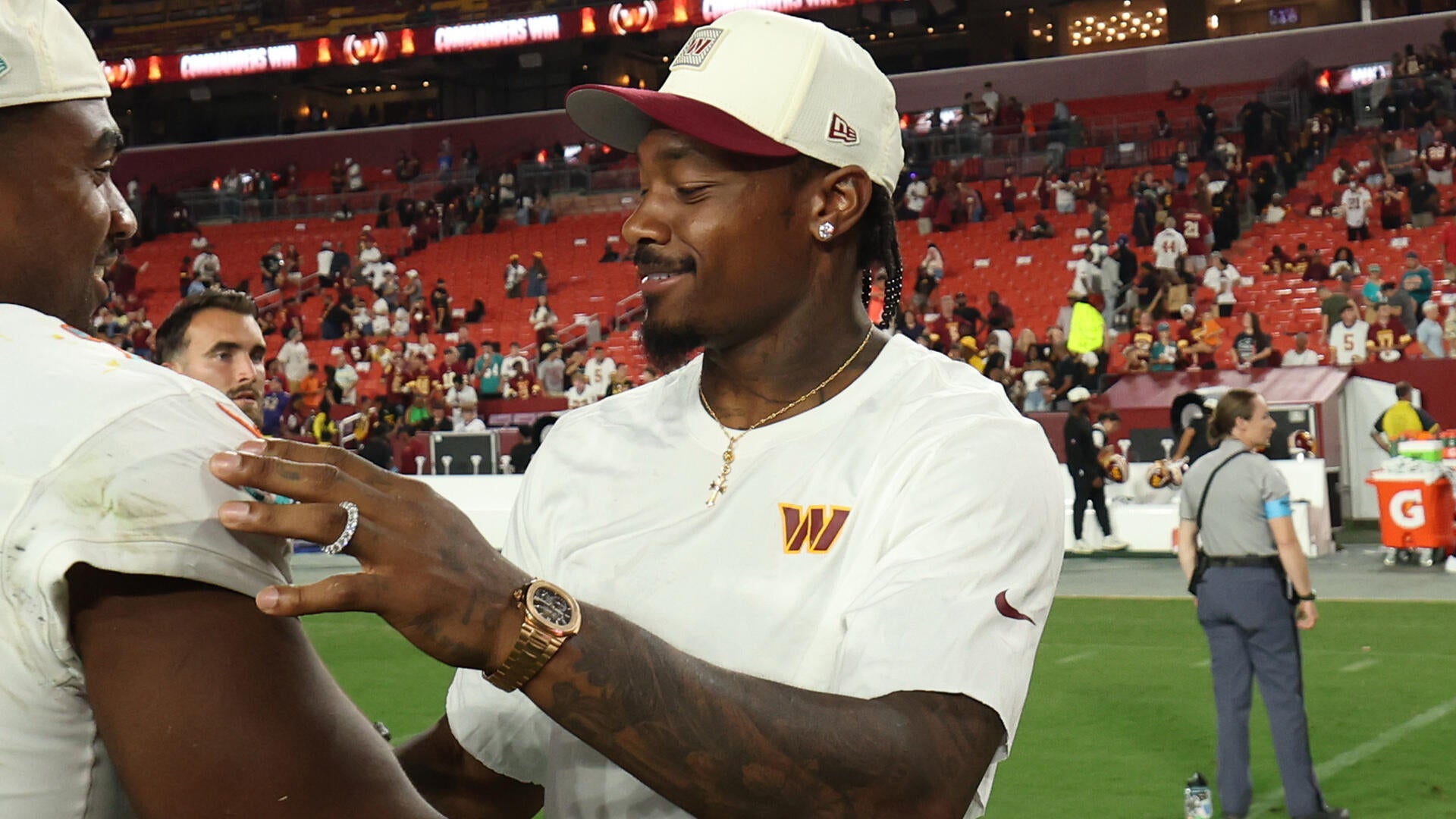
On 12 July 2026, with training camps roughly three weeks out and his playing future unsigned, Stefon Diggs gave the league's 32 front offices the only leverage a 32-year-old unsigned wide receiver can manufacture: a quote. Speaking to reporters on a Sunday conference call, the former Buffalo Bills and Houston Texans target said plainly that no wide receiver currently listed as a secondary option on an NFL roster is better than him, and that he ranks himself above all of them.
The line was less boast than positioning. Diggs is coming off a 2025 campaign that, by his own framing, no longer slots him among the league's alpha receivers, the players who draw top-of-the-market contracts and command first reads on every down. He is insisting, in essence, that he is the best of the next tier, and that the price tag for that tier has been set below what he intends to collect. For a free-agent market starved of proven perimeter production, that is a meaningful distinction.
The case the wideout is making
Diggs' argument, as reported, is structural rather than statistical. NFL rosters across the league pay a premium to the No. 1 receiver, the player offenses build around, and a measurable step down to the second option. Diggs is conceding the first tier. He is staking his claim to the second, with the implicit message that any team looking to upgrade its supporting cast should be on the phone this week. As CBS Sports framed it on 12 July, the calculus matters for any club whose depth chart features a wideout two or three years younger but markedly less accomplished.
His resume is the receipts. Five seasons of 1,000-plus receiving yards, multiple All-Pro selections and a 2020 receiving-yardage crown are not arguments a public-relations team built; they are logged in league databases. What is also logged, fairly, is the dip in production that followed his mid-2024 trade from Buffalo to Houston, and the lower-body injuries that limited him through the back half of the 2025 calendar. The wide receiver he is today is not a carbon copy of the player who paced the Bills' aerial attack earlier in the decade. He is a player asking teams to price the distance between those two versions, not the version itself.
What an offer sheet would actually have to clear
The second tier of NFL receivers, by late-career precedent, generally commands annual values in the low double-digit millions, with guaranteed money concentrated in the first two years. That is the band in which Diggs' free-agent pitch lives: enough to justify a starting slot on the outside, not enough to reset the top of the position market. ESPN's 12 July report laid out his reasoning in plain terms: at a moment when rookies and young second-contract wideouts are still developing, a veteran with his production history is the safer short-term bet.
The wrinkle is durability. Teams signing a 32-year-old receiver in mid-July need not only production, but a medical file that has been opened more than once. The 2025 injury history cuts against the upside case. The résumé cuts against the discount case. The free-agent market, accordingly, will likely settle somewhere between an invitation to compete for a starting job and a one-year prove-it arrangement, with incentives tied to snap count or yardage thresholds. That intermediate pricing is exactly the band Diggs is trying to pre-empt by staking out the No. 2 ranking first.
Why timing matters more than the quote
The NFL's legal tampering window opens in early March and teams spend most of the off-season re-signing their own. By 12 July, the marketplace is thin. Most productive wideouts are locked into existing contracts or have already been traded. A veteran walk into a 32-team league at this point in the calendar is, at best, a depth add and, at worst, a camp body competing for a roster spot. Diggs' public posture is designed to compress the gap between those two outcomes. He is betting that the public ranking, repeated in enough coaching staffs' group chats, moves his floor up.
The bet has a logical flaw worth naming: front offices do not sign players because the player insulted the depth chart. They sign players because the player's specific route tree fits a specific quarterback's drop-back package. Diggs' most productive years came in offenses that schemed him the ball on intermediate dig and over routes; whether the team that signs him this month runs that tree, or asks him to play across the formation as a move-piece, is a question the broadcast commentary cannot answer. The quote does the marketing. The tape does the hiring. The two are not the same.
There is a second-order question the public framing has not yet addressed: whether a contender, a team with Super Bowl aspirations and a young ascending No. 1, views an aging No. 2 as a luxury or a risk. Contenders generally hoard cap space for in-season acquisitions. Re-builders see veterans as culture-setters rather than long-term pieces. The clubs with the most obvious need, mid-table teams trying to break a six-or-seven-win ceiling, are also the clubs most wary of giving two-year guarantees to a player whose best football is recognisably behind him. The wideout market is a clearinghouse of competing incentives, and Diggs has just become the loudest voice in it.
What remains unsettled
None of the reporting on 12 July identified a team that had extended an offer, nor did it name a presumed frontrunner. The absence is not unusual for this stage of the calendar but it is consequential: until a club speaks with its cap sheet, Diggs' stated ranking remains a request, not a result. Medicals and scheme fits will move the needle. So, quietly, will the league's wider receiver market, which can shift on a single training-camp injury to a starter elsewhere on the depth chart. A market that looked thin at noon on Sunday can look thin or crowded by Friday, depending on a single MRI.
What the day did confirm is that Diggs is not waiting passively. A quiet summer in Miami or a quiet autumn camp invite, in this league, pays less than a one-week news cycle that names a position and demands a counter-bid. Whether the gambit yields a contract or merely a headline is a question only the waiver wires of late August and early September will finally answer.