Hormuz reopens on American terms, and Iran's leverage narrows
Within 48 hours of Iran's Revolutionary Guards declaring the Strait closed 'until further notice,' the U.S. military had escorted roughly 20 commercial vessels through and declared the waterway open to lawful traffic. The episode exposes how little Tehran's chokepoint threat now weighs against an American naval posture willing to simply reroute and overwrite.
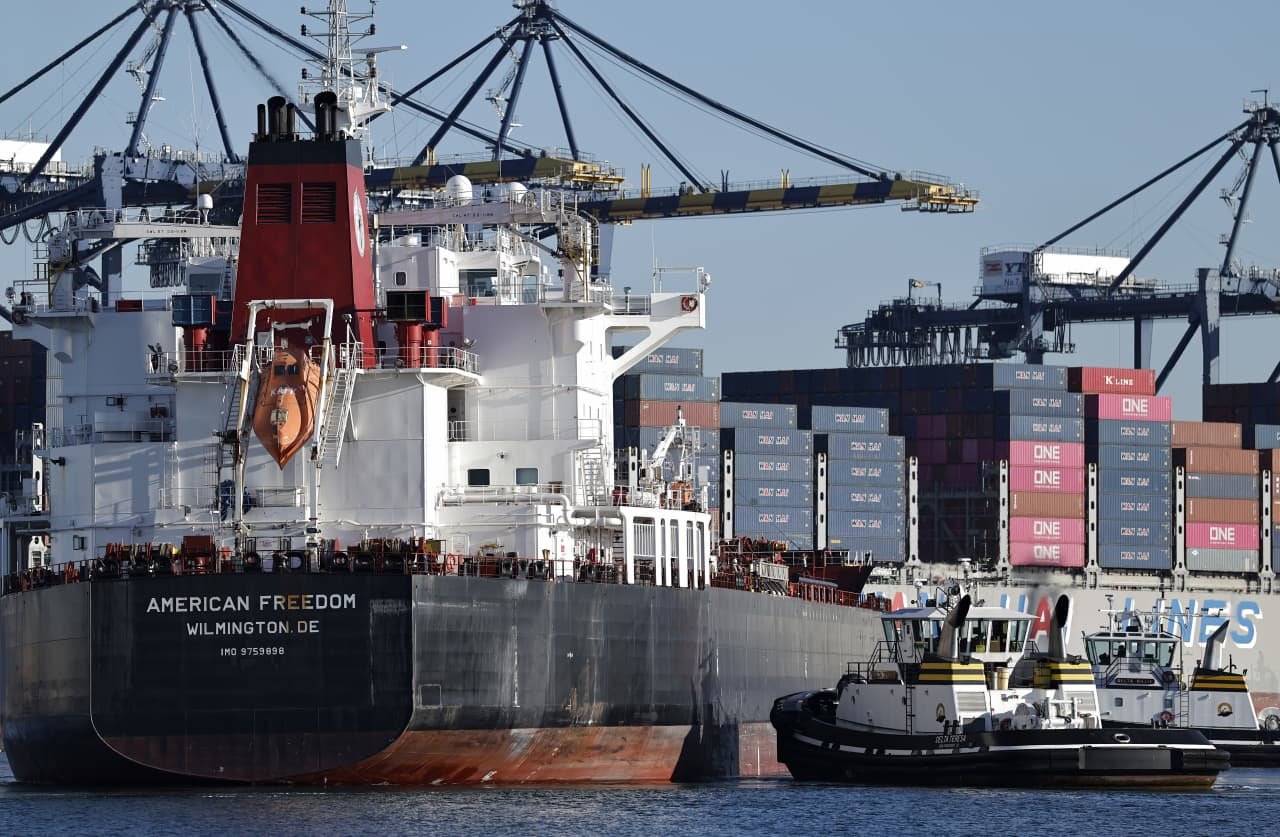
The U.S. military announced on 12 July 2026 at 13:36 UTC that the Strait of Hormuz is open to all vessels seeking lawful transit. Roughly 34 hours later, by 23:37 UTC on 12 July, Axios reported that U.S. naval forces had coordinated the passage of around 20 commercial vessels through the corridor in the preceding 24 hours. The window between declaration and escorted transit is the story: Iran's Revolutionary Guards had declared the Strait closed "until further notice" at 22:55 UTC on 11 July, and by the close of the following afternoon the chokepoint was being treated, in practice, as American-administered neutral ground.
A blockade that lasts a day and a half is not a blockade. It is a negotiation tactic. The U.S. response, swift escort operations layered over a public re-opening declaration, suggests Washington read the closure as exactly that: a single round of pressure inside an ongoing bargaining sequence rather than a strategic reversal of Tehran's posture. The structural lesson is harder than the tactical one. Whoever controls the actual transit flow at the moment of crisis now sets the terms under which everyone else operates, and the side that has to declare its blockade and then watch escorted traffic move through it has, by definition, lost the escalation it launched.
Who blinked first, and what counts as blinking
Iran's guards framed the 11 July closure as a fait accompli. Less than 24 hours later, the U.S. Central Command's public posture was that the waterway remained open. Iran's foreign affairs line, reported via BRICS News on 12 July at 22:20 UTC, accused Washington of pressuring Oman out of a transit-management deal that would have split the Strait into a northern Iranian-controlled route and a southern international corridor. If that reading is accurate, it is consistent with a sequence in which Tehran attempted to convert geographic leverage into co-administration of the corridor and was outbid. If it is not, the Iranian messaging still concedes the operative point: the Strait was opened without Iranian co-signature.
A second Iranian move, reported at 13:38 UTC on 11 July, made the bargaining explicit: Tehran said it would not return to talks until Washington implemented "agreed-upon understandings" on Hormuz transit and Iranian oil exports. The two demands are linked. Without a transit arrangement, Iran's ability to move its own crude through the northern lane is constrained by the same American escort authority that re-opened the corridor to commercial traffic. With one, Iran gets both passage and partial recognition of its administrative role in the chokepoint.
The Omani proposal and the architecture of a split corridor
At 19:02 UTC on 11 July, Oman floated what would, on paper, have been the cleanest compromise: two separately controlled shipping routes through the Strait, with transit presumably managed by the relevant littoral authority on each side. The proposal appeared, briefly, to be the kind of technocratic fix that energy ministries and tanker operators would have accepted, because it offered a defined regulatory regime without requiring either Washington or Tehran to publicly concede the other's veto. Iran's adoption of the plan would have given it de facto administrative authority over the northern shipping lane; U.S. rejection would have looked like an unwillingness to share a corridor that all parties depend on.
Within hours, that option was closed off. By 18:50 UTC on 11 July, Iran had rejected a U.S. ultimatum and insisted the Strait would remain closed to all traffic except the northern Iranian route. That stance hardened the bargaining but also collapsed Oman's two-track architecture: a single-track closure is harder to manage diplomatically than a partitioned one, because it forces every flag-state and every insurer to take a side. By the time the U.S. declared the corridor open the next afternoon, the Omani middle ground had been squeezed out. What remained was a binary: the Strait was either closed, meaning Iran held it; or open, meaning the United States ran it.
Why escort operations beat a blockade declaration
A blockade, to be meaningful, has to be enforced against vessels willing to run it. Insurance underwriters and tanker charterers treat the Hormuz transit as a graded risk: war-risk premia, rerouting via Salalah or around the Cape of Good Hope, and the assumption that the U.S. Fifth Fleet will keep the lane passable in extremis. Once the U.S. Navy begins actively shepherding commercial hulls through the corridor, that assumption operationalises within hours. The market does not need to be told the Strait is open; it needs to see footage and AIS tracks showing commercial traffic moving with naval escort. Axios's 12 July reporting of around 20 coordinated transits in 24 hours is exactly the volume needed to reset underwriter assumptions and dampen the war-risk spike.
The counter-narrative sits inside Iranian state-aligned messaging: that the closure declaration was not a blockade of commerce but a freeze on U.S. and Israeli-flagged traffic and a precondition for broader negotiations. If that framing holds, then the 12 July American re-opening declaration overrode a narrower security measure rather than a commercial embargo. Two problems undercut that reading. The first is operational: a blockade that excludes Israeli and U.S. vessels only has to be enforced against a subset of shipping, and the U.S. response of escorting roughly 20 commercial vessels in 24 hours is consistent with running that exact subset at speed. The second is the BRICS News recap of 12 July at 22:20 UTC, in which Iran itself frames the closure as part of a U.S.–Omani deal dispute, not as a targeted security measure. The Iranian messaging does not converge on a single intent; what converges is the American ability to move traffic anyway.
What remains genuinely uncertain
The sources do not specify the tonnage or flag-state composition of the 20 escorted vessels. They do not confirm whether Iran's Revolutionary Guards physically approached any of them. They do not give the duration of the escort window or the conditions under which it might be scaled back. Each of those is an operative question for tanker operators deciding whether to fix a Hormuz routing or to take the longer Cape route, and each is unsettled by the public record. Oman's two-corridor proposal, which would have given shape to the bargaining, is no longer on the table per the sources available; whether it returns depends on negotiations that the 12 July messaging suggests have moved, at least for now, to a different track.
The bigger structural question is whether this sequence collapses Iran's chokepoint leverage for good or simply resets the cycle. Closing the Strait and watching it be reopened under foreign escort is a more expensive signal than the regime bargained for. Until Iran's bargaining position recovers some operational ground, expect the U.S. to keep the escort posture in place and expect the next round of talks, when it comes, to begin from the assumption that the corridor is American-administered until proven otherwise.
Desk note: Monexus reads the 11–12 July Hormuz sequence as a short-cycle bargaining defeat for the Iranian side, anchored on Axios's 12 July reporting and the contradictory Iranian messaging captured in BRICS News's later same-day recap. We have left Oman's two-corridor proposal flagged as collapsed rather than active, given the absence of post-12 July confirmation that it is still in play.
Wire provenance
This editorial synthesis draws on the following public wire/social posts:
- https://x.com/polymarket/status/1943892715000000000
- https://x.com/polymarket/status/1943800000000000001
- https://x.com/polymarket/status/1943795000000000002
- https://x.com/polymarket/status/1943701000000000003
- https://x.com/polymarket/status/1943672000000000004
- https://x.com/unusual_whales/status/1943670500000000005
- https://x.com/polymarket/status/1943629000000000006
- https://t.me/bricsnews/2026-07-12-iran-oman-strait
- https://x.com/polymarket/status/1943892715000000000
- https://x.com/polymarket/status/1943800000000000001
- https://x.com/polymarket/status/1943795000000000002
- https://x.com/polymarket/status/1943701000000000003
- https://x.com/polymarket/status/1943672000000000004
- https://x.com/unusual_whales/status/1943670500000000005
- https://x.com/polymarket/status/1943629000000000006
- https://t.me/bricsnews/2026-07-12-iran-oman-strait