Iranian drones strike US positions in Kuwait as regional escalation widens
The Iranian Army says it has hit US bases in Kuwait with armed drones, and Kuwaiti officials confirm defensive activity. The strike marks a widening of Iran's retaliation against American installations across the Gulf.
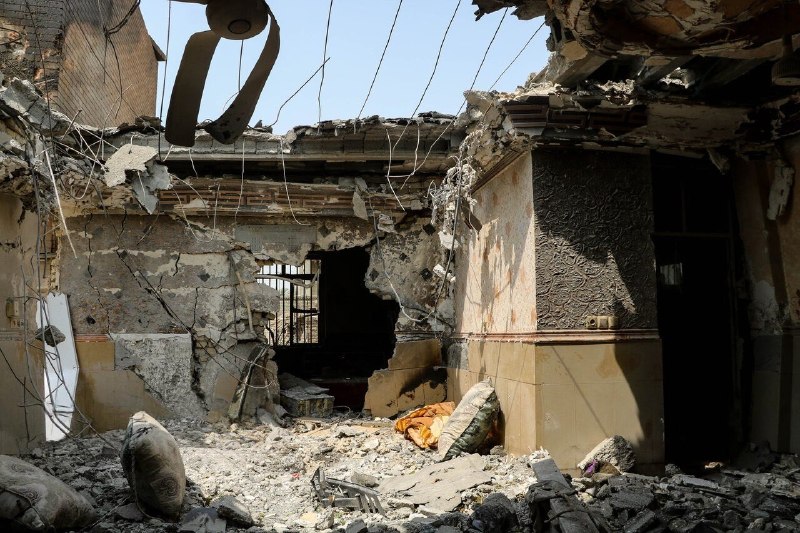
At 03:21 UTC on 13 July 2026, Iranian state-aligned broadcaster Al-Alam Arabic carried an "urgent" statement from the Iranian Army asserting that army drones had targeted the positions of American forces, their defence and missile systems, and support shelters in Kuwait. A minute earlier, the same channel had broadcast a follow-on claim that attacks by Iranian Army drones on American bases "in the region" would continue. By 03:47 UTC, eyewitness and alert channels were circulating warnings inside Kuwait; at 03:55 UTC, the Kuwait Army stated, briefly and on the record, that the sound residents had heard was caused by the activity of the country's defence system.
The sequence puts a public frame around a strike that, until now, had been rumour. Tehran is asserting responsibility. Kuwait is confirming that something came in. Washington has not, in these dispatches, confirmed damage or casualties on the ground.
What Tehran is claiming
The Iranian Army statement, as carried by Al-Alam Arabic, is specific in scope: "positions of American forces, defence systems, missiles, and support shelters belonging to the American Army in Kuwait." That phrasing is important. Iranian messaging has frequently distinguished between US personnel and the hardware and infrastructure that surrounds them, and the language here targets the latter without claiming to have struck troops directly. The follow-on statement says operations will continue, which is an intent signal aimed as much at domestic audiences and at regional deterrence as at Washington.
What Kuwait is confirming
The Kuwait Army communication is brief, on the public record, and unusually direct: the sound of the explosion heard by residents was caused by the activity of the defence system. That single sentence does three things at once. It tells civilians the noise is not a separate incident. It confirms that engagement occurred. And it stops short of naming the attacker, attributing damage, or characterising the outcome. In Gulf-states' crisis communication, that kind of minimalism is the standard posture when an incident sits between an Iranian claim and an American response, both of whom Kuwait hosts or hosts elements of.
The silence around the impact
What the public record does not yet contain is the consequential third leg of the verification triangle: a US Central Command or Pentagon statement attributing damage, casualties, or a defence outcome. Iranian-aligned outlets have every interest in describing the strike as successful; Kuwaiti authorities have an interest in signalling competent interception without escalating; the United States has an interest in controlling the narrative of what, if anything, was hit. Until one of the three breaks the silence in detail, the strike exists as a confirmed event with contested effects.
Where this sits
If the Iranian Army statement is taken at face value, the operation extends a pattern Tehran has practised for several years: a calibrated, deniable-and-then-claimed strike against US assets in a third country, communicated in Arabic and English across state media to maximise regional and Western coverage while leaving diplomatic channels formally closed. Kuwait joins a list that already includes Iraq and Syria, where Iranian-backed forces have operated against US positions; the geographic choice matters because Kuwait is a GCC state, a host of forward US Central Command logistics, and a country whose government has historically balanced Iranian pressure with Gulf and American partnerships. Striking there tightens the deterrence envelope on Tehran's Gulf neighbours, who are now potential nodes in any future US retaliation calculus.
The asymmetry between what Tehran is willing to say and what Washington and Kuwait are saying is itself the news of this hour. A short, three-sentence Kuwaiti statement, a continuing feed of Iranian "urgent" claims, and a public gap where US confirmation would normally sit: that is the shape of the escalation as it is currently being reported.
Desk note: Monexus is sourcing the strike from the Iranian-Al-Alam feed (carrier of the Iranian Army statement), the Kuwait Army's own brief acknowledgment, and on-the-ground witness alerts from within Kuwait. A US-side confirmation of damage or outcome is not yet in the public record, and this article has flagged that gap explicitly rather than back-filling it from speculation.
Wire provenance
This editorial synthesis draws on the following public wire/social posts:
- https://t.me/alalamarabic/
- https://t.me/alalamarabic/
- https://t.me/JahanTasnim/
- https://t.me/wfwitness/