Budapest moves against Sulyok: Hungary’s parliament opens door to ousting Orbán-era president
Lawmakers in Budapest have voted to start a process that could remove President Tamás Sulyok, an Orbán appointee, as the country’s post-2026 coalition keeps rewriting the rules of the Fidesz era.
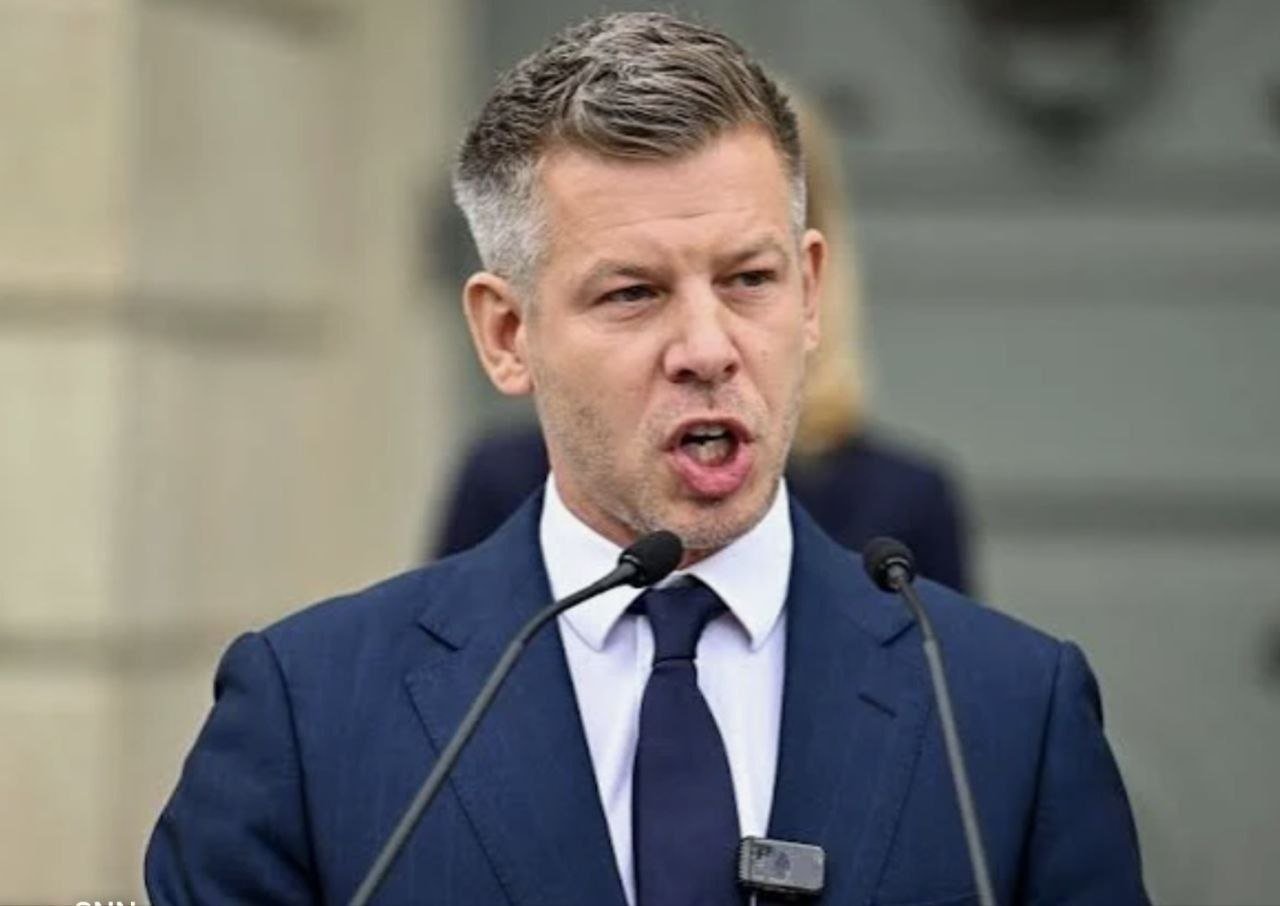
On 14 July 2026, Hungary’s parliament voted to amend the country’s fundamental law in a way that opens a procedural path toward removing President Tamás Sulyok, the former head of the Supreme Court who took office in 2024 after being elected by a parliament still controlled by Viktor Orbán’s Fidesz (Al Jazeera, 14 July 2026, 02:03 UTC). Deutsche Welle reported the same vote on 13 July 2026, framing it as the latest attempt by Budapest’s post-election majority to roll back the institutional architecture of Orbán’s fourth government (DW, 13 July 2026, 19:45 UTC).
The motion is the clearest signal yet that the coalition that succeeded Fidesz after the April 2026 elections intends to dismantle not only the executive actions of the Orbán era but the personnel decisions that cemented it. Removing a sitting president requires a two-thirds majority; the chamber that voted the amendment on Monday is widely understood to have the numbers.
The procedural vote
The amendment, reported by both Al Jazeera and DW as passing in parliament on Monday, narrows the immunity protections and clarifies impeachment conditions for the head of state. Under Hungary’s current fundamental law, the president is an indirectly elected, largely ceremonial figure who can be removed by two-thirds of parliament for a defined set of reasons. The amendment reportedly expands those grounds into language flexible enough to cover Sulyok’s case without naming him (Al Jazeera, 14 July 2026, 02:03 UTC).
A separate, simpler reading in DW’s reporting is that lawmakers chose a more direct route: passing a law that, on its face, treats Sulyok’s 2024 election as procedurally defective and provides for his removal by ordinary majority (DW, 13 July 2026, 19:45 UTC). Both outlets agree on the political outcome they expect; they differ on the legal architecture.
Sulyok’s office did not immediately respond to requests for comment from either wire. The Hungarian presidency’s website, as of Monday morning, continued to list him in office.
Why Sulyok, why now
Sulyok was elected president by an Orbán-controlled parliament on 26 February 2024, succeeding Katalin Novák, who resigned over a pardon scandal (DW, 13 July 2026, 19:45 UTC). His elevation was widely read at the time as an effort to install a more pliable institutional figurehead: a former Constitutional Court president with a documented willingness to defend Fidesz-aligned legislation. The new government’s argument, judging from the framing in DW’s reporting, is that the procedure that produced his election was itself tainted, since it occurred during the final months of a government that lost its popular mandate two years later.
That line is politically audacious and legally thin at the same time. Post-election coalitions across the EU have come to power on platforms of reversing predecessor decisions; few have gone after a president by name. The Hungarian coalition appears to be gambling that the political window is narrow and that domestic appetite for symbolically breaking with Orbán remains high.
Counter-narrative and Orbán’s response
The Orbán-aligned press has framed the move, predictably, as a politically motivated removal of a legitimately elected head of state. Independent Hungarian outlets that have not been picked up by international wires at the time of writing would carry Fidesz’s line that the vote amounts to a constitutional coup staged by the coalition of Péter Magyar’s TISZA, the Democratic Coalition, and other opposition forces that came together after April.
Two structural facts complicate that line. First, Sulyok was elected by a parliament that Fidesz had already gerrymandered to its own advantage, on the party’s own preferred rules. Second, the same fundamental law that produced him now provides the mechanism for removing him, which undercuts the “illegitimate coup” framing that Fidesz-friendly outlets are likely to push. The constitutional text, not street-level mobilisation, is doing the work here.
Where Europe sits
The vote lands in Brussels as the European Commission continues to withhold billions of euros in cohesion funds under the rule-of-law conditionality regime introduced after 2020 (DW, 13 July 2026, 19:45 UTC). A coalition government in Budapest actively rewriting the constitutional order to remove an Orbán appointee is a different kind of problem from the one the conditionality mechanism was designed to address. The Commission will have to decide whether changes that dismantle Orbán-era institutions count as restoring rule of law, or whether the very method used amounts to a new infraction of its own.
Council of Europe observers will be watching the legal mechanics, not the politics. Removal of a head of state by parliamentary vote, even with two-thirds support, is rare in the European post-2010 settlement. The precedents that exist – Romania’s 2012 impeachment attempt by the Basescu government, Austria’s 2019 motions against the Kurz cabinet – were episodes of domestic polarisation that did not result in removal. Hungary now sits in the same category procedurally, although with a different outcome likely.
What remains uncertain
The two wire reports differ on what exactly was voted on Monday. Al Jazeera describes an amendment to remove Sulyok that suggests the two-thirds route; DW describes a separate law that would remove him by ordinary majority. The discrepancy may simply be a matter of which draft both outlets were shown first, or it may reflect a chamber that bundled two procedural options. Until the text of the amendment is published in the Hungarian Official Gazette (Magyar Közlöny), the legal route is not fully clear.
It is also not clear whether Sulyok will resign before the second vote required to remove him, as Novák did in 2024. Resignation would spare the new government the optics of a forced removal; insistence on staying would force a confirmation vote and a public reckoning with Fidesz’s institutional legacy.
What to watch
A second chamber vote within the next two weeks. The text of the amendment once published in Magyar Közlöny. The reaction from the European Commission’s rule-of-law portfolio. And, in the background, Fidesz’s next move: a parliamentary walkout, a constitutional challenge at the new Constitutional Court, or a street mobilisation that the coalition has so far avoided having to face. Budapest is no longer the only EU capital where the post-2026 settlement is being fought out – but it is the place where the fight is being conducted, for now, inside the constitutional text itself.
Desk note: Monexus is reporting this story from two English-language wire readings of the same parliamentary vote, with a noted discrepancy on the legal route. We will publish the text of the amendment as soon as it appears in the Magyar Közlöny. The frame here prioritises the constitutional mechanics over the partisan narrative on either side, on the principle that a vote that rewrites the rules deserves more attention than the personalities it touches.
Wire provenance
This editorial synthesis draws on the following public wire/social posts:
- https://en.wikipedia.org/wiki/Tam%C3%A1s_Sulyok
- https://en.wikipedia.org/wiki/2026_Hungarian_parliamentary_election