A blockade, a threat, and the question Tehran is asking Washington
On 14 July 2026 Iran's Revolutionary Guard warned that no oil or gas would leave the region while US forces remained. The threat sits one blockade away from a closure that would reset global energy markets within hours.
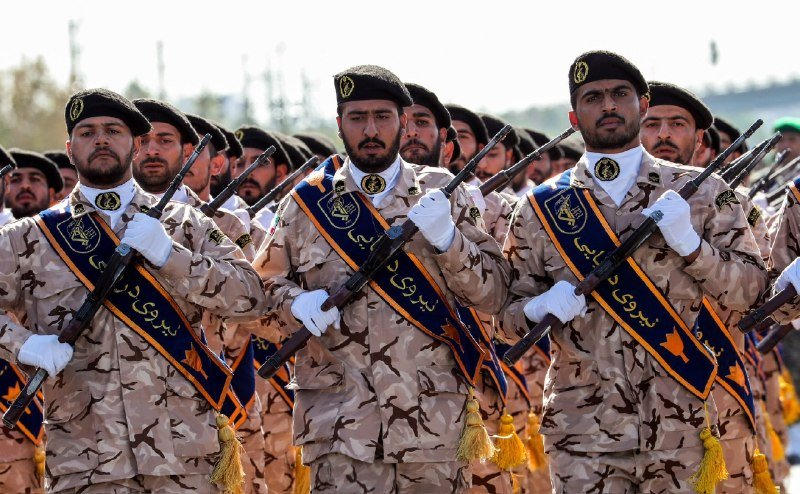
At 18:41 UTC on 14 July 2026, Iran's Foreign Ministry assistant Kazem Gharibabadi accused the United States of having "completely destroyed the agreement" by reimposing a maritime blockade. Four minutes later, the Islamic Revolutionary Guard Corps (IRGC) framed its strikes on coastal sites as a direct retaliation for earlier US Army action. By 18:46 UTC, the Guard had escalated further: "As long as the evils of the United States exist in the region, not a single drop of oil and gas will be exported from the region."
Three statements, five minutes, and a question hanging in the air over the Persian Gulf: is Tehran signalling an intent to fully close the Strait of Hormuz, or is it bargaining for the lifting of a blockade that its own negotiators were reportedly working to defuse?
What was actually said
The exchange reads less like a coordinated communiqué than a multi-track messaging exercise. The Foreign Ministry assistant framed the move in legal-diplomatic language, an agreement destroyed, a blockade reimposed, which suggests the Iranian negotiation track is now arguing, at home and abroad, that Washington tore up a deal. The IRGC, by contrast, framed the moment in operational terms: strikes against coastal sites were a response to US Army strikes earlier the same afternoon, and any repeat would be met with further punishment. Read together, the two statements carve a deliberate split between a political-track narrative ("they broke it") and a military-track threat ("we will keep hitting").
The final IRGC line is the one that moved the markets, and it is also the one most often paraphrased rather than quoted. It is not a statement that Hormuz is closed. It is a conditional: while US forces remain in the region, no export. That phrasing preserves an off-ramp while signalling the cost of not taking it.
The blockade nobody has independently described
The Iranian claim that the United States has "reimposed" a blockade is, on the public record so far, not corroborated by a Western statement visible in the available reporting. Press TV, Tasnim and the Fars-affiliated wires that usually amplify Tehran's framing have been active; US Central Command has not, in the same window, posted an English-language confirmation that a formal blockade has been declared. That gap matters. A blockade is a legal act with defined consequences under the law of the sea, and the difference between a blockade and a tightened inspection regime, a no-fly zone, or an asset freeze on flagged vessels is the difference between a casus belli and a sanctions posture.
For now, the most defensible reading is that something has changed in the US Navy's posture toward Iranian-flagged or Iran-bound shipping, and that Tehran is naming the change as a blockade for domestic and regional consumption. The Reuters and AP wires have not, in this news cycle, used the word. If either does so, the framing hardens. Until then, treat the term as the Iranian government's description, not a confirmed multilateral fact.
Why the Strait of Hormuz threat is not a bluff but is also not a closure
Even credible threats to close Hormuz have historically functioned as leverage rather than as operational plans. The chokepoint carries a substantial share of seaborne crude and LNG exports, and Iran itself exports through it; a full closure is mutually destructive in a way that an Iranian leadership thinking about regime survival rarely accepts. The more common pattern is a harassment campaign against specific tankers, selective seizures, drone activity near shipping lanes, and, as in 2019, the detention of commercial vessels for negotiation rather than the outright mining of the strait.
That said, the threat is not costless for Washington. Insurance premiums for tankers transiting the gulf rise within hours of such statements, and war-risk underwriters re-price routes on the same news cycle. Even a non-closure is a market event. And the IRGC's conditional phrasing leaves open a long tail: not a single drop while US forces remain. That is a demand, dressed as a forecast.
What is being tested
Three things are being tested simultaneously. First, whether the US blockade claim can be sustained inside the Iranian public sphere, the Foreign Ministry needs the street to believe that Washington tore up a deal, not that Tehran walked away. Second, whether the IRGC's operational tempo can be ratcheted without triggering a US response that escalates beyond coastal sites. Third, whether the Gulf's other producers, and the Asian buyers dependent on Gulf crude, will read the moment as a buying opportunity (lifting prices for non-Iranian barrels) or as a supply shock that demands a coordinated diplomatic response.
The window for de-escalation is narrow but visible. If a third party, Oman, Qatar, China, can broker a face-saving formula for the blockade claim (perhaps a temporary inspection regime described in language both sides can sign), the IRGC's conditional can be defused without anyone publicly backing down. If that channel does not open, the next test is not a statement at 18:46 UTC but a tanker stopped at 04:00.
Desk note: this article leans on Iranian state and state-adjacent reporting for the Iranian framing, because that is where the framing originated. Where Western wire confirmation of the underlying US action is absent in the available record, the piece has flagged it explicitly rather than treating Tehran's characterisation as fact.
Wire provenance
This editorial synthesis draws on the following public wire/social posts:
- https://t.me/alalamarabic
- https://t.me/alalamarabic
- https://t.me/alalamarabic