Trump's Iraq pivot is a confession, not a strategy
The White House says it loves Iraq, hates its prime minister's looks, doesn't need troops there anymore, and wants the oil. None of those sentences sit comfortably next to each other.
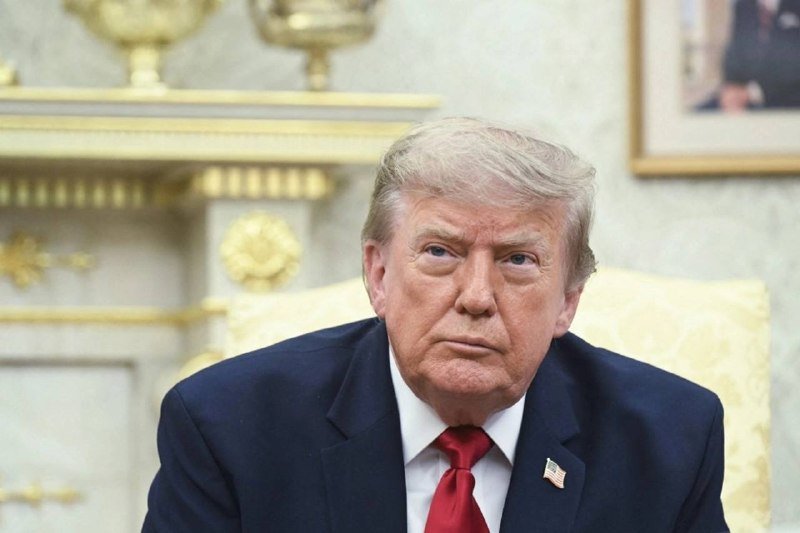
On 14 July 2026 at roughly 15:27 UTC, Donald Trump stood at a podium and said, with the cadence of a man greeting a cable-news host he had just spotted in the front row: "We love Iraq!" Eleven minutes earlier, in the same room, he had welcomed Iraq's new prime minister to the White House for talks that the Polymarket wire said were "expected to focus on disarming Iran-backed militias." By 15:27 the agenda had apparently expanded. By 16:05 Trump had concluded that "we don't think we need the military there anymore." By 16:20 he was talking about "taking out a lot of oil." Somewhere between the welcome and the exit, Iraq had become a country the United States both adored and intended to drain.
The incoherence is the story. The Trump administration's Iraq policy, as telegraphed through the day's own quotes, is not a strategy. It is a sequence of reflexes: affection for a leader who flatters him, contempt for the same leader's face, revulsion toward Tehran, and the old hydrocarbon reflex that has driven US Gulf policy since the Carter Doctrine. Each sentence is true for as long as it takes to say the next one. The deeper problem is that Iraq is being asked to function as the prop in three separate US performances at once: the Iran-containment show, the energy-security show, and the transactional-realism show. It can play one. It cannot play all three.
What was actually said, and what was actually on the table
The substantive content of the meeting, according to the Polymarket wire that broke the news at 15:14 UTC, is the disarmament of Iran-backed militias operating on Iraqi soil, principally the Popular Mobilisation Forces formations that consolidated under the Iraqi state after 2016 but retained a parallel chain of command tied to Tehran. That is a real policy problem with real casualties behind it, and it is the kind of bilateral ask that previous administrations have pursued in writing. Trump chose instead to brief the press on the prime minister's looks.
"He is young and handsome," Trump said at 16:01 UTC. "I don't like that. I'm not happy about it." Three minutes later he added: "He is gonna be there for a long time." The contradiction between visual displeasure and political durability is small in itself. It is large as a tell. Personal chemistry is doing the work that policy doctrine ought to be doing. The same instinct surfaced a day earlier, on 13 July at 20:25 UTC, when Trump warned that Iran would use a nuclear weapon "within one day" if it acquired one: maximalist language, no quoted intelligence estimate, no named source community. The framing is the argument.
The Iran problem that Iraq won't solve
Trump returned repeatedly to Iran in the briefing, which is the giveaway. At 16:06 UTC he claimed that "Iran's military power is just a tiny fraction of what it was four months ago. So Iraq won't have the Iran problem." The argument runs: degrade Tehran's conventional capability to a point where its Iraqi proxies become strategically irrelevant. If that is true, the militia question is on its way to solving itself, and the Washington meeting is a courtesy rather than a negotiation.
If it is not true, the meeting is a demand that Iraq do what four months of US and Israeli strikes on Iran have not done: break the paramilitary infrastructure that took the Islamic Republic four decades to build. There is no public evidence, in the sources available to this publication on 14 July 2026, that Iran's proxy network in Iraq has been dismantled. There is plenty of evidence that those formations retain territorial control in Anbar, Diyala, and the southern Shia heartland, and that they have rearmed after each previous round of attrition. Treating a degraded Tehran as a defeated Tehran is a category error, and it is the error the day's commentary kept making.
The oil line, said out loud
The most candid moment came at 16:20 UTC. "We're going to be taking out a lot of oil," Trump said of Iraq. The phrase is unguarded in a way that US energy diplomacy has not been for decades, even at the height of the sanctions era. It collapses three policy registers into one: the security argument (we protect the fields, therefore we have a claim), the commercial argument (American firms should extract, refine, and ship), and the rhetorical argument (the resource is the relationship). Each has its own constituency in Washington. The first is the Pentagon. The second is the oil majors and the export-credit agencies. The third is the President's base.
Iraq's read of this is not mysterious. Baghdad has watched successive US administrations justify presence in terms that drift from counter-terror (the 2014 frame), to counter-Iran (the 2018 frame), to counter-IS (the recurring frame), to energy access (the 2026 frame). The thread tying those frames together is that Iraqi hydrocarbons are treated as a US strategic asset first and an Iraqi national resource second. The prime minister who walked into the White House on 14 July inherits the task of being charming enough to keep the security umbrella while refusing to be a steward of someone else's resource.
The Iraq counter-read, briefly
The Iraqi political class does not share Trump's taxonomy. From Baghdad, the militias are a domestic security problem that has been deliberately under-resolved because every Iraqi faction with a vote in parliament benefits from the ambiguity. Disarmament negotiated in Washington, in English, with an Iraqi PM whose durability Trump both praised and resented in the same hour, is not disarmament. It is a managed handover of one set of patrons for another. Iraq's Shia political establishment will read the oil line as confirmation that Washington's interest is extractive, and the militia line as confirmation that Washington's interest is also extractive, just of a different kind. The popular read on the street in Najaf, Karbala, and the southern provinces will be simpler still: two empires arguing over who gets the rent.
What this leaves on the table
Trump's own history, as he volunteered it at 16:15 UTC, frames the day. "I used to say: don't go into Iraq, don't attack Iraq. Frankly, they attacked the wrong country." The line is true to his 2003 and 2004 commentary, and it is the rare instance of a sitting US President publicly repudiating the strategic premise of an active US footprint in the country he is receiving its leader. The implication is that the 2003 invasion was a strategic error in targeting, not in kind. The continuation of presence is therefore owed a justification independent of the one the Bush administration gave, and Trump has been unable or unwilling to produce one. Each new frame Iran, oil, militia disarmament, the prime minister's face is offered as if it were the frame, and abandoned the next time a podium appears.
The contradictions are not going to be resolved by another meeting. They are going to be resolved by a US administration that picks one interest, says which it is, and lets the Iraqi state negotiate the rest. Until then, every Iraqi prime minister who walks into the White House is buying a parking ticket for someone else's car.
The sources available to this publication on 14 July 2026 are limited to the day's wire traffic and one previous-day comment. The full readout of the White House meeting, the formal agenda, and any joint statement were not yet public at the time of writing. A second Trump quote, also dated 13 July, attributing a one-day timeline to Iranian nuclear use, is the only pre-meeting signal on offer and should be read as rhetoric, not as a leaked intelligence finding.
Wire provenance
This editorial synthesis draws on the following public wire/social posts:
- https://t.me/s/ClashReport
- https://x.com/polymarket/status/
- https://x.com/polymarket/status/