Anwar's deportation pledge signals a sharper edge in Malaysia's Israel posture
Malaysia's prime minister says any Israeli found in the country will be expelled immediately, hardening a longstanding non-recognition stance into a public operational promise.
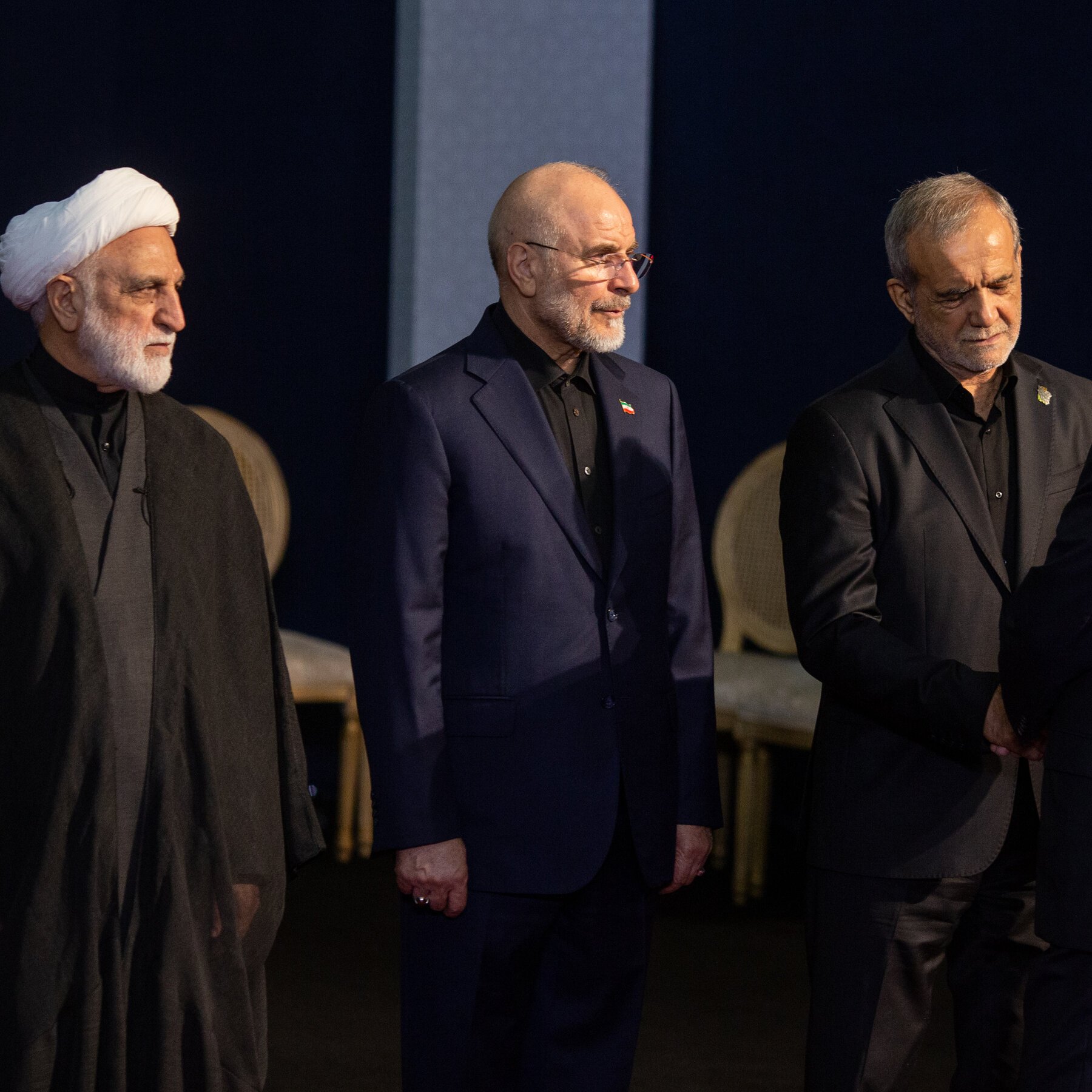
At a press appearance in Kuala Lumpur on 15 July 2026, Prime Minister Anwar Ibrahim declared that Malaysia would deport any Israeli citizen found on its territory, restating in operational terms a non-recognition policy the country has held for decades. Reporting on the remarks, distributed between 11:07 and 11:15 UTC across Iranian state-aligned outlets Tasnim and Mehr News as well as Al Alam Arabic, framed the announcement as a hardening of Malaysia's stance rather than a new departure.
The pledge matters less as a policy surprise and more as a signal of where a Muslim-majority Southeast Asian government now positions itself on the diplomatic fault line running through the Middle East. Anwar's framing did not stop at non-recognition; it converted that position into an explicit enforcement commitment, naming deportation as the consequence. The shift from a passive "we do not recognise Israel" posture to an active "we will expel" posture is the news, and it places Kuala Lumpur at the sharper end of a regional spectrum that includes Indonesia and Brunei.
What was actually said
According to the wire carried by Tasnim News and Mehr News, Anwar stated that Malaysia does not recognise Israel and that any Israeli the authorities encounter will be expelled immediately. The remarks were reported in parallel by Al Alam Arabic, the Arabic-language channel of Iranian state media, which broke the development on its verified Telegram channel at 11:15 UTC on 15 July. The phrasing across the three Iranian-aligned wires is consistent: non-recognition as the doctrinal anchor, deportation as the announced response.
The statement does not break new diplomatic ground in formal terms. Malaysia has not maintained diplomatic relations with Israel since 1965 and is a signatory to the Organisation of Islamic Cooperation's long-standing consensus against normalisation. What it does is move the dispute onto enforcement terrain, giving Malaysian immigration authorities an explicit political instruction to act on a status question that was previously left in the abstract.
The regional pattern
Anwar's intervention sits inside a wider pattern of Southeast Asian and Muslim-majority states tightening the operational meaning of non-recognition. Indonesia has periodically recalled ambassadors and paused bilateral contact during flare-ups in Gaza, without going as far as a standing deportation pledge. Brunei shelved parts of a sharia-influenced penal code in 2019 under external pressure, but its non-recognition position has remained constant. Malaysia's announcement extends that regional posture a step further, converting a diplomatic condition into an immigration instruction.
The audience for the message is not principally Tel Aviv. The wire distribution matters here. Tasnim, Mehr News and Al Alam are all Iranian state-adjacent, and they carried Anwar's remarks within the same eight-minute window, suggesting coordination or at least mutual interest in amplifying the line into a broader Middle East and Global South readership. For Tehran and its information ecosystem, a Muslim-majority Asian capital publicly committing to deport Israelis is a useful data point in a wider narrative about diplomatic isolation of Israel.
Counterpoint: a domestic signal as well as a foreign one
There is an alternative reading worth holding alongside the geopolitical one. Anwar's domestic political coalition, which spans a reformist base and a more conservative Islamic partner in the Unity Government, benefits from a clear public posture on Palestine. Malaysia's October 2023 decision to suspend Israel-affiliated container shipments and its broader crackdown on vessels linked to Israeli trade set the precedent for treating non-recognition as an enforceable economic stance rather than a line in a foreign ministry brochure.
The dominant framing, that Malaysia is moving from passive non-recognition to active enforcement, holds up against the source material. But the timing, on the calendar year in which Gaza reconstruction and a fragile ceasefire track remain in international headlines, also points inward. The pledge gives Anwar a high-visibility foreign-policy moment at low diplomatic cost, because Malaysia has no Israeli counterpart with whom relations would have to be suspended or downgraded.
What remains uncertain
The wires do not specify the operational mechanism: which agency would be tasked with screening arrivals, whether the pledge covers dual nationals, transiting passengers or only those seeking residency, and what legal authority the government would rely on. The phrase used, "any Israeli we find," is broad and politically forceful but, as carried in the source material, is not accompanied by an implementing regulation or an interior ministry directive. The sources also do not address whether the pledge affects the small number of Israeli passport holders who have historically entered Malaysia on third-country documents, a practice common among Israeli business travellers and which regional governments have handled inconsistently.
The propagation of the remarks through Iranian-aligned wires is itself worth noting. Western agencies had not, as of the wire distribution window, run a comparable item in the source material available. Whether that reflects a story that did not register on Western desks or a story that Western wires will treat more cautiously once official Malaysian text is published remains an open question. For now, the public record is shaped by Telegram channels operating in Arabic and Persian, with the original Malaysian-language statement not yet available in the sources read for this piece.
The stakes
If Malaysia follows through with operational implementation, the most direct effect is on its own immigration practice and on the small but nonzero flow of Israeli-linked business travellers who have historically used third-country documents. The wider effect is symbolic: it raises the cost, in political terms, for any Southeast Asian state considering a partial normalisation track. Anwar's pledge closes a door that was already nominally shut, and in doing so, narrows the diplomatic space in which a future regional mediator might try to position Kuala Lumpur.
The trajectory to watch is whether the statement hardens into a written directive, whether neighbouring capitals follow with their own operational language, and whether the original Malay-language text diverges materially from the Arabic and Persian versions now in circulation. Those are the next data points that will determine whether this is a press-conference line or the opening of a new enforcement posture.
Desk note: Monexus carried Anwar's deportation pledge through the Iranian-aligned wires that broke the remarks, framing it as a hardening of non-recognition rather than a doctrinal shift. Western wires had not, at the time of the source window, run the item, and the operational mechanics remain unspecified in the material available.
Wire provenance
This editorial synthesis draws on the following public wire/social posts:
- https://t.me/alalamarabic
- https://t.me/JahanTasnim
- https://t.me/tasnimnews_en
- https://en.wikipedia.org/wiki/Malaysia%E280%93Israel_relations