A fish-recognition puzzle and a 455-page history of the lab: two dispatches from the slow science beat
New Scientist reports that telling one fish from another of its own kind is harder than it looks; meanwhile Asimov Press is putting the final pages on a 455-page history of the molecular biology lab.
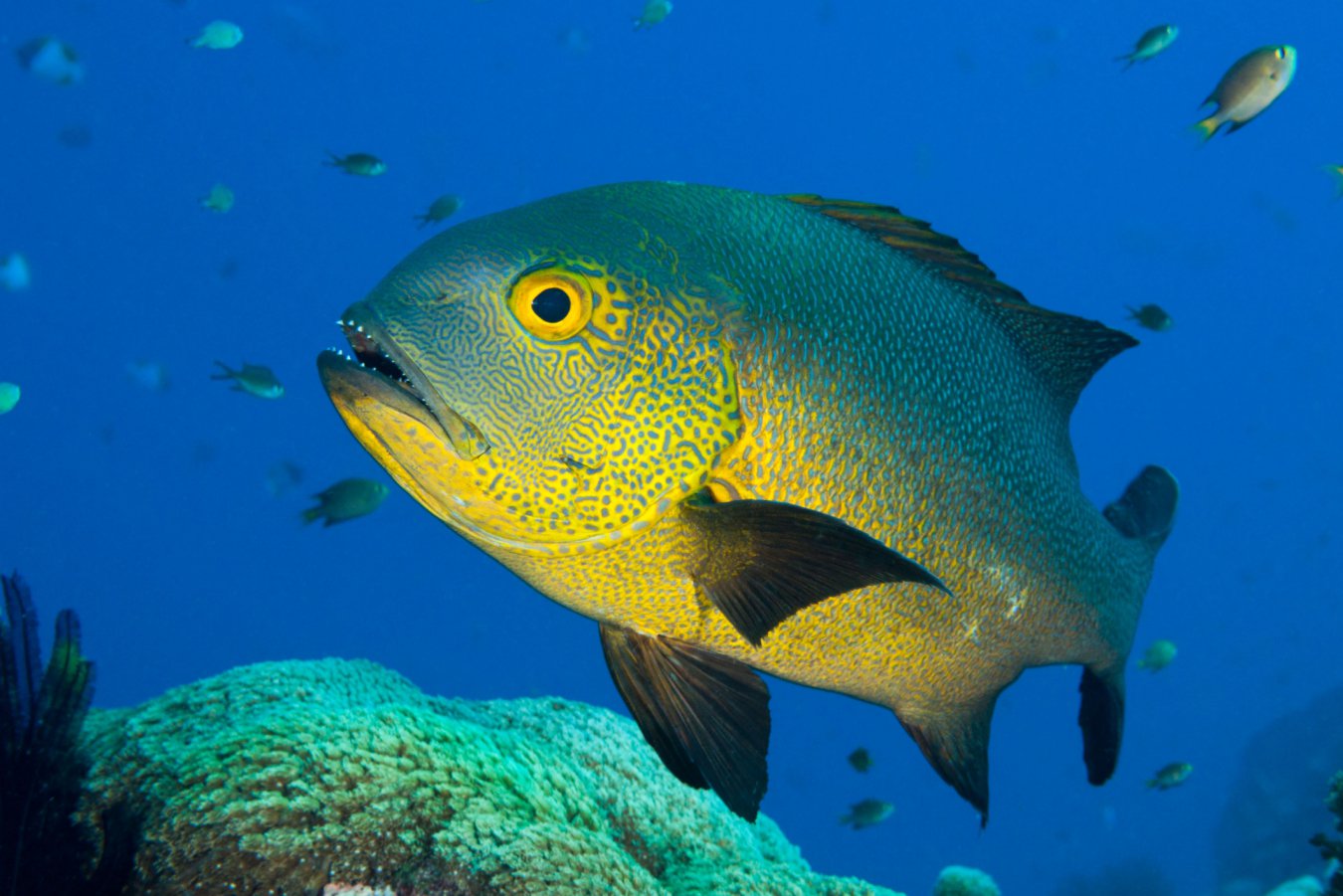
At 17:00 UTC on 15 July 2026, New Scientist published a piece that, on its face, looks like a biology-puzzle headline: how do fish recognise others of their own species? The short answer, the magazine reports, is that the question turns out to be much more complicated than it looks.
That admission from working researchers is itself the news. A field built on the assumption that visual cues drive most fish-to-fish identification is being forced to absorb evidence that smell, sound, lateral line sensing, and learned social context do far more of the work than the textbooks allow. The question matters well beyond ichthyology: the same machinery that lets a cichlid in Lake Tanganyika pick its own kind out of hundreds of lookalikes is the machinery that governs mate choice, shoaling, aggression, and speciation. Get the recognition mechanism wrong, and the rest of the model wobbles.
The visual-first story is fraying
The traditional account treats colour, body shape, and species-specific markings as the dominant cues. New Scientist's explainer surveys work in which researchers tested that account against cleaner wrasses, cichlids, sticklebacks, and zebrafish, and found visual signals underperforming in a long list of contexts: turbid water, low light, juvenile stages, and high-density mixed-species shoals. Olfactory cues, long dismissed as secondary, are turning out to be load-bearing in more systems than expected. Auditory signals and even subtle hydrodynamic differences picked up by the lateral line appear to be doing real work.
The field has been here before with other taxa. The reward signal for getting it right is a sharper account of how reproductive isolation evolves; the risk is that experimental designs that only manipulate visual cues keep producing visual-cue results, locking the field into a self-confirming loop.
Counter-narrative: the visualists push back
Not every researcher buys the demotion. The counter-position, sketched in passing in the New Scientist piece and echoed in adjacent cichlid literature, is that the apparent gap is an artefact of testing conditions: lab assays stripped of predation pressure, inbred fish lines, and short observation windows. In the wild, the visualists argue, an animal that does not read colour and pattern quickly is the one that gets eaten first. The methodological answer, on this view, is bigger and better field studies, not a wholesale rewrite of the cue hierarchy.
Both positions are well-evidenced in their own right. The honest reading is that fish run a multi-modal recognition stack, and the relative weight of each channel shifts by habitat, life stage, and ecological context. That is less a tidy headline than a working scientific consensus.
Structural frame: lab bench, open notebook, slow publishing
The fish-recognition puzzle lands on the same day that Asimov Press editor Nik McCarthy announced on X that the publisher's forthcoming book on the history of the molecular biology lab is nearly finished: 455 pages, more than 100 images, six-plus months of production work. The pairing is not random. New Scientist's coverage is the daily press explaining where the science is unsettled; the Asimov Press volume is the slower history asking how the bench itself, the equipment, the protocols, the institutional settings, shaped what counts as a recognisable result.
That long-form approach is a deliberate counterweight to the velocity of the news cycle. A history-of-the-lab book treats the apparatus as a protagonist: which centrifuge, which strain of bacteria, which grant window, which country hosted the experiment. It is also, structurally, the kind of work that takes longer to commission, write, and fact-check than a magazine explainer, and reaches a smaller audience per page, even as its shelf life is longer.
Stakes: what recognition science is actually for
The recognition question is not idle taxonomy. Conservation programmes that mix captive-bred fish into wild populations rely on conspecific cues to reduce outbreeding depression. Fisheries managers trying to count stocks in turbid estuaries lean on the assumption that the animals are sorting themselves correctly. Aquaculture breeding programmes selecting for traits across generations depend on fish choosing the right mates in the right tank. If the cue stack is multimodal and context-sensitive, every one of those applications needs a more careful operational definition than the legacy visual-first model offers.
The Asimov Press book sits in the same loop from a different angle. A history of the molecular biology lab is, among other things, a history of which organisms became models, which were sidelined, and which institutional arrangements decided which questions were tractable. Fish-recognition work, much of it done in university zebrafish facilities and a small set of cichlid field stations, is part of that story; so is the question of who funds a six-month book project on the history of a wet lab in 2026, when newsroom science desks have shrunk and academic presses have consolidated.
What both items together suggest is a science ecosystem doing two things at once: producing the kind of careful mechanism-level revisions that take a decade to settle, and trying to find the publishing formats that can carry them. The fish question will not be resolved in this news cycle. The book, if it ships as McCarthy described, will outlast it.
What remains uncertain
The sources do not specify which researchers New Scientist quoted in the recognition piece, nor the precise species or study designs at the centre of the demotion-of-vision argument. The Asimov Press post is a production update rather than a contents sheet: there is no table of chapters, no publication date in the thread, and no pricing information. Readers looking for either should treat both items as pointers, not final answers.
Desk note: Monexus treats science coverage as a slow beat. The fish-recognition piece is a state-of-the-question explainer, not a single-study scoop; the Asimov Press book is a publishing announcement, not a review. Both deserve the page; neither deserves more than the evidence supports.