Kenyan court rejects Rastafarian bid to legalise religious cannabis use
A Nairobi court has dismissed a Rastafarian petition seeking the right to use cannabis as a sacrament, acknowledging that Kenya owes the country a wider drug-policy debate but ruling the petitioners' case did not meet the legal threshold.
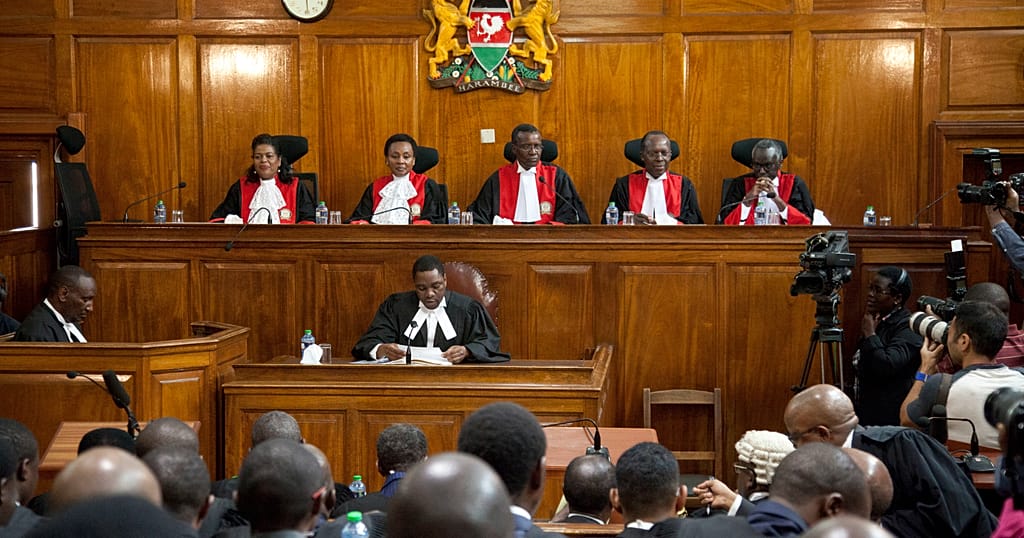
A Nairobi court dismissed on Wednesday a petition by Kenyan Rastafarians seeking to legalise the use of cannabis as a religious sacrament, a ruling the community has vowed to appeal. The petitioners argued that criminalising ganja violated their constitutional rights to freedom of religion and conscience. Justice ruled that, while the court acknowledged the importance of the religious practice, the petitioners had not met the legal threshold required to overcome Kenya's existing narcotics law.
The case tests the boundary between a constitution that protects belief and a state that still classifies cannabis as a prohibited substance. It also lands at a moment when several African governments are loosening cannabis rules for medical and industrial use, leaving religious claimants in an awkward position: their sacrament is increasingly legal as a crop, but their practice of consuming it remains criminal.
A right recognised, a remedy denied
According to the BBC's reporting on the ruling, the court accepted that Rastafarians had established the religious significance of cannabis to their faith, but declined to grant the specific relief sought, namely an exemption from prosecution for ritual use. The bench instead urged a broader national conversation on drug policy, signalling that the question of personal and sacramental use had effectively been pushed to Parliament rather than resolved in court.
The petitioners' lead lawyer, Murigi Kihara, told reporters outside the Milimani Law Courts that the community would file an appeal. The Rastafarian Society of Kenya, which has campaigned for decades for legal recognition of the faith's sacramental use of ganja, characterised the ruling as a partial victory and a partial defeat: belief vindicated, conduct still punished.
Inside Kenya's narcotics framework
Kenya's drug law, the Narcotic Drugs and Psychotropic Substances (Control) Act of 1994, treats cannabis as a prohibited substance, with possession, use, and sale carrying penalties that scale with quantity. The law makes no exception for religious or traditional use, and prior attempts to carve out a sacramental exemption have not succeeded. The petitioners had hoped the 2010 Constitution, with its expansive Bill of Rights, would tilt the balance.
The state's lawyers argued that any exemption had to come from Parliament, not the courts, and that the judiciary could not, on its own motion, legalise a substance still classified as a narcotic. The bench appeared to agree with that procedural posture, even as it invited a wider national debate.
A continent moving in different directions
The Kenyan ruling sits awkwardly next to a continental drift. Lesotho became the first African state to license medical cannabis cultivation in 2017; South Africa decriminalised personal use and later opened a regulated medical and industrial chain; Zimbabwe has issued cultivation licences; Uganda and Malawi have moved into medical cultivation, and Ghana has taken tentative steps. Rwanda, by contrast, retains a strict prohibition.
The economic logic is straightforward: industrial hemp and medical-grade cannabis are export commodities at a moment when several African economies are searching for non-traditional revenue lines. The religious-rights logic runs in a different direction: it asks whether a state that already tolerates, however unevenly, the cultivation of the plant for profit can keep prosecuting the people who consume it as worship.
What the ruling actually settles, and what it doesn't
The judgment is narrow. It does not say Rastafarians have no right to use cannabis sacramentally. It says they have not, on the pleadings filed, cleared the legal bar for an exemption from a statute the legislature has not amended. That distinction matters for an appeal: the community can argue that the court misapplied the constitutional test for religious freedom, or that the statute itself is unjustifiable in light of the constitution's rights provisions.
The harder question is political. Kenya's Parliament has shown little appetite for revisiting narcotics law. The court's pointed invitation to a "broader national debate" amounts to an acknowledgement that the present law sits uneasily with the constitution's commitments, but the judges have stopped short of forcing the issue.
Stakes
For the petitioners, the immediate stake is exposure. Rastafarians in Kenya say members of the community have been arrested for possession, fined, or detained for periods that disrupt livelihoods and family life. A constitutional exemption would have removed that exposure, at least for ritual use.
For the state, the stakes are enforcement capacity. Kenya's drug-control apparatus is built around a prohibition regime; carving out a sacramental exception would, in the government's telling, complicate policing and prosecution across the board. The countervailing argument is that selective enforcement, in which ganja cases consume court time while the underlying policy is under quiet reconsideration, costs more than a clear rule.
For the wider region, the case will be read. A Kenyan precedent on religious cannabis would have travelled: to South Africa, where the Constitutional Court has already accepted the religious-use argument in narrower form; to Zimbabwe, where Rastafarian communities are present; to the diaspora policy circuits in which African drug-law reformers compare notes. The opposite precedent travels too: a higher court that takes the case up could still set a regional benchmark, or could confirm that in East Africa, the religious-use argument will have to win in Parliament before it wins in court.
What remains genuinely uncertain is whether the appeal will succeed, and whether the court's invitation to a national debate translates into legislative motion. The bench has named the problem; the question is whether anyone in Nairobi with the authority to act will pick it up.
How Monexus framed this: the wire line concentrated on the disappointment in the courtroom. Monexus treated the ruling as a constitutional-procedure story, set inside a continental map of drug-law reform that the court itself gestured at but did not resolve.
- 18 JulKenyan court rejects Rastafarian cannabis plea, leaving religious-freedom fight in the appeal courts
- 17 JulKenyan court turns down Rastafarians' cannabis plea, leaves the door open for a national debate
- 15 JulKenyan court rejects Rastafarian bid to use cannabis in worship, leaves door open for national debate