Kyiv resets the cabinet table: Svyrydenko takes the prime minister's chair mid-war
Yulia Svyrydenko formally takes over as Prime Minister of Ukraine, inheriting a wartime economy, a defence-industrial scaling target, and a parliamentary arithmetic that has just been redrawn behind her.
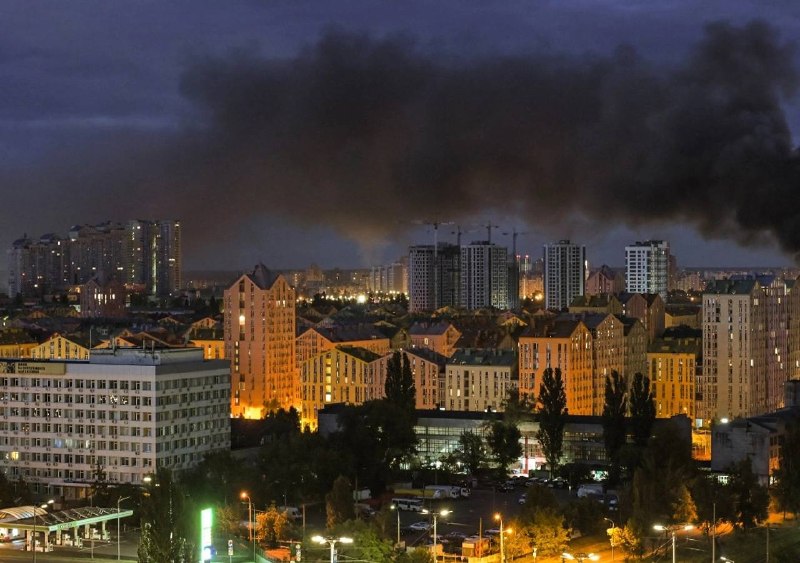
Yulia Svyrydenko began her first full day as Prime Minister of Ukraine on 16 July 2026, a handover engineered in wartime and confirmed by her own office on the Telegram channel of the Mykolaiv Regional Military Administration. Her opening message was unadorned and direct: "I am starting to fulfill the duties of the Prime Minister with clearly defined priorities. Our main task is the full support of the Defense Forces of Ukraine and the scaling of the Ukrainian defense-industrial complex." In a country that has now spent more than four years under full-scale invasion, the PM's first sentence was a list, not a slogan, and the list began with the front line.
The promotion is the second significant internal reshuffle inside the executive branch this summer, and it lands at a moment when Kyiv's external support package is being renegotiated, its domestic budget is being redrawn around defence procurement, and the parliamentary arithmetic behind the government has been quietly recalibrated. Svyrydenko inherits a job that is, in practical terms, the chief operating officer of a war economy, with the title of head of government attached.
What actually changed on 16 July
The transition takes effect in the middle of a budget cycle. Svyrydenko arrives from the post of First Deputy Prime Minister and Economy Minister, where she led the "Made in Ukraine" industrial-policy track and the government's negotiations with the European Union on integration and trade. She takes over from Denys Shmyhal, who had held the post since March 2020, covering the pre-war, wartime emergency, and reconstruction-planning phases of the Zelenskyy administration. Shmyhal's relocation is widely reported in Kyiv circles, though the Mykolaiv ODA Telegram statement on 16 July does not itself specify his next role.
The new prime minister's first public framing is telling. She named two priorities, in order: the Defence Forces and the defence-industrial complex. There was no third bullet on EU accession timelines, no fourth on anti-corruption institutions, and no fifth on the energy grid. In a country where reform language usually crowds the press conference, that economy of focus reads like an instruction to ministers, not a rally cry. The signal to the General Staff and to the ministries responsible for weapons production is that the new PM's calendar starts with them.
The counter-narrative from inside Kyiv
The reading inside the presidential faction, as relayed by Ukrainian outlets in the days before the swap, is that the change has less to do with failure than with sequencing. Shmyhal had carried the wartime government through its emergency phase, when the executive's main business was to absorb Western aid tranches, stabilise the hryvnia, and keep the budget running on rolling amendments. The reconstruction and weapons-procurement phase requires a different toolkit: someone fluent in EU talks, in industrial-policy numbers, and in the technical diplomacy of arms-procurement contracts with allied governments. Svyrydenko's CV, with the Economy Ministry already in hand, fits that bill. Ukraine's parliamentary arithmetic behind her remains workable, though tighter than it was.
The reading pushed by some Western correspondents in the days before the transition was less generous: that Shmyhal had become a drag on the government's reform narrative, and that the swap was therefore as much about optics as about operations. The empirical test of which frame holds will arrive in the autumn budget cycle and in the next tranche of EU integration benchmarks, not in this week's telegram traffic. Monexus will track both readings against the actual policy moves in the next sixty days.
A wartime economy running on two clocks
The structural reality behind the staffing shuffle is that Ukraine is now operating on two fiscal clocks at once. The first is the donor clock: tranches from the EU's Ukraine Facility, support packages from individual member states, and the G7-backed extraordinary revenue acceleration (ERA) loan mechanism, which routes future Russian sovereign assets immobilised in Western jurisdictions to back Ukrainian budget support. These inflows fund the front. The second is the production clock: the rate at which Ukrainian state-owned and private defence plants can deliver drones, artillery shells, electronic-warfare systems, and interceptor missiles into the hands of brigades who need them next month, not next fiscal year.
The two clocks are now being aligned by design. The government's domestic defence-industrial policy, which Svyrydenko oversaw in her previous post, runs an explicit target of increasing the share of domestically produced materiel in the armed forces' arsenal, measured annually and reported to the National Security and Defence Council. Reaching that target while the war is ongoing, rather than after it, is the operative question. The PM's portfolio is the intersection of those two clocks, which is the reason the office now matters as it has not mattered since the first months of the invasion.
The stakes over the next quarter
Three concrete markers will tell readers whether the new government is working as advertised, and they are all dated rather than impressionistic. First, the autumn budget revision: how much of the planned deficit is closed by domestic revenues versus donor support, and how the capital expenditure line for the defence-industrial complex is sized against the wage and social-protection lines. Second, the next EU progress report on integration benchmarks, which will read against Svyrydenko's own past signature on the negotiating file. Third, the production-and-delivery numbers published by the Ministry of Defence's procurement directorate, which is the empirical test of whether the "scaling of the Ukrainian defence-industrial complex" is a plan that converts into hardware on pallets.
The remaining uncertainty is personnel, not policy. The Mykolaiv ODA Telegram statement on 16 July confirms Svyrydenko's tenure; it does not specify the final cabinet line-up, including the redistribution of the Economy Ministry portfolio she is vacating. Until the new ministerial table is published in full, every reading of the government's direction is provisional. What is already on the record is that the front line, and the factories that supply it, sit at the top of the new prime minister's stated list. That, in wartime Kyiv, is the only opening line that matters.
The desk compared the Mykolaiv ODA statement with parallel reporting from Ukrainian outlets and the Kyiv press pool; the official sourcing available on the day covers the appointment and stated priorities but not the full cabinet roster, which we have flagged here as the central remaining uncertainty.
Wire provenance
This editorial synthesis draws on the following public wire/social posts:
- https://t.me/mykolaivskaODA
- https://t.me/DenysShmyhal
Follow the event.
These dated source records provide context. They do not retrospectively verify this archive article.
A dated voting record is evidence of one decision. Use the original UN record before turning it into an alignment label.
Visual explainer · historical vote of 2022-03-02 →