Nolan's The Odyssey arrives as a serious bet on the theatrical epic
Universal has staked a summer on a hand-built IMAX adaptation of Homer, and the early notices frame Nolan as having matched the source material's gravity rather than flattening it.
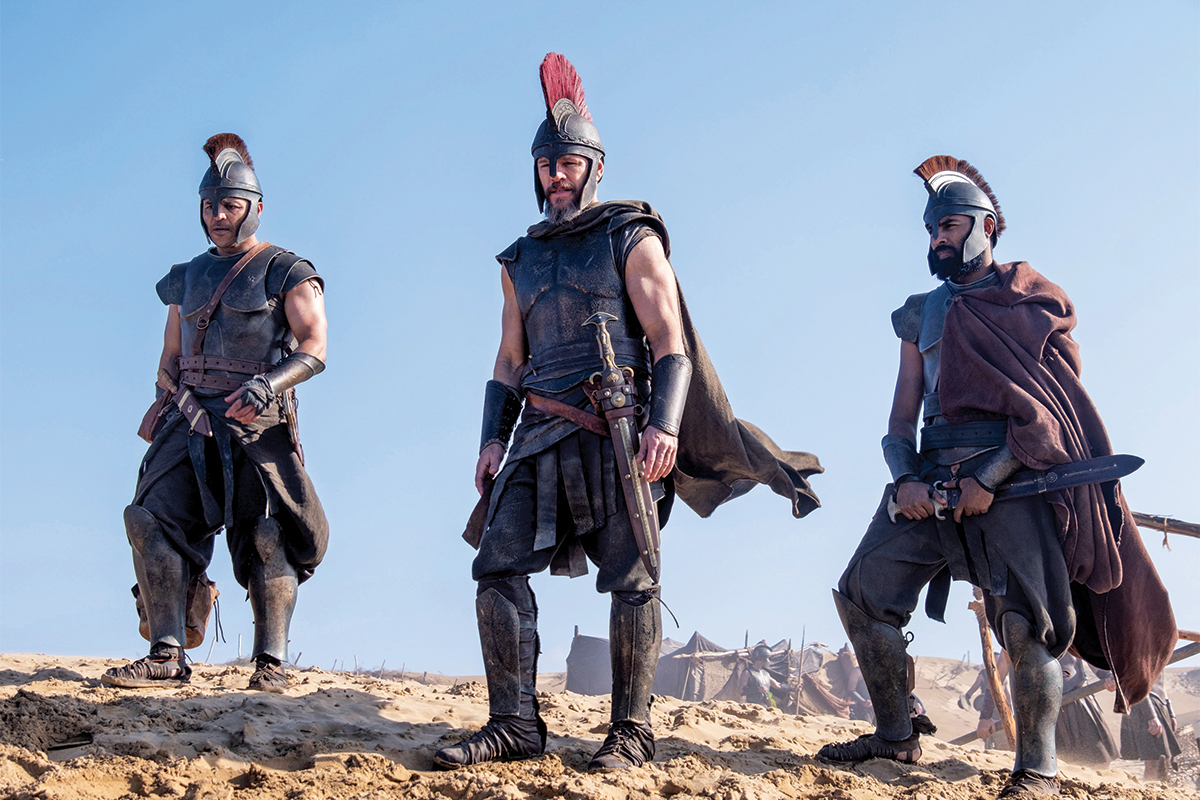
On the morning of 15 July 2026, The Guardian published a five-star notice of Christopher Nolan's The Odyssey that did something rare for a contemporary blockbuster review: it treated the film as a Homeric artefact rather than a product. The verdict, written by a classicist brought in specifically for the assignment, framed Nolan's IMAX-scaled adaptation as a film that does "full justice to the Homeric legend," assembling a deep cast to convey "the true cost of war" through film-making of "thrilling ambition." The phrase that ran through the notice like a refrain was "soulful hero", a deliberate counter to the cold-calculator Odysseus a more cynical reading of the source might have produced.
That opening notice matters because the film is not a typical studio swing. Nolan has spent two decades building a personal brand around scale, and The Odyssey is his most exposed wager yet: a roughly two-and-a-half-hour IMAX epic built around practical sea work, period craftsmanship, and a cast of marquee names taking roles that have no contemporary franchise logic. The early critical read suggests the gamble has cleared the bar, and it sets up a more interesting conversation than the usual summer discourse about whether a serious filmmaker has "sold out."
What the early notices actually say
The Guardian's review is the load-bearing piece of evidence in the launch window, and it is doing specific work. Its lead characterisation of the film as "god-tier" is a rhetorical escalation, but the body of the notice is grounded in craft observations: a cast assembled at a scale that lets ensemble scenes breathe; a tonal seriousness about the human cost of return-from-war that lifts the material out of adventure register; and a film-making ambition that the reviewer ties explicitly to the IMAX format. The piece also flagged, in the framing of the verdict, the way the project treats its central character, not as a trickster stripped of conscience, but as a man whose moral register shifts under the weight of what the war has cost him. The word the notice returned to was "metamorphosis."
That is a meaningfully harder sell than the trailer pitch of "Nolan does Homer." The marketing read of the project, going back to the first announcement, was spectacle: IMAX cameras, sea work, a release calendar built around a theatrical-only window. The Guardian notice is asking audiences to read the spectacle as the means, not the end.
The cast, and why the size matters
Indian Express's companion piece on 16 July fills in the second-order question the Guardian review invites: who is actually in this. The piece walks through the principal roles in Nolan's IMAX epic, a deliberate reminder that the ensemble is part of the project's argument. An Odysseus adaptation can lean on a single star turn, or it can build a layered world around its returning hero, wives, sons, suitors, gods, monsters, soldiers, and let the war's cost distribute itself across the cast. The Indian Express inventory makes clear Nolan chose the second path. The film has the bench to make a decade-long-journey narrative feel populated rather than procedural.
This is also the operational reason the project exists in its current form. A Homeric adaptation with this cast list is not a low-risk piece of studio accounting; it is a bet that an audience exists for an adult, slow-burn, IMAX-scaled epic in a market that has spent fifteen years being told that audiences want only four-quadrant IP. Universal's release strategy, a theatrical window designed around the format rather than a streaming fast-follow, is the financial side of the same bet.
The format is the argument
The consistent thread across both pieces is the IMAX frame itself. The Guardian review frames the format as enabling the film's moral seriousness: large faces, real sea, a sense of scale that earns the long runtime. Indian Express's cast inventory is, implicitly, an inventory of faces that survive the close-up at that resolution. Nolan's brand for the last fifteen years has been tied to the format; The Odyssey is the test of whether the format can carry a literary adaptation at this length without the spectacle overwhelming the source.
It is also a test of whether the theatrical-only model still functions for a non-franchise adult picture. The economics of exhibition have shifted substantially since Oppenheimer demonstrated the appetite for a Nolan original in 2023; the question is whether The Odyssey can be a second data point rather than a one-off curiosity.
What the early read does not settle
The sources we have for this piece are two: the Guardian review published at roughly 16:00 UTC on 15 July, and the Indian Express cast inventory distributed via Telegram in the early hours of 16 July. Neither contains box-office figures, runtime confirmation, distributor statements, or interviews with Nolan or his cast. The Guardian notice is unambiguously positive, but it is one critic's verdict, and a critic brought in specifically because of their Homeric expertise; the broader critical picture will arrive over the opening weekend. The Indian Express inventory is descriptive rather than evaluative. The sources do not, at this point, tell us whether the film will hold the serious tone through its second hour, whether the supporting cast lands its weight, or whether the IMAX-only release holds its theatrical count. Those are the questions that the next ten days of coverage will decide.
What the sources do tell us, plainly, is that the film exists in the form its makers promised: a hand-built IMAX epic built around a Homeric story of return, with a cast large enough to populate that world and a critical reception serious enough to treat it as such. That is a more honest basis on which to read the launch than the usual mid-summer noise about bets, gambles, and swings.
This publication's framing leaned on the Guardian's classicist-led verdict and Indian Express's cast inventory rather than aggregator scores; both pieces arrive before the broader critical wave, and the review-and-cast pairing is the cleanest first read of what the film is actually trying to be.