What three quiet science papers tell us about who gets heard
A new cell-imaging method, a paper on honey-bee smell, and a study on who actually persuades Americans in a crisis land in the same week. Together they expose the gap between official messaging and the messengers people trust.
Three papers crossed the desk on 14 and 13 July 2026, each modest in ambition, each consequential in what they imply about how knowledge moves. The first, indexed on 14 July at 19:40 UTC, describes a new cell-imaging method designed to capture molecular interactions inside the crowded interior of living cells; until now, researchers have lacked a reliable way to see many of those contacts as they happen. The second, indexed the same day at 18:10 UTC, reports that honey-bee larvae lack the sophisticated olfactory capabilities of adult honey bees, a temporary loss the authors link to the nurse bees' labour of feeding them. The third, dated 13 July at 19:00 UTC, finds that scientists and ordinary members of the public are more persuasive than government and industry in moving Americans to act on environmental, health and technology crises. Read individually, each is a footnote. Read together, they sketch something larger about the messengers we trust, the instruments that make those messengers credible, and the communication lanes that fail us in a crisis.
The pattern underneath is straightforward: trust does not attach to titles or podiums. It attaches to perceived independence, to technical competence the reader can see for themselves, and to evidence that survives peer review. Each of the three studies lands a small blow for that proposition, and each is therefore worth more than its field suggests.
Instruments before arguments
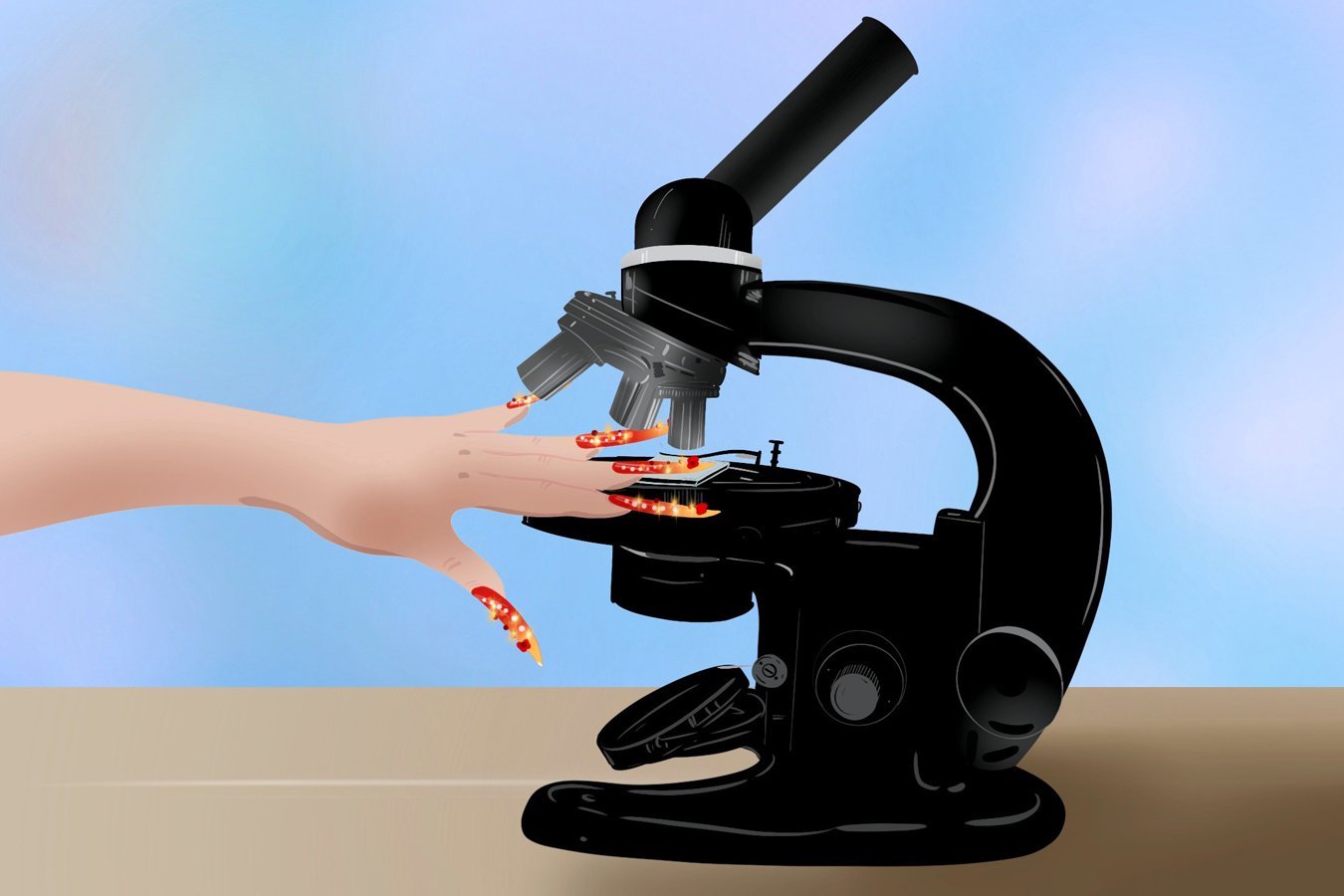
The cell-imaging paper is the clearest example. Reporting on the work, indexed at 19:40 UTC on 14 July, frames the contribution as a method rather than a discovery: the technical ability to watch many molecular interactions simultaneously inside a cell. The previous limit was effectively resolution and signal-to-noise in a dense, dynamic environment. By removing that limit, the work changes what questions become possible to ask. Future findings in cell signalling, drug response and developmental biology will rest on the instrument before they rest on any particular hypothesis.
That ordering matters. Public debates about science funding often treat instruments as plumbing and breakthroughs as the visible product. In practice, the reverse is closer to true: a sharper lens precedes the discovery the lens then makes visible. Covering science as a parade of outcomes misses the actual mechanism by which the field extends its reach. Method papers, unglamorous as they read, are how the trust ledger is rebuilt every few years.
What the bees can't smell
The bee study, indexed at 18:10 UTC on 14 July, does something similar in a smaller key. Honey-bee larvae, the researchers report, lack the olfactory sophistication of adults; this temporary deficit is a side effect of being fed by worker nurse bees rather than foraging for themselves. The substantive claim is narrow and biological, but the framing is what makes the paper interesting: a temporary loss of function tied to a social role rather than to the organism alone.
The implication is that sensory systems are not solo achievements. They are built, in part, by the division of labour in the hive. Reporting that frames the finding as a curiosity about bees understates this. It is the same structural insight that gives the cell-imaging paper its weight: capability is scaffolded by the conditions around it. A bee raised without nurse bees would smell differently. A cell imaged without the new method would yield different conclusions about what is happening inside it. Instrument and community, in both cases, are part of the answer.
Who actually moves the room
The third paper, dated 13 July at 19:00 UTC and published in PNAS Nexus, is the one with the most obvious public-policy bite. Across environmental, health and technology crises, Americans report they are more persuaded by scientists and by public consensus than by leaders in government or industry. That is a measured finding, not a slogan, and the press coverage has accordingly been careful: scientists and fellow citizens rank first, with formal authority figures trailing.
Read against the standard crisis-communications playbook, that finding is uncomfortable. The playbook assumes the podium is the instrument and the press conference is the channel. The data here suggest the opposite. When the messenger is identifiable as a partisan of any institution, the message loses lift; when the messenger is identifiable as an expert with a track record or as a neighbour whose judgement the listener respects, the message travels further. The structural frame is plain: legitimacy tracks competence that the audience can verify, and it tracks solidarity with the audience's lived experience. Neither requires a government seal.
What this leaves on the table
The findings all point in the same direction and the limits are easy to name. The cell-imaging method, as reported, has been demonstrated; whether it works robustly across other cell types, with cheaper instruments, or in clinical settings is not yet on the public record. The bee study describes a developmental loss in olfactory capacity; the upstream genetic and neural mechanisms remain open. The persuasion paper measures self-reported intent to act, not action itself, and is one study in one country in a literature where replication is uneven. Treating any of these as settled would be premature.
There is also a counter-reading worth taking seriously. A sceptical view holds that public trust in scientists is itself a product of long-running institutional positioning, and that the standing of "fellow citizens" depends on the cues they carry when they speak. If so, the apparent advantage of scientists and ordinary people is not a permanent feature of the information environment; it is the residue of a long campaign to put those voices forward. That reading does not contradict the empirical finding. It complicates the policy reading: the lever that the data appear to identify may be one that has already been pulled.
The messengers, and the instruments they need
Read together, the three papers cluster around a single claim about how knowledge circulates. Persuasion depends on perceived independence and on instruments the audience can examine. New imaging methods give researchers a sharper register on what is real; careful work on animal development maps how organisms inherit their senses from the communities that raise them; and survey data tell us that the messenger matters more than the podium. None of this contradicts official messaging on its own. It does suggest that official messaging, by itself, has structural limits which the evidence outside the podium does not share.
The practical takeaway for the next crisis is not novel. Fund instruments, not outcomes. Train communicators who can stand in front of the work and show it. Treat peer review as the credential rather than the title. The papers indexed this week are quiet, modest and exactly the kind of evidence base that makes those moves defensible.
How Monexus framed this: three papers indexed on Phys.org and a PNAS Nexus study on public persuasion were read as a single signal about trust, instruments and the limits of podium-driven science communication. The desk treated each finding as evidence rather than as commentary, and gave the sceptical reading of the persuasion data its own paragraph rather than burying it.