Two lab advances point past silicon: twist-engineered oxides and a neuron gatekeeper step into view
A scalable twistronics method and a neuron-skeleton discovery land on the same day, hinting at new routes to electronics and dementia treatment that don't depend on silicon alone.
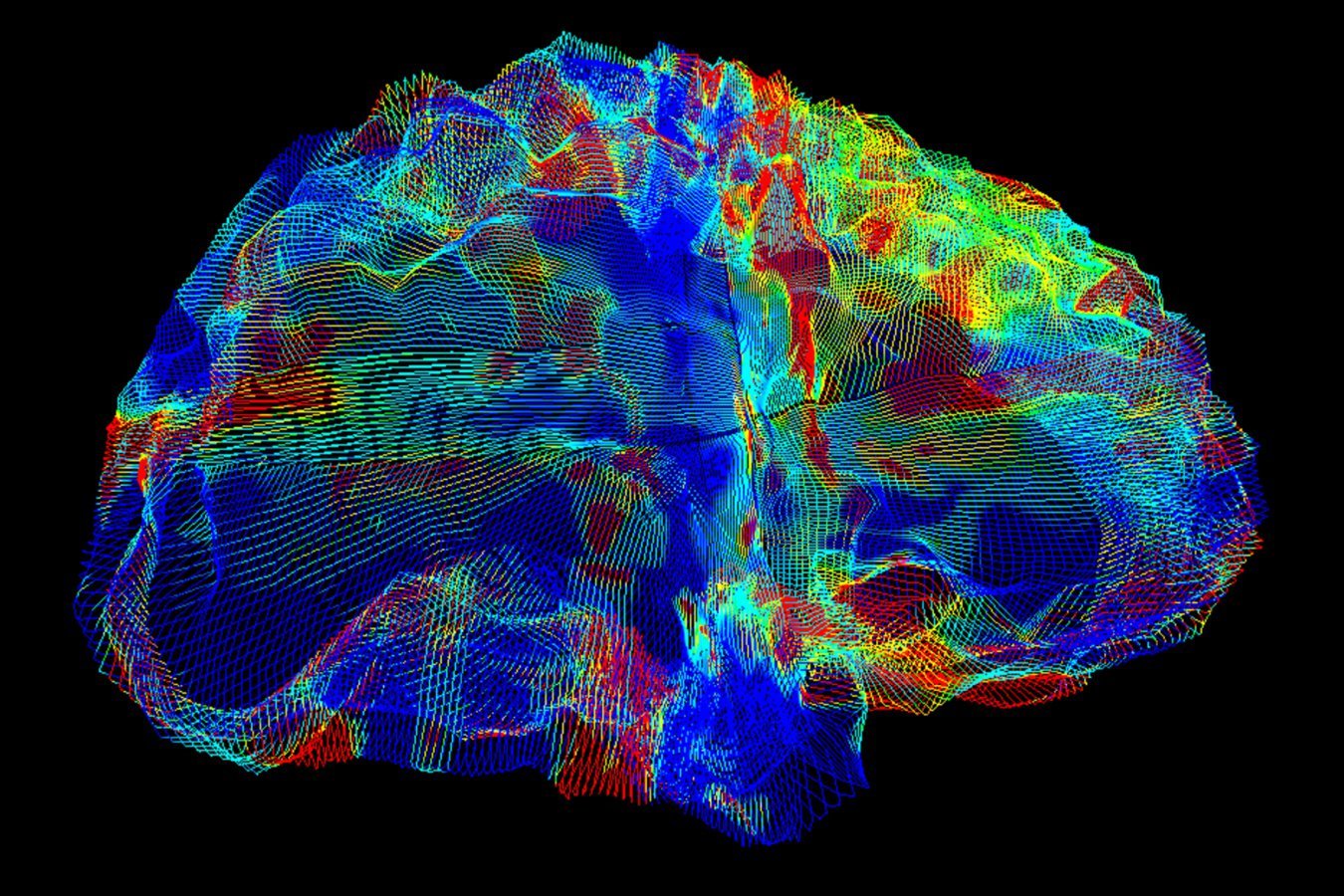
On 15 July 2026, two research teams published results that, taken together, sketch a route around two limits that have defined modern electronics and brain medicine for decades. One group showed that twistronics, the trick of squeezing exotic behaviour out of layered materials by rotating them to a precise angle, can be done at scale with a class of oxides that engineers have struggled to handle. The other group reported that a structural scaffold inside neurons does far more than hold them in shape; it acts as a gatekeeper for what those cells absorb, and that gatekeeper breaks down in Alzheimer's.
Read together, the two papers are a reminder that the bottlenecks in next-generation hardware and in neurodegeneration are not primarily computational. They are physical: how matter is stacked, and how a single cell decides what to let in. Both teams, working on opposite ends of the science spectrum, have now shifted attention from what these structures are to what they do.
A bigger, flatter twist
Twistronics caught the field's attention roughly a decade ago, when two sheets of graphene rotated by about 1.1 degrees turned from an ordinary conductor into a superconductor. The catch has always been the angle itself. A silicon carbide wafer, baked and re-stacked with nanometre precision, yields perfect samples of roughly a square centimetre. Industry needs wafers measured in tens of centimetres.
The team behind the new work extended the technique to oxide materials, a class that includes the high-temperature superconductors and the ferroelectrics used in memory chips. According to the report filed by Phys.org on 15 July, the researchers demonstrated a fabrication route that produces oxide twistronic samples at sizes well beyond what the graphene version can manage. The implication is not yet a factory floor, but it is no longer a one-off art piece either.
In practical terms, oxide twistronics open doors that carbon-based structures cannot. Oxides carry intrinsic magnetism, can be tuned by electric fields, and, crucially, are already part of the semiconductor industry's equipment base. A fabrication route that scales is therefore a route that fabs can, in principle, swallow. Whether the electrical properties hold up at wafer scale is the next question; the source materials do not yet answer it.
The move also nudges the field away from a tight dependency on graphene, a material that excels in laboratory demonstrations but has resisted the kind of monopoly-of-use that silicon enjoys. Building the next transistor generation on oxides gives Eastern and Western fabs a more level starting line than graphene ever offered, since oxide deposition is already standard kit in Taiwan, South Korea, Japan, and mainland China.
A skeleton with opinions
The neuroscience result, reported the same day, is in some ways the inverse problem. Inside every neuron sits a microtubular scaffold called the cytoskeleton. It is sometimes described as structural scaffolding, sometimes as a kind of internal skeleton. A team publishing through Latest Science News on 15 July described it more provocatively, as a gatekeeper: a structure that controls what the cell imports, including the molecular cargo that keeps synapses healthy.
The finding reframes a debate that has run for years. A growing body of work has argued that the cytoskeleton is not just infrastructure but a participant in cellular decision-making, especially in neurons, where every molecule absorbed or expelled shapes how the cell computes. The new paper sharpens the claim. In the Alzheimer's samples examined, the cytoskeleton's gatekeeping role appears to fail: the cell takes up too little of what it needs, or too much of what it shouldn't.
That re-framing matters for drug development. Most Alzheimer's therapeutics in clinical trials have gone after proteins that form plaques or tangles. If the bottleneck is the cell's intake system rather than the cargo it carries, the targets shift, and with them the timeline. Researchers can begin asking which existing compounds restore gatekeeping rather than which new compounds clear aggregates.
What both papers share
The two results sit in different journals, on different continents of the scientific map, but they point at the same kind of problem. Modern electronics hit a wall when silicon stops shrinking cleanly, and modern medicine hits a wall when it cannot keep brain cells alive long enough to matter. In both cases, the response from the field has been to add more layers, more nodes, more precision. The two new papers suggest a different move: exploit structures that were already inside the material, just not yet understood.
There is also a parallel in funding logic. Twistronics has been a darling of national materials programs in the United States, Europe, and China. Cytoskeleton research has benefited from a decade of concentrated investment in neurodegeneration, including the broad push to find disease-modifying Alzheimer's therapies. The two papers arrive at a moment when both pipelines are searching for the next big win.
What to watch next
Three dates will matter. First, oxide twistronics needs wafer-scale replication by an independent group; until that happens, the fabrication method is a promising data point rather than a platform. Second, the cytoskeleton gatekeeping result must be confirmed in patient-derived neurons, not only in animal models, before any drug programme can reasonably optimise around it. Third, both results need to enter hardware and clinical pipelines on a timeline measured in years, not decades, if they are to matter to investors and patients alive today.
Neither paper changes the trajectory on its own. Read together on the same afternoon, they suggest a broader shift: a science community that spent the 2010s rediscovering old materials with new tools is starting to ship the outputs of that work at scale, whether the output is a larger wafer or a more accurate map of why a brain cell forgets.
This piece focused on the methods and downstream leverage of the two studies rather than the institutions behind them. The thread context for this article linked each paper to a single secondary outlet; downstream coverage from the original journal venues will land over the coming weeks and is worth tracking before either result is treated as settled.
Wire provenance
This editorial synthesis draws on the following public wire/social posts:
- https://en.wikipedia.org/wiki/Twistronics
- https://en.wikipedia.org/wiki/Microtubule
- 18 JulThree quiet lab wins reshape what cheap chips, brains and bioplastics can do
- 17 JulScaling up twisted oxides, smarter DNA models, and a neuron gatekeeper: a week at the materials–biology frontier
- 15 JulTwo decades of brain research, a bigger twistronics canvas, and an algal plastic: the science that moved this week