Kyiv opens EU cluster on external relations, but a fractious cabinet formation risks burying the moment
A cluster that took years to negotiate was finally opened this week, even as the political machinery that should be celebrating it fights over itself.
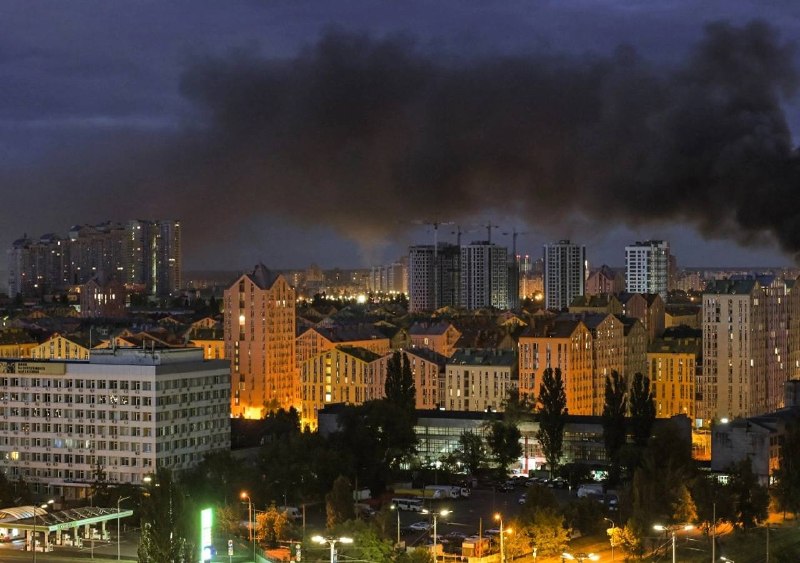
On 17 July 2026, with the Rada still arguing over who sits in which ministry, Ukraine's negotiators in Brussels opened Cluster Six of its EU accession talks, the long-delayed chapter on external relations. The political choreography could hardly have been worse: a cluster that took years of patient diplomacy to reach opened the same week the machinery that should be celebrating it spent its energy on a personnel fight.
That collision is the story. A successful cluster opening is, in EU enlargement terms, a structural event; it locks both sides into shared negotiation on foreign and security policy, common security and defence, and the rest of the external-relations chapter, and it gives Kyiv a seat at the table when Brussels calibrates its position on third countries. Burying it inside a domestic cabinet drama is a self-inflicted wound, and the people most exposed to it are the Ukrainian diplomats who have spent the better part of a decade getting the country to this room.
What Cluster Six actually unlocks
Cluster Six groups four negotiating chapters into a single package: chapter 30 on external relations, chapter 31 on common foreign, security and defence policy, chapter 32 on financial and budgetary provisions, and chapter 33 on external relations more broadly. Opening it formally moves Ukraine from the preparatory stage into the substance of how the country aligns its foreign-policy posture, sanctions policy, and eventual financial contribution to the EU acquis. In practice that means Ukrainian positions on sanctions, on third-country diplomacy, and on the budget contribution that follows membership will be negotiated jointly with member states, not unilaterally as Kyiv has had to manage them for the last four years of wartime.
The opening was confirmed by Ukrainian officials circulating in the Telegram channel Economics_Politics on 17 July 2026, framed in the blunt terms the channel has used throughout the war: that the cluster is real, that it has been a long time coming, and that the domestic political weather is the only thing threatening to dim the moment. Channel posts noted the irony explicitly, observing that "due to the chaos surrounding the appointment of the new government, several more important events for Ukraine were lost," and listing the cluster opening first among them.
The cabinet formation shadow
Cluster Six did not open in a vacuum. The week of 17 July was dominated in Kyiv by the protracted formation of a new executive following the post-war reshuffle inside the Verkhovna Rada, with factions trading ministerial portfolios and the public-facing messaging consumed by who gets which building on Hrushevskoho Street. For a country that has spent three and a half years making the case that its European integration is irreversible, that sequencing matters: a cluster opening is a public-relations asset by definition, and the cabinet drama pulled the camera away from the asset and onto the personnel fight.
There is a counter-reading, and it is worth airing. A noisy cabinet formation is, in any parliamentary system, a sign of working politics, not broken politics. Factions negotiating portfolios is the normal mode; the alternative, a prime minister chosen without contestation, is usually a warning sign rather than a reassurance. Read generously, the same political energy that consumes the headlines this week is the energy that produced the parliamentary majority that ratified the cluster framework in the first place. Read less generously, it is a gift to every external actor who would prefer Ukraine's European path to look like chaos rather than inevitability.
Why external relations is the cluster that matters most right now
Of the six clusters Ukraine has either opened or is in the process of opening, the external-relations package carries the highest current geopolitical weight. Membership talks are not just a technical alignment exercise; they are a signal to third countries about where Kyiv's strategic centre of gravity sits and how durable that sit is. The cluster covers sanctions alignment, joint positions on countries bordering the EU, cooperation on counter-terrorism, non-proliferation, and the foreign-policy machinery that, post-accession, would route through Brussels rather than through ad hoc bilateral arrangements.
For a country at war, that is not abstract. Sanctions alignment in particular has been one of the friction points between Ukraine and several member states since 2022, with Kyiv frequently out in front of the EU's restrictive measures and Brussels catching up. A formal negotiating chapter turns that asymmetry into a shared project with a calendar. The cluster also pulls the security-and-defence chapter into formal negotiation, which is the section of the acquis that has the most obvious wartime relevance and the most obvious post-war consequences for European defence industrial policy.
The pattern underneath the moment
Brussels has been deliberately rhythmic with Ukraine's accession track, releasing milestones in batches so each one can be politically absorbed. The risk of that approach is that the absorbed milestones become invisible. A reader following EU enlargement only through headlines will have registered the candidacy, the framework, the opening of negotiations, the early clusters, and now Cluster Six, but the actual leverage each step creates compounds underneath the surface. A country inside the cluster system negotiates foreign policy with a different set of constraints than a country outside it; a country that has opened the external-relations cluster cannot, in practice, drift on sanctions the way an unaligned candidate can.
The structural point is plain. The European integration project is the only major geopolitical project in Europe that is moving forward on its own timeline, and the only one that converts wartime alignment into a permanent institutional settlement. The cluster system is the mechanism by which that conversion happens. Each cluster opened is a few hundred pages of the acquis that becomes politically impossible to reverse. The cabinet formation drama in Kyiv does not change that arithmetic, but it does change the political surface in which the arithmetic is doing its work.
What remains genuinely uncertain is whether the next cluster, and the one after that, will land in similar circumstances or whether the domestic political weather will eventually cooperate. The sources do not specify the timeline for Cluster Seven; the negotiating calendar is set bilaterally between the Ukrainian government and the European Commission and is not in the public record this week. What is in the public record is the opening of Cluster Six on 17 July 2026, and the fact that a domestic cabinet fight briefly succeeded in overshadowing it.
Desk note: the wire coverage on 17 July 2026 framed the day around the Rada's cabinet drama. Monexus is reading the cluster opening as the structural event of the week, with the personnel fight as the noise that almost buried it.
Wire provenance
This editorial synthesis draws on the following public wire/social posts:
- https://t.me/s/Economics_Politics
Follow the event.
These dated source records provide context. They do not retrospectively verify this archive article.
A dated voting record is evidence of one decision. Use the original UN record before turning it into an alignment label.
Visual explainer · historical vote of 2022-03-02 →