Netanyahu's World Cup nod to Argentina is lighter than it looks, and heavier than Milei wants it to be
On 18 July 2026 Israeli Prime Minister Netanyahu said he is rooting for Argentina. The line reads as sport banter. It lands on a Buenos Aires that has just voted to deepen its Israel alignment and a Jerusalem looking for friends in Latin America.
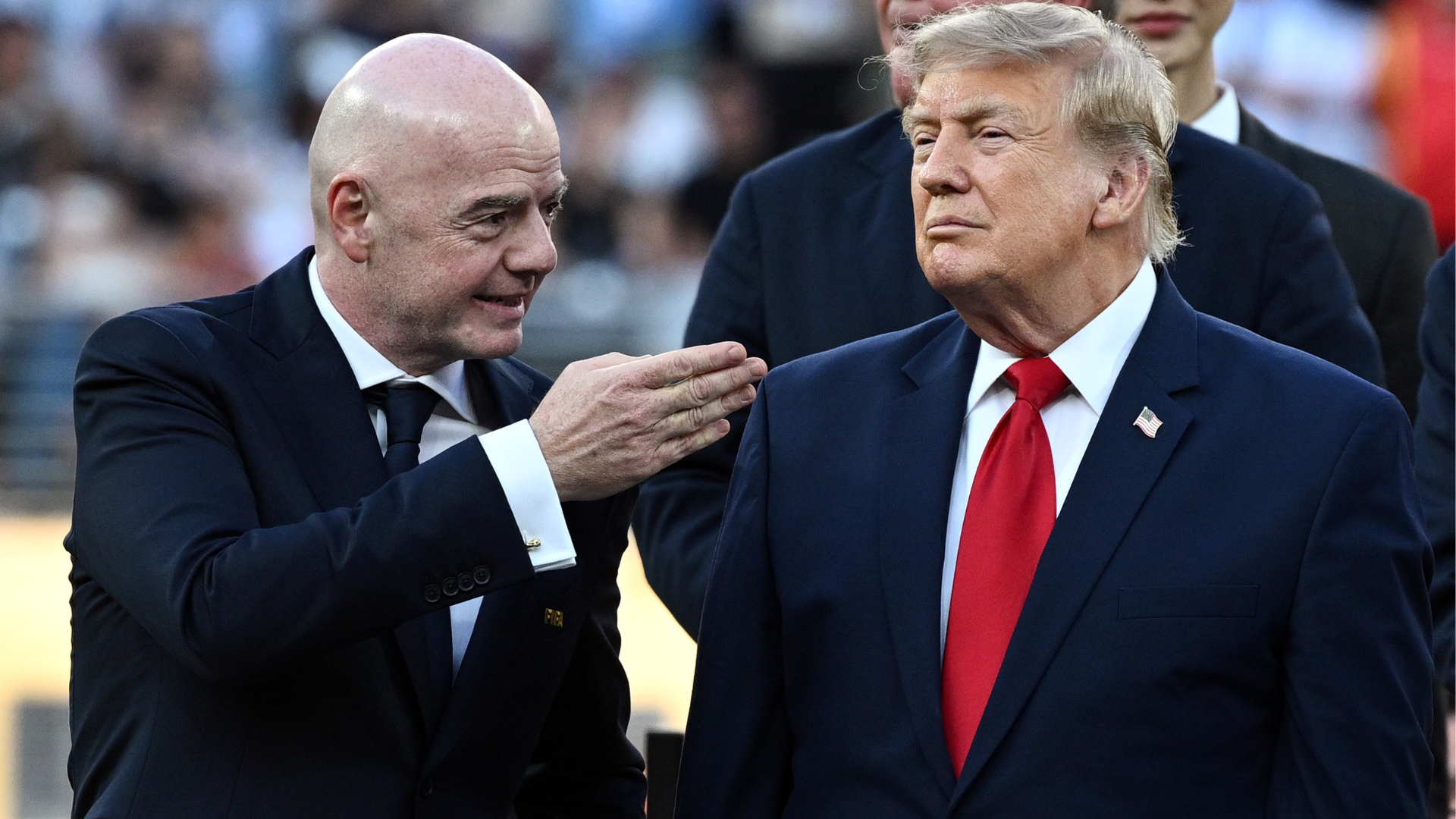
On 18 July 2026, at 20:21 UTC, a short item crossed the wire from the X account Unusual Whales: Israeli Prime Minister Benjamin Netanyahu had declared, in the run-up to the 2026 FIFA World Cup, that he was rooting for Argentina. The line arrived dressed as sport banter, the kind of cross-continental pleasantry that usually merits a paragraph and a shrug.
It deserves more than that. The remark lands on a Buenos Aires that, in the preceding months, has done something no other major Latin American capital has matched at this scale: it has folded its Israel alignment into the symbolic furniture of the state, from a relocated embassy to a cabinet-level pledge to recognise Jerusalem as Israel's capital. The remark also lands on a Jerusalem that, with its war in Gaza grinding into a second year and its European partnerships under visible strain, has been searching, publicly, for friends in places where Western capitals have grown cool. Milei and Netanyahu are not just two heads of state who enjoy a selfie. They are, at this moment, two premiers whose domestic political logic has made each other useful.
A telephone call, not a tournament pick
Read literally, Netanyahu's World Cup comment is unremarkable. Israel did not qualify for the 2026 finals; its players' absence from the pitch has been a quiet ache for years. A prime minister declaring for a foreign squad is the kind of soft-content diplomats emit when cameras are on and budgets for state visits are not. What makes this declaration worth a beat is the symbolic traffic it confirms. Argentina under Javier Milei has executed the most pro-Israel realignment of any South American government in living memory: the embassy in Israel was moved to Jerusalem in 2024, Argentine ministers have spoken of relocating their own country's embassy to Jerusalem once Argentina's capital status question is resolved, and Milei has stood beside Netanyahu in public repeatedly. Netanyahu returning the compliment, in a stadium-adjacent register, is the predictable closing of a loop.
The point is not that two leaders exchanged a pleasantry. It is that the pleasantry is now part of the operating record of a bilateral relationship that has been, by any measure, the most ideologically inflected in the region. In Brasília, in Mexico City and in Bogotá, governments that were critical of Israel's military campaign in Gaza have, in the same window, downgraded or paused high-level contacts. Buenos Aires has done the opposite. The Milei-Netanyahu channel is one of the few in the Western Hemisphere that has deepened since October 2023.
The counter-read: just sport
The counter-read is straightforward, and it deserves to be aired before the structural reading drowns it. Netanyahu's comment may be exactly what it appears to be: a sports-flavoured line, the kind of which dozens of heads of state trade every World Cup cycle, with no diplomatic freight attached. Argentina is the defending champion from Qatar 2022; declaring for the Albiceleste is, in plain fandom terms, a defensible position for a prime minister whose country is not in the tournament. International relations scholars will rightly note that dozens of similar declarations preceded this one and produced no policy movement. There is no evidence in the wire item that the comment was negotiated, scripted, or tied to any pending bilateral action.
That is the honest framing. It is also incomplete. Symbols do not float free of the material relationship that surrounds them. When a head of government declares for a foreign team in the middle of a war that has cost his counterpart's main Western partners significant domestic political capital, the declaration is read in two hemispheres at once. In Jerusalem, it is read as a thank-you. In Brasília and Bogotá, it is read as a flag-plant.
What Argentina bought, and what it cost
The structural frame is plain. Milei's foreign policy has been a deliberate inversion of the Kirchner-era posture: out of the Community of Latin American and Caribbean States, sceptical of the BRICS+ embrace that Brazil and Lula had been constructing, and explicitly Western-Atlanticist in rhetoric and practice. Israel has been the most visible expression of that reorientation. For Netanyahu's government, the deal is no less legible: a G20 economy in South America, run by a leader with a high domestic approval ceiling and a taste for iconoclastic positions, willing to make the Israel relationship a brand. In a region where Israel has spent two years losing arguments about Gaza, that brand is worth something.
The cost on the Argentine side is harder to quantify and easier to understate. Argentine Jewish institutions are the largest in Latin America and historically one of the most politically diverse; the closer the state identification with one Israeli government becomes, the narrower the room for that internal pluralism. Argentine Muslim institutions, smaller and less institutionally dense, have less capacity to absorb the friction. And within the broader Mercosur and CELAC diplomatic environment, the Milei-Netanyahu alignment reads, to regional partners, as a vote with the United States and against the line Brazil has tried to hold on the Middle East.
The forward view
The trajectory to watch is the embassy question. Milei's government has publicly committed, in stages, to recognising Jerusalem as Israel's capital and to moving the Argentine embassy there once domestic legal steps are completed. That promise is the most concrete deliverable the relationship has on its books, and it is also the step most likely to generate friction with Brazil, with the Arab League embassies in Buenos Aires, and with the Argentine judiciary that will have to sign off. If the embassy question moves before the World Cup final on 19 July 2026 at MetLife Stadium, Netanyahu's rooting interest will have been the warm-up, not the headline. If it doesn't, the line will be remembered as one of those small moments that tells you which way the wind is blowing long before the storm arrives.
What remains genuinely uncertain is how durable the alignment is beyond Milei's term. Argentine presidential cycles have ended alignments before; the Menem-to-Kirchner handoff erased a decade of one posture and installed another. Netanyahu's coalition politics are no more stable. The bilateral relationship is, at this moment, a two-person arrangement more than an institutional one, and two-person arrangements survive only as long as the two persons do.
Desk note: Monexus read the Unusual Whales wire post at 20:21 UTC on 18 July 2026 and built this piece outward from that single line, declining to embellish the original item with detail not present in the source thread. The structural reading is the publication's own; the literal reading is the wire's.
Wire provenance
This editorial synthesis draws on the following public wire/social posts:
- https://t.me/s/unusual_whales
- https://en.wikipedia.org/wiki/Israel%E2%80%93Argentina_relations
- https://en.wikipedia.org/wiki/2026_FIFA_World_Cup
- https://en.wikipedia.org/wiki/Javier_Milei