Argentina enters the World Cup final carrying a 41% market, a missing president, and a country that hasn't stopped arguing
Polymarket prices Argentina at 41% to lift the trophy on 19 July 2026. President Javier Milei is staying home to avoid jinxing the side. The split-screen tells you almost everything about Argentine politics in 2026.
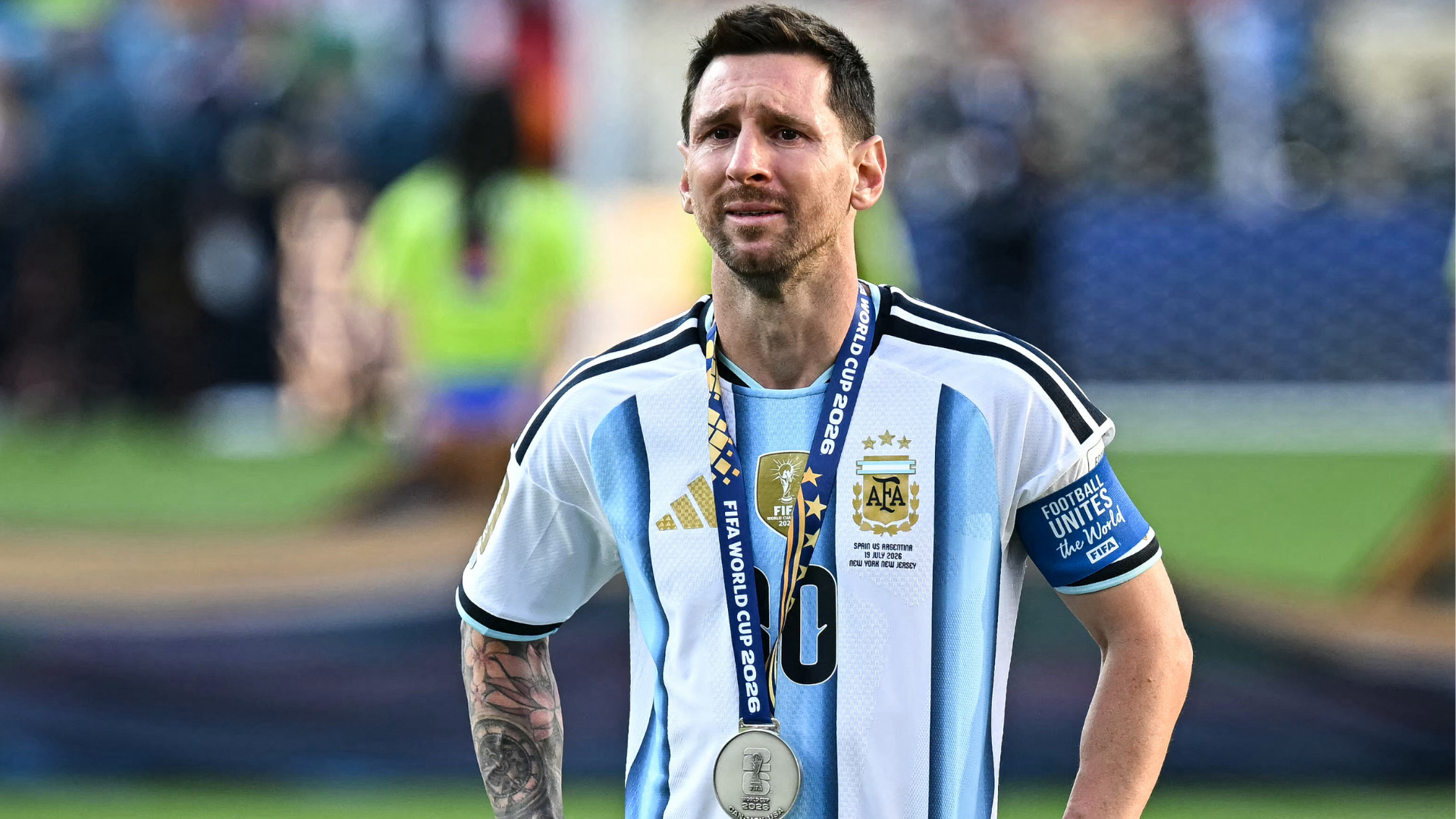
At 13:24 UTC on 19 July 2026, a Polymarket-linked account posted a single line to X: Javier Milei refuses to attend the World Cup final over fears he could "jinx" Argentina. Sixty-one seconds later, the same feed pushed a price print: 41% chance Argentina wins the World Cup. The two dispatches were filed almost as a pair, and the symmetry was the story. A head of state, two months into a market-shock stabilisation programme, would not fly to watch his own national team play for the biggest trophy in football. A prediction market, hours from kickoff, was still pricing La Albiceleste as the single most likely champion on the planet.
This is the Argentina of mid-2026: a country that has stopped pretending the gap between its economic life and its emotional life can be bridged by anyone in a suit. Milei's libertarian shock therapy has torn the peso apart and stitched it back together at a rate most Argentine households have learned to read the way a sailor reads a barometer. The World Cup run has done what Argentine football always does in hard times: given the country something to scream about that is not the inflation print.
The market that thinks like a partisan
Polymarket's World Cup contract is the cleanest live read on sentiment available to anyone outside Buenos Aires. On 19 July 2026, with the final within hours, Argentina was trading at 41%, the highest single-name probability on the board. The platform runs on USDC collateral and resolves against the official FIFA result, which means the price is, in effect, a cold-blooded consensus of thousands of wallets about who actually wins on the night.
The 41% is striking for what it does not include. It does not include hope. It does not include the weight of Lionel Scaloni's squad over the last three tournaments, or the diaspora vote from every bar in Madrid and Miami that will be wearing blue and white. It is the price of a binary outcome, set by people who stand to lose money if they are wrong, and it has Argentina as the favourite against a European opponent whose name Polymarket's own order book can read in real time.
The platform has been busy. Two of the four items on the Polymarket X feed that crossed Monexus's desk on 19 July were direct links into World Cup markets, including a live trading page for the final at poly.market/v0wUSvt and a deeper position-builder at poly.market/kBYQ2ne. The market is the story precisely because the market is open: anyone with a phone and a stablecoin can disagree with the consensus, and the price moves.
The president who won't fly
Milei's absence is not a scheduling conflict. The libertarian president, who has spent his political career cultivating an almost superstitious relationship with markets, has decided that his physical presence at the final is a variable he can remove. The framing on the Polymarket X feed is sardonic: he fears he could "jinx" the side. Read in the language of Argentine politics, that is a load-bearing sentence. It says out loud what Argentine voters have been told for two years: that Milei's blessing and Milei's curse are treated by his own supporters as two forces acting on the same field.
The Milei government is in the middle of the most aggressive stabilisation programme in Argentine history. The peso has been allowed to find its own level, monthly inflation has decelerated from the six-digit prints of late 2023 and 2024 to something closer to a manageable monthly figure, and the Central Bank has rebuilt net reserves under the supervision of a Washington-negotiated programme. None of that is the story Milei wants in the papers on the night of the final. He wants the team, not the treasury.
So he stays home. The decision is also, quietly, a political one. A president photographed in the stands of a sold-out final with La Albiceleste's captain lifting a trophy cannot easily be edited out of the campaign footage for 2027. A president who stayed behind, who let the players "own" the moment, who joked about jinxes, can be slotted into a different reel: the austere figure who refused to mix his office with the country's joy.
A country that argues with itself in real time
There is a counter-narrative, and it is the one Milei's opponents will spend the next 72 hours repeating. Argentine football is the most over-determined cultural artefact in the country, and every government for the last half-century has tried to ride it. The default move of Peronist and anti-Peronist politicians alike is to wrap themselves in the team's shirt at exactly the moment of maximum public sentiment. Milei, who made his name attacking that consensus as decadent, is now doing the closest thing to it available: not flying to the match, but making sure everyone knows he chose not to.
This is the structural pattern underneath the anecdote. Argentina has spent the last three years running two parallel economies: a peso economy that the government is trying to rebuild, and a parallel, dollar-linked, stablecoin-friendly economy that ordinary Argentines use to survive between salary payments. Polymarket is not a foreign curiosity in Buenos Aires; it is one more screen on a phone that already shows MEP, blue, CCL, and the latest reading on the BCRA's crawling peg. A prediction market pricing the national team at 41% on the night of the final is read in Argentina not as a curiosity of US crypto rails but as another instrument on the dashboard.
What the next 48 hours actually settle
The final will resolve the contract on the field, but it will not resolve the argument. If Argentina wins, the Milei government will inherit a week of street celebrations it can neither claim nor ignore; the inflation print due in early August will land in the same news cycle as the trophy lift, and the two numbers will be argued over in every living room in the country. If Argentina loses, the libertarian project will have to absorb the country's grief without being seen to feed on it, and the prediction market will record, with its usual indifference, that the consensus was wrong by one match.
The Polymarket print of 41% is not a forecast of national mood. It is the price at which Argentina can be bought and sold by anyone with a USDC balance, in the hours before the team walks out. That is, in its own way, the cleanest summary of where the country is: a place where the football market and the currency market are read on the same screen, where the president's travel schedule is parsed for omens, and where the most consequential election of 2026 will be decided by eleven players and a referee's watch.
Desk note: Monexus framed this as a single-screen read of Argentine life in July 2026, rather than a sports piece, because the prediction-market print and the Milei travel decision arrived as a pair on the same feed and only made sense read together. The sports result is genuinely uncertain; the structural argument about the gap between Argentine football and Argentine economic policy is not.
Wire provenance
This editorial synthesis draws on the following public wire/social posts:
- https://x.com/polymarket/status/