Burnham's Britain: a mayor takes Downing Street and inherits a country running on fumes
Andy Burnham was sworn in as UK prime minister on 20 July 2026, the seventh occupant of Downing Street in a decade, taking over from Keir Starmer and inheriting a country short on both money and patience.
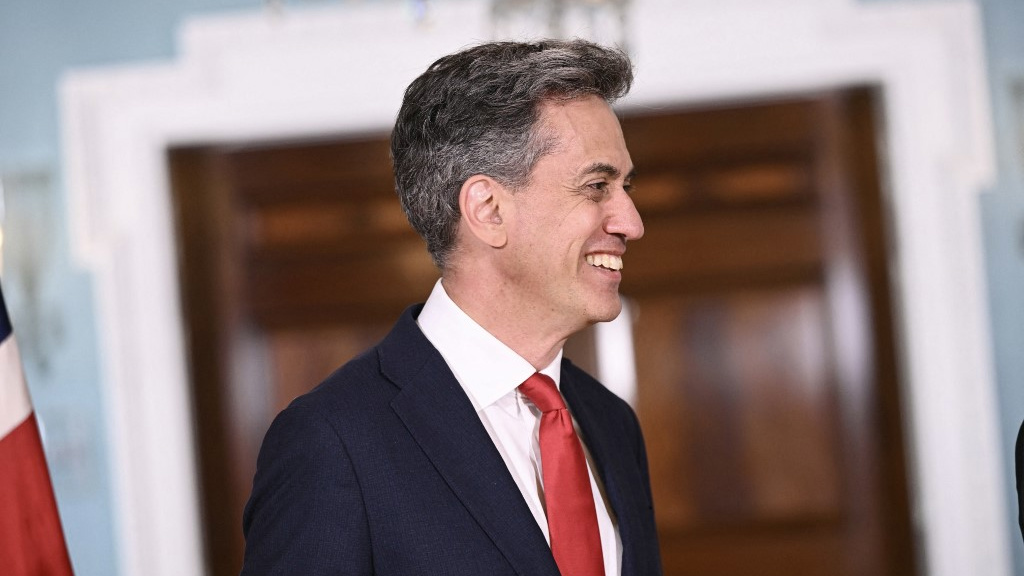
Andy Burnham was sworn in as prime minister on 20 July 2026, becoming the seventh occupant of Downing Street in a decade and the fourth Labour premier to take the keys since the Conservatives imploded. The ceremony closed the shortest-lived Starmer government and opened a premiership that, on its first morning, is already defined by the question of whether a former regional mayor can hold together a country that has stopped trusting the people who run it.
The personnel change is the easy part. Burnham's task is not: a sluggish economy, public services creaking under a decade of austerity and stop-start fixes, a cost-of-living shock that has not properly lifted, and a voting public that France 24 reports is showing "growing scepticism" at the ballot box. He takes over a party that has cycled through leaders faster than any in its history, and a parliamentary system that delivers prime ministers the way a coin-flip delivers outcomes, regardless of mandate. The bet Labour is making is that a man who built a personal political machine in Manchester can build one for the country.
A mayor in the building
Burnham's path to Downing Street is unusual and, his allies argue, exactly what the moment requires. For eight years he ran Greater Manchester, a combined authority with a transport budget, a housing pipeline and a policing brief, balancing those against Westminster rather than waiting on it. France 24's profile notes that he became "one of the UK's most popular politicians" outside the bunker of Westminster. Deutsche Welle's write-up of the swearing-in frames him as the Labour movement's most prominent figure, a label that is at once an asset and a liability: a mandate without a portfolio until, very suddenly, a portfolio.
A mayor who learned to negotiate with councils, developers, unions and Whitehall simultaneously now has to negotiate with one thing above all: his own MPs. France 24 reports Burnham has vowed to "bring back hope," a phrase that is either a programme or a marketing line depending on who in Labour HQ is asked. Sceptics, of whom there are now more than a few, point out that hope is what every incoming British prime minister promises and what few, including Starmer, end up delivering.
The Starmer wreckage
Starmer's exit is the context Burnham does not want the story to be about, and yet will be, for months. France 24's farewell piece describes a handover that leaves behind a "colossal task," a phrase used by the broadcaster but easy to hear in the sourness around Westminster. Starmer came in promising competence, delivery and an end to the chaos of the Johnson-Truss cycle; he leaves with his party already chewing through the next option, and with voter patience measurably thinner than when he arrived.
The wire coverage is unusually blunt about that: France 24 sets the tone by leading on voter scepticism rather than Burnham's agenda. The framing is unflattering by accident. Burnham is inheriting not just an office but a verdict, a public that has watched four prime ministers in roughly the span of one US presidential cycle and is no longer sure the title means anything.
A leadership test the ballots keep failing
If Burnham wants to "lead the country differently," as France 24 reports he intends, the structural obstacles are not in his speeches. They are in the numbers. Britain's growth rate has been the dullard of the G7 for much of the past decade, public investment has been rationed, and households have run down savings to keep consuming. The Westminster model's answer to this tends to be a fiscal event: another budget, another statement, another set of forecasts that get revised away within a quarter.
A mayor's instinct is to build. Burnham's Manchester record gives him a credibility on housing, on transport integration, on the unglamorous plumbing of regional growth that a Westminster-only operator rarely has. The risk is that Number 11 (the Treasury) and the bond market, not the voters of Salford or Stockport, will set the tempo of his first year. Burnham has spent a career trying to make Whitehall money reach the high street. Now he is the Whitehall money.
What remains to be seen
The most contested claim in the wire coverage is the easiest one: that Burnham will be "different." France 24 frames the entire transition around that word. So does PressTV's dispatch, which describes him as the "seventh leader in a decade." Both framings are doing the same work: they assume a clean break with the recent past. The record on such clean breaks is not encouraging.
What the sources do not yet tell us, and what will define whether Burnham's first hundred days make it into a second thousand days, is the composition of his cabinet, the first budget's shape, and how he handles the backbenches of his own party, where a number of colleagues did not want him there. His mandate is personal, not parliamentary. In Westminster that distinction tends to get tested early and loudly.
This publication framed the handover around voter scepticism and the structural limits on any incoming UK prime minister, rather than around the personality change at the top. The leadership merry-go-round is the story; the new face on it is the news.
Wire provenance
This editorial synthesis draws on the following public wire/social posts:
- https://t.me/presstv/56328