Nolan's Odyssey and the Cost of Squeezing Homer into Three Hours
Three published reactions to Christopher Nolan's 'The Odyssey' agree the film is a feat of scale, but diverge sharply on what the director has done to Homer's trauma, gods, and monsters.
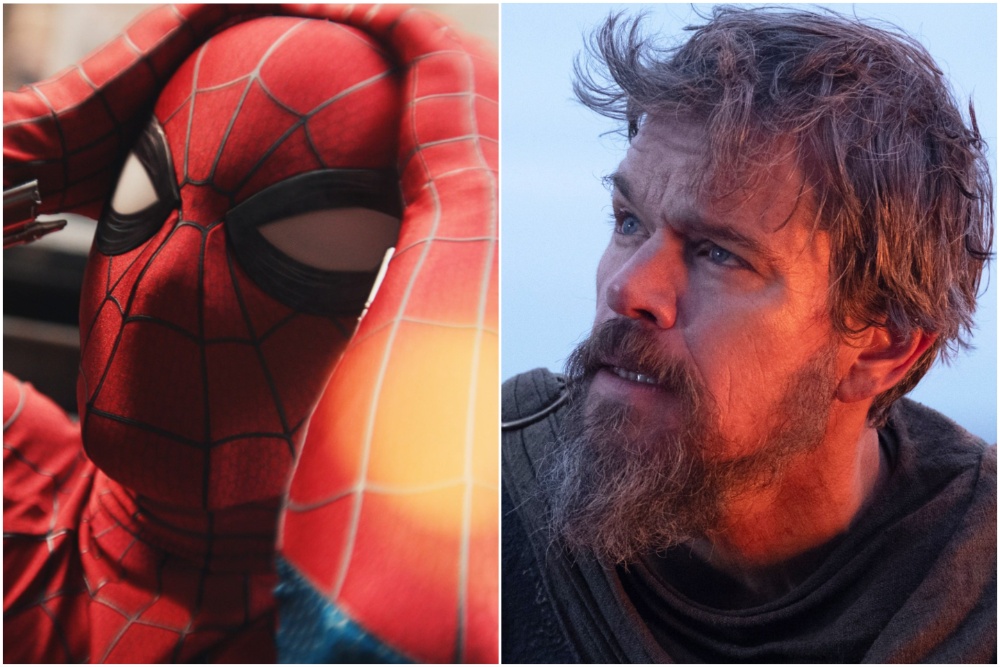
The first three-hour cut of Christopher Nolan's The Odyssey lands in theatres on 17 July 2026 with a marketing promise that has obsessed classicists for two years: that the director of Oppenheimer and Dunkirk would render the full arc of Homer's 12,000-line epic on screen, from the fall of Troy to the slaughter of the suitors. The earliest reviews, published within hours of the embargo lifting, read less like a referendum on whether Nolan pulled it off than on what he decided to cut, and why those cuts land where they do.
The film is the most expensive Greek-myth project ever financed by a Hollywood studio, and the first to bill itself as a complete rendering of both the Iliad's aftermath and the Odyssey in a single sitting. It is also a film whose every creative decision is now being weighed against a 2,800-year-old poem, and where the verdict depends as much on which Homer you bring to the cinema as on what Nolan put on the screen.
Three reviewers, three Homers
The most searching piece so far is the Hyperallergic essay published on 20 July 2026, in which a self-described "Homerist" walks out of the film and lands on a single accusation: that Nolan's Odysseus is a man defined by trauma but untouched by it. "This is a tale of a man affected by trauma, but without any sense that it changed him at all," the critic writes, capturing a complaint that has surfaced in classical-studies circles since the first trailer dropped. The reading hinges on the Odyssey's most counter-intuitive move: Homer's hero comes home diminished, wearier, sometimes weeping, and is reunited with a wife and son who do not entirely recognise him. A version of that arc, in the reviewer's telling, is the difference between the poem and a thousand years of action-figure retellings.
IndieWire's history desk, posting the same day to its Telegram channel, approached the film from the other end of the syllabus. Its dispatch on the Sea Peoples, the confederation of maritime raiders blamed in the Late Bronze Age for the collapse of several Eastern Mediterranean palace economies around 1177 BCE, warns that "Greek History TAs will be fielding questions about the Sea Peoples for years, thanks to Christopher Nolan's latest film." The framing matters: the Sea Peoples appear in the Iliad's margins and in Egyptian and Ugaritic inscriptions but not in the Odyssey proper, and Nolan's decision to fold them into a post-Troy prologue has implications for which ancient source materials now become standard reference points in undergraduate classrooms.
A third piece, distributed through a culture wire on 20 July 2026, catalogues the liberties directly: missing scenes, missing characters, and an ending that is not in the poem. The piece runs through what Nolan has changed, what he has invented, and what he has dropped entirely, without assigning a verdict, and serves as the most usable map of the divergences for non-specialists.
What three hours can carry, and what it cannot
Squeezing the Odyssey into a single feature has always been a creative emergency. The poem runs to roughly 12,000 lines in standard English translation, an oral performance that takes close to a full day to deliver aloud, and is built around set-pieces that resist montage: the Cyclops, Circe, the descent to Hades, the Sirens, Scylla and Charybdis, the cattle of the Sun, the long return to Ithaca, the trial of the bow, the slaughter of the suitors. Each of those episodes is, on its own, the length of a short film. A director who wants all of them on screen has to choose, somewhere, between the poem's recursive pace and the audience's tolerance for the third storm at sea.
That compression is the engine of the new complaints. Nolan's signature is the extended practical-effects sequence built around a single set-piece, and the Odyssey offers him a dozen of them. The Hyperallergic reading sees the cost of that choice in the homecoming, where the film's pacing resets to the rhythm of the set-pieces rather than to the quieter bookending in Ithaca that gives the poem its moral weight. The IndieWire piece reads the cost in the opposite direction: a film that has already spent its biggest hour on Troy and the sea monsters may be tempted to hand the Sea Peoples a bigger role than the Odyssey can justify on its own evidence, which then leaks into how the film teaches its audience to think about the Late Bronze Age collapse.
The three accounts, taken together, sketch the structural bargain any Homer adaptation has to strike. A complete film has to give up either the poem's interiority (the daily despair of a man trying to get home) or its episodic abundance (the long catalogue of impossible things that happen to him). Nolan's choice, by the evidence of the first reviews, is to keep the set-pieces and let the interiority compress.
The gods, or their absence
None of the three reviews is principally about theology, but the most consequential adaptation question raised by the cycle of writing is what Nolan has done with the gods. Homer's Odyssey is saturated with divine machinery: Athena pleads Odysseus's case in Zeus's court, Poseidon's grudge drives the plot, Hermes is sent to warn Aegisthus. The poem's gods are not metaphors. They are characters, with agendas and rivalries, who intervene openly and whose absence is itself a plot point.
Hollywood has tried, for most of its history, to render this either by literalising the divine (a long tradition of beach-shot Zeus, including the 1997 television Odyssey with Armand Assante, which was praised for its gods and condemned for everything else) or by excising them in favour of psychological realism. The Hyperallergic piece does not specify Nolan's choice in detail, but its central complaint, that the film treats trauma as scenery rather than as transformation, implies that the gods have been demoted to texture. The IndieWire piece, by contrast, takes the gods for granted as part of the world the film builds; the catalogue of changes does not list their excision among the major alterations, which suggests they remain, even if recast.
The choice has consequences beyond fidelity. A Odyssey without active gods is, structurally, a Robinson Crusoe story with better weather. A Odyssey with active gods is something the cinema has rarely managed to render without embarrassment, because divine intervention is, on screen, a special effect.
What the new film will be measured against
The next test of Nolan's choices will not come from critics but from the people the IndieWire piece identifies as the film's most lasting audience: graduate teaching assistants and undergraduate lecturers in Greek history. If a generation of students enters a Bronze Age Aegean survey having first encountered the Sea Peoples through Nolan's prologue, the film will have done something that no previous adaptation has done: it will have rewritten the canon of accessible images. The same is true of the homecoming, where a Nolanesque rendering of the bow contest and the slaughter will set the visual baseline against which every subsequent classroom reading of books 21-24 will be measured.
That is a different kind of review cycle, slower and less theatrical than the press embargo, but it is the one that will decide whether The Odyssey joins the small list of film adaptations that genuinely shape how a non-specialist public reads the original text. The Lord of the Rings did this for Tolkien. The 1997 Odyssey, for all its critical bruises, did it for an entire cohort of American students who grew up watching it on classroom VHS. Nolan's film, by the scale of its production and the scale of its marketing, will set that bar for the next decade.
The first round of reviews does not settle the question. It does settle something narrower, and arguably more useful: that the most interesting disagreements about the film are not about spectacle but about which parts of Homer survive the compression, and which parts the director has decided to carry on his own.
Desk note: the three early responses, a Homerist on Hyperallergic, a classicist-friendly history desk on IndieWire, and a catalogue piece from a culture wire, converge on the same diagnosis from different angles. Nolan's The Odyssey succeeds as set-piece filmmaking and is read as most vulnerable in the places where Homer is least cinematic: the interior weather of a long homecoming, and the slow moral accounting at its end.
Wire provenance
This editorial synthesis draws on the following public wire/social posts:
- https://t.me/indiewire