Spain ends Argentina's World Cup reign in New York, and Messi walks off into the open question
La Roja beat Argentina in extra time at MetLife Stadium on 19 July 2026, leaving Lionel Messi in tears and Lionel Scaloni noncommittal about his future as coach.
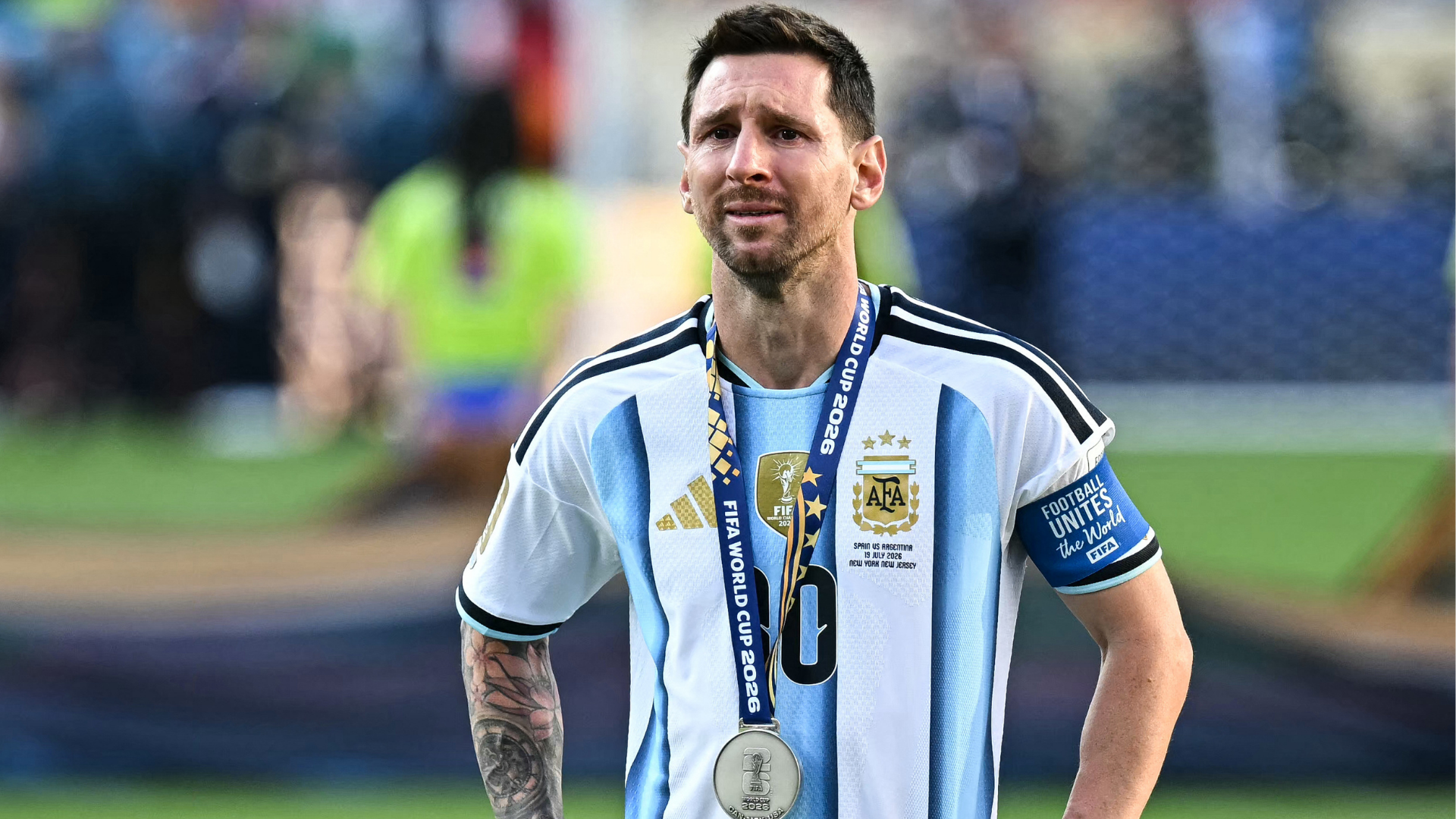
At 02:03 UTC on 20 July 2026, fans poured into the streets of New York as Spain lifted the FIFA World Cup trophy for a second time. The match at MetLife Stadium had ended in extra time, and the Argentine captain, Lionel Messi, was still on the pitch, in tears, accepting a runners-up medal. The scoreboard read Spain 1, Argentina 0 in added time of extra time after 120 minutes ended level. The wounding came not from the result alone but from the timing. Argentina had arrived in New York as defending champions, and Messi had arrived with the explicit framing of one last international campaign.
Spain's victory completes a generational transfer that has been visible all tournament: a Spanish squad built around players who cut their teeth in La Masia and at Athletic Bilbao academies, schooled in the same possession football that defined the 2010 side, but faster, more vertical, and fronted by forwards who came of age watching Messi on television rather than alongside him. Argentina leave with the obvious question: whether the man who carried them to glory in Qatar in 2022 will, or even should, take the field again in a competitive international shirt. Coach Lionel Scaloni, in tears himself in the technical area after the final whistle, cast doubt on his own long-term future in his post-match remarks, reported by France 24 at 02:11 UTC on 20 July 2026. The uncertainty travels up the chain of command.
A final in the open air, decided in the dark
The 2026 final was staged at MetLife Stadium in East Rutherford, New Jersey, the 82,500-seat venue that will host the 2026 tournament's showpiece and the venue that will stage the 2026 NFL Super Bowl. The decision to award the match to an open-air stadium in the northeastern United States, rather than to a domed venue further south, shaped the entire tactical script. Evening kickoff local time meant temperatures dropped through the second half, but the air remained humid, and the surface remained fast.
The scoreline stayed goalless through 90 minutes and through the first period of extra time. According to France 24's match report at 00:49 UTC on 20 July 2026, the contest was resolved in the additional 30 minutes, with Spain scoring in extra time before the final whistle. The goal's specifics, including the identity of the scorer and the exact minute, are not detailed in the source material available to this publication; reporting at 02:03 UTC on 20 July 2026 from Al Jazeera's breaking-news desk described the result as Spain's defeat of Argentina in extra time, framing it as a "thriller" without enumerating the goal sequence. That gap is itself worth flagging: the wire coverage filed in the first hour after full time emphasised emotion and aftermath rather than a minute-by-minute anatomy of the goal.
What is documented is the human consequence. Messi was photographed in tears as he received his runners-up medal, the image circulating through Hindustan Times's reporting on 20 July 2026 at 02:31 UTC. Scaloni, the architect of Argentina's 2022 triumph in Qatar and the man most associated with the Scaloneta generation that grew up around Messi, declined to commit to continuing as coach.
The passing of the No. 10
For a generation of viewers, the World Cup final had a fixed reference point: Messi in an Argentina shirt, lifting the trophy, with the rest of the team arranged around him. That image dates from 18 December 2022, when Argentina beat France on penalties at Lusail Stadium in Qatar. The 2026 cycle was, by Argentina's own framing before the tournament, a campaign to extend that era by four years. The squad travelled with a 39-year-old Messi still as the central figure, surrounded by Julián Álvarez, Enzo Fernández, and Lautaro Martínez in their prime.
Spain's victory changes the coordinates. The Spanish team that took the field in East Rutherford is the same squad that won the 2024 European Championship in Germany and the 2023 Nations League, built around Pedri, Gavi, Lamine Yamal, and Nico Williams. Yamal, born in 2007, was 17 when Spain won Euro 2024. By the time of the 2026 final he was 19, old enough to have watched Messi's Qatar final as a primary-school pupil in Rocafonda, the neighbourhood in Mataró whose mural of the Argentine became a small pilgrimage site during the Euros. The structure of the substitution, one era for another, is not symbolic. It is the literal composition of the squads.
This is the deeper point that the post-match coverage has begun to crystallise. Al Jazeera's framing at 02:03 UTC on 20 July 2026 placed Messi's appearance in the "likely final World Cup match" register, signalling that even before the trophy was lifted the public read had settled on a farewell tour rather than a competitive cycle. France 24's coverage of Scaloni's emotional press conference extended that register into the coaching staff. The Argentine federation now faces a decision it has been able to defer since 2022: what comes after.
What the Argentine federation actually has to decide
The immediate questions are tactical and contractual, not existential. Scaloni has held the position since 2018 and signed a contract extension after the Qatar win. His post-match remarks, as reported by France 24 on 20 July 2026, leave open the possibility of a departure; Argentina will want clarity before the next international window. The federation's under-23 side reached the 2024 Olympic final in Paris and lost to France in extra time; the depth chart is real, even if the No. 10 shirt is not.
The structural challenge is harder. Argentina's attacking identity since 2021 has been organised around Messi's gravity. The team defends from the front by compressing space around the ball at his feet, and the rest of the shape rotates to give him passing lanes. Spain beat Argentina, according to the wire reporting, by denying those lanes and forcing the game into the channels where Yamal and Williams could run at an ageing Argentine back line. Any successor to Scaloni, or Scaloni himself in a post-Messi configuration, inherits a squad whose instincts have been trained for a player who is unlikely to play a 2030 qualifier.
The counter-frame, and it is a fair one, is that this is how every great team transitions and that Argentina has navigated the post-Maradona era more than once. The 1994 World Cup, the 2006 World Cup, the 2010 World Cup all produced their own reckonings. In each case, a generation of players had to learn to play without a gravitational centre. The cost in tournament results was real; the cost in identity was realer.
What remains uncertain in the first hours
Three things are unsettled in the available reporting and matter to how the story will be told. First, the goal. The Spanish scorer and the minute of the decisive goal are not specified in the source material; the wire copy describes the result as a 1–0 in extra time, with France 24 calling the match a "thriller" and Al Jazeera using the same language, but neither file a detailed goal log. Reconstructed broadcasts will fill this in within hours. For now, the goal remains a shape rather than a name.
Second, Scaloni's future. His emotional press conference, as reported by France 24 at 02:11 UTC on 20 July 2026, included a public non-commitment to continuing as coach. That is not a resignation, and Argentine federation sources quoted in the early reporting did not, in the available material, frame his comments as such. The next match in the Argentine calendar will clarify. Third, Messi's own decision. The Hindustan Times reporting at 02:31 UTC on 20 July 2026 captured the immediate aftermath, including Messi collecting his runners-up medal in tears, but the question of whether this was his final World Cup match is, at the time of writing, a public read rather than a confirmed statement from the player or the federation.
The honest position is that the tournament produced a clear winner in Spain, a clear ending in Messi's tears, and a chain of decisions that will play out over months, not minutes. The matches at MetLife Stadium, from the group stage through the final, gave the 2026 World Cup a specific gravity: a North American stage for a generational handover in the sport's most-watched fixture. Spain took the trophy home. Argentina takes home the question.
This publication treated the result as the lead rather than the goal sequence, because the available wire copy in the first hour after full time led with emotion and aftermath rather than a minute-by-minute account. Once detailed goal logs and Scaloni's full remarks are on the record, the structural story, Spain's second World Cup and the open question at the top of Argentine football, will hold either way.
Wire provenance
This editorial synthesis draws on the following public wire/social posts:
- https://t.me/hindustantimes